
Bridging the Crisis Gap: Situated and Ubiquitous Crowdsourcing for Disaster Relief
Situated and ubiquitous crowdsourcing with volunteers during disasters
This paper introduces "CrowdMonitor" and "CityShare," two complementary tools designed for disaster management. It combines ubiquitous crowdsourcing (mobile-based movement tracking and social media analysis) with situated crowdsourcing (public displays in physical spaces) to coordinate spontaneous volunteers and emergency services during crises.
TL;DR
In the chaotic early stages of a disaster, professional emergency services are often stretched thin. This paper presents two innovative systems—CrowdMonitor and CityShare—that enable better coordination between "spontaneous volunteers" and official agencies. By combining mobile tracking (Ubiquitous Crowdsourcing) with physical public displays (Situated Crowdsourcing), the researchers provide a framework for local task management even when the internet goes dark.
Background: The Information Void in Disaster Management
When a flood or earthquake strikes, citizens don't wait for instructions; they organize themselves into emergent groups. However, these well-intentioned efforts often happen in a vacuum. Emergency services don't know where the volunteers are, and volunteers don't know where the most urgent needs are located.
The authors identify a critical tension:
- Ubiquitous Crowdsourcing (apps) is flexible but requires high user effort to install and configure.
- Situated Crowdsourcing (public displays) is easy to use "on the fly" but is physically limited.
Methodology: A Two-Pronged Digital Strategy
1. CrowdMonitor: The Eye in the Digital Sky
CrowdMonitor focuses on Ubiquitous Crowdsourcing. It passively collects social media data and tracks participating volunteers' movements (anonymized) to create a heat map of activity. This allows emergency services to see where help is congregating and to send direct chat messages or "public calls" to specific geographic areas.
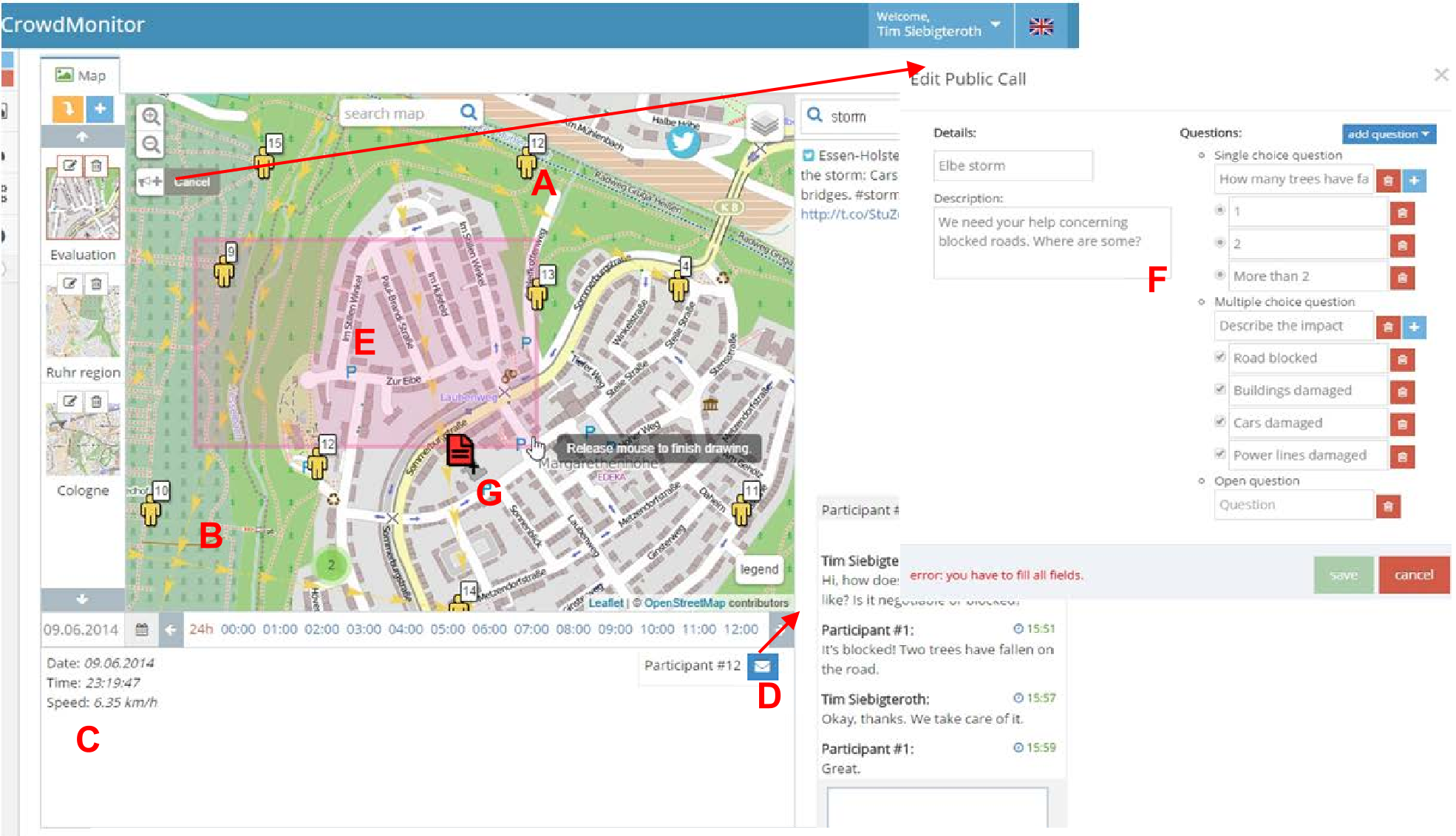 Figure 1: CrowdMonitor seeking to passively collect and display social media information and volunteer movement.
2. CityShare: The Local Physical Anchor
CityShare addresses Situated Crowdsourcing. It uses public displays placed in safe locations, such as shop windows.
- Robustness: Running on a Raspberry Pi, it can create a local Wi-Fi hotspot. Even if the city's internet infrastructure is destroyed, citizens can scan a QR code on the glass to access a local web app.
- Interaction: The screen displays three zones: a main map of tasks, a sidebar for official news, and a QR code for mobile connection. Citizens can post "Demands" (e.g., "Need help clearing debris") or "Offers" (e.g., "I have a spare generator").
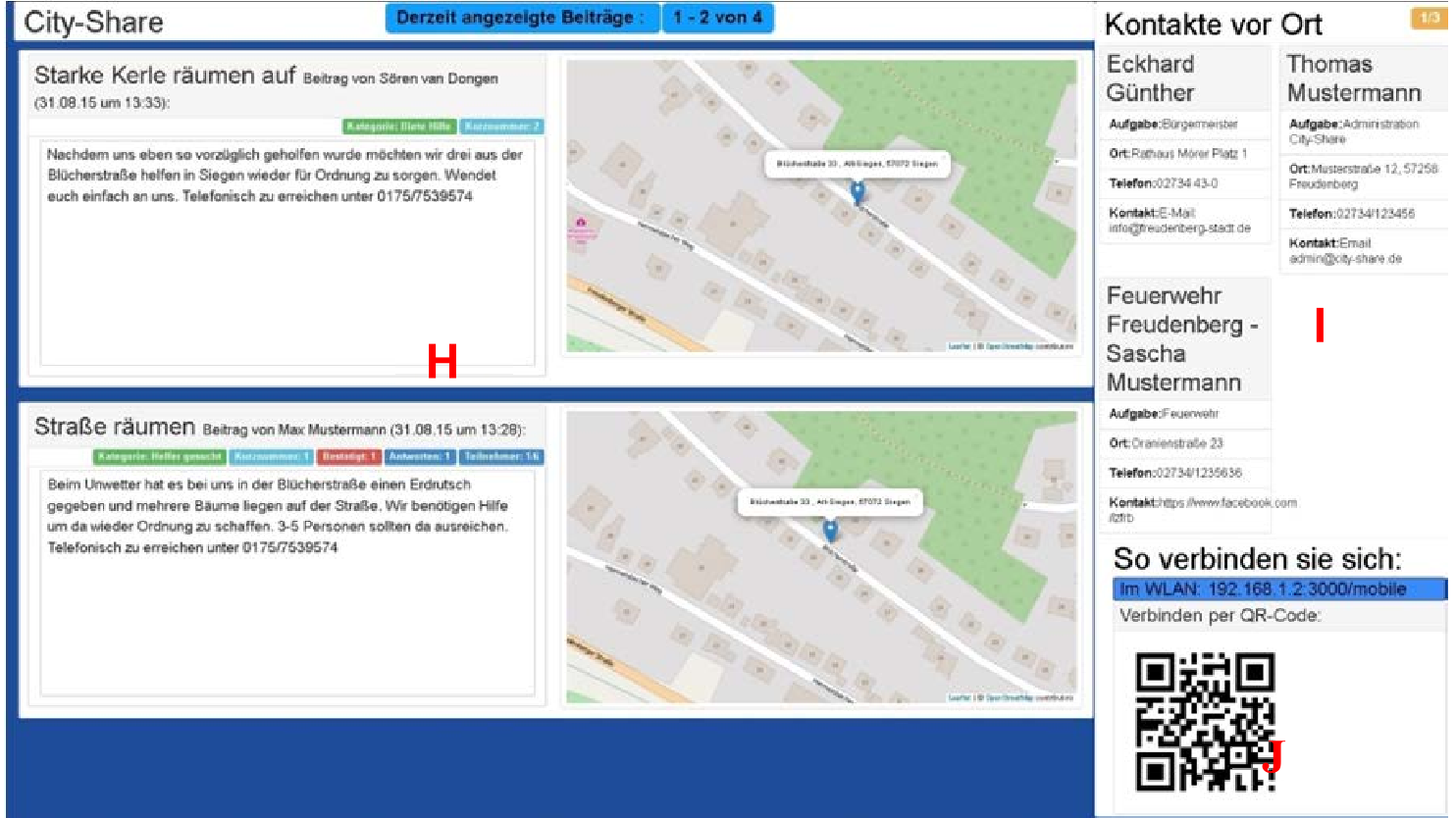 Figure 2: The CityShare display interface, showing task cards, maps, and official news feeds.
Experiments and Key Insights
The research emphasizes the serendipitous availability of workers. Unlike Amazon Mechanical Turk where workers are remote, disaster volunteers are "situated"—they are physically there.
- Contextual Awareness: By utilizing the "contextual control" of a situated environment (the shop window), the system reaches an "untapped source of potential workers" who might not have downloaded a specific emergency app beforehand.
- Offline Resilience: The ability for the Raspberry Pi to serve as a local communication hub was a critical design choice, acknowledging that pervasive internet is a luxury in a true disaster scenario.
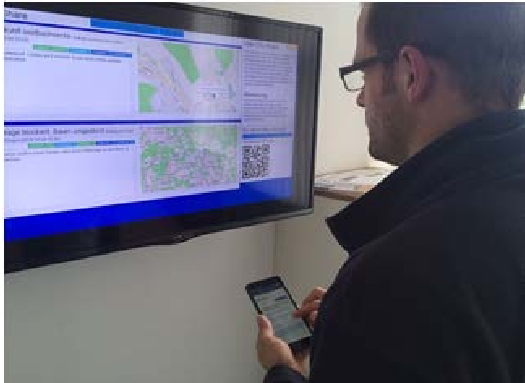 Figure 3: Visual representation of volunteer movement patterns captured by the system.
Critical Analysis & Conclusion
The Takeaway: The real innovation here is not just the "app" or the "display," but the interplay between them. CrowdMonitor provides the "big picture" for officials, while CityShare provides the "boots on the ground" coordination for the community.
Limitations: The paper acknowledges that public displays are prone to vandalism, which is why they suggest placement behind shop windows. Additionally, the reliance on social media (Twitter/X) for CrowdMonitor assumes that these platforms remain operational and populated with useful data during a crisis, which is not always guaranteed.
Future Work: The authors aim to refine the usability of these tools based on field tests, ensuring that the interface is "stress-proof" for users who may be in a state of panic or high adrenaline during an actual disaster.