
Beyond Preferences: Architecture of Situation and Socially Aware Recommendations
Situation and social awareness-based personalized recommendation service in pervasive computing environment
The paper introduces a "Situation and Social Awareness-based Recommendation" (SSAR) framework for pervasive computing environments. It combines smartphone-captured sensor data with social network analysis to provide personalized music recommendations using a hybrid situation-similarity Collaborative Filtering and PageRank-inspired social ranking method.
TL;DR
Static user profiles are no longer enough for the pervasive era. This paper presents a framework that uses smartphone sensors (GPS, light, motion) and biometric data (EKG) to define a user's "current situation." By combining this context with a PageRank-derived social authority model, the authors create a recommendation system that knows not just what you like, but what you need right now based on your environment and trusted social circle.
The "Context Gap" in Recommendation Systems
Traditional Collaborative Filtering (CF) operates in a vacuum. It assumes that if User A and User B liked the same movies in the past, User B will like what User A is watching now. However, pervasive computing demands more:
- Dynamic Situations: A user’s music preference changes if they are running (high heart rate) versus sitting in a rainy living room.
- The Trust Deficit: Standard CF can recommend items from "similar" users who might not be authoritative or trustworthy sources.
- The Interaction Barrier: Manually rating items is a nuisance in mobile environments.
The authors argue that a truly "smart" service must be Situational (aware of the environment) and Social (aware of expertise and trust).
Methodology: The Dual-Engine Approach
1. Situation-Similarity Collaborative Filtering
Instead of a standard User-Item matrix, the authors build a User-Situation-Tag model.
- Automatic Tagging: When a user interacts with an item, the system captures sensor data (GPS, Compass, Light, EKG) and automatically attaches a "Situation Tag."
- Pearson Correlation: The system calculates similarity between users not by their long-term tastes, but by the similarity of their contexts at the time of consumption.
2. Social Awareness and Node Authority
To ensure the recommendations are "authoritative," the paper adapts the PageRank algorithm to a social graph.
- Influence Mapping: Users are treated as nodes in a tripartite hyper-graph (Users, Tags, Items).
- Authority Score: Using a damping factor , the system calculates the "Importance Weight" () of a node. Users with higher social influence within the network act as "filters" for high-quality content.
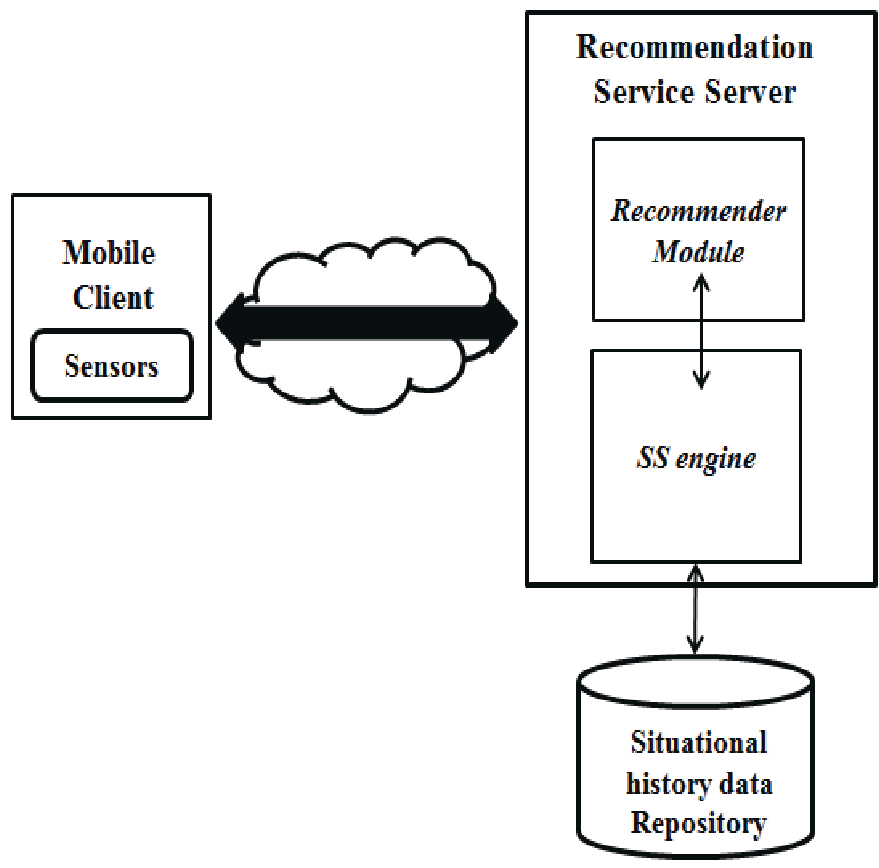 Figure 1: The architecture bridging the Mobile Client (sensors) and the Recommendation Server.
Implementation: The "Hannah" Case Study
The authors validated their theory with a music recommendation prototype. They used a unique setup involving:
- Android Mobile Client: Collecting ambient data.
- EKG Sensor: Attached to the user's forearm to measure heart rate regularity (QRS interval).
In a test scenario, the user "Hannah" (female, 30s) was in a "Normal" EKG state, in a "raining" environment, in her "living room" during the "morning." The system synthesized these sensors into "Situation A" and provided a curated playlist that users in similar contexts — filtered by social authorities — had enjoyed.
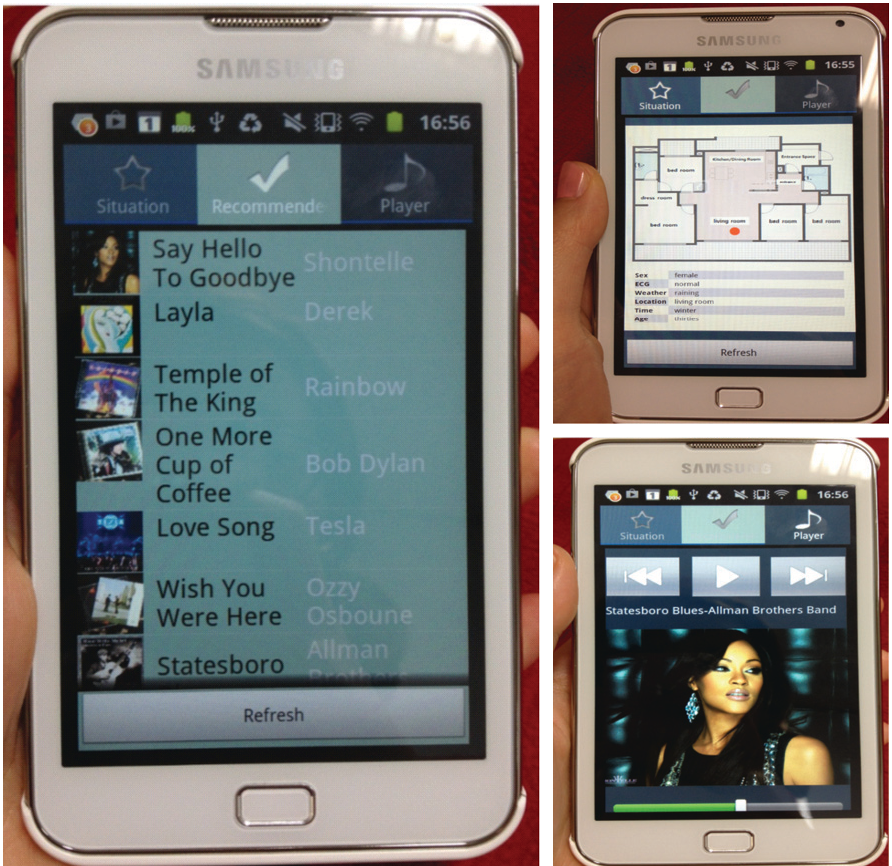 Figure 2: Real-world deployment using EKG sensors for physical state awareness.
SOTA Comparison & Experimental Insight
The paper contrasts its approach with prior works like FLAME2008 and PHM.
- Efficiency: Unlike systems that require manual "information need" inputs, this framework is passive and pervasive.
- Trust: By integrating the Social Node Influence (PageRank), it avoids the "garbage in, garbage out" problem where low-quality items from similar users get boosted.
- Hybrid Scoring: The final ranking formula, , balances Situation Suitability () and Importance Weight (), ensuring the result is both contextually relevant and socially verified.
Critical Analysis & Future Directions
Strengths: The inclusion of biometrics (EKG) alongside environmental sensors provides a much higher resolution of "context" than previous mobile-only attempts.
Limitations:
- Scalability: The authors admit they haven't tested the PageRank/Similarity hybrid on massive datasets (millions of users).
- Privacy: The paper is silent on the privacy implications of continuously streaming heartbeat and location data to a central server.
The Takeaway: This work shifts the focus of recommendation from "Who are you?" to "Where are you, and how do you feel?" It paves the way for future AI assistants that don't wait for a prompt but act based on the user's biological and environmental pulse.