
Beyond the 'Holy Grail': Why Social Dynamics Kill e-Health Interoperability
Ski hill injuries and ghost charts: Socio-technical issues in achieving e-Health interoperability across jurisdictions
This paper explores the socio-technical barriers to e-Health interoperability through ethnographic case studies on "ghost charts" and pre-hospital care handovers. It argues that achieving interoperability requires addressing discipline-specific information needs and organizational complexities rather than just technical standards.
TL;DR
Interoperability in healthcare is often pursued as a purely technical quest for standardized data formats. However, this paper reveals that the real blockers are socio-technical: the "ghost charts" clinicians keep to get work done and the fragmented data chains in pre-hospital care. True interoperability requires a shift from technical connectivity to supporting the "invisible" logic of clinical workflows.
The "Ghost" in the Machine: Why Clinicians Create Workarounds
In the world of health informatics, the "official" patient record is supposed to be the single source of truth. Yet, walk into any ambulatory clinic, and you'll find "ghost charts"—unauthorized, locally maintained duplicate records.
The authors' ethnographic study reveals that these aren't signs of inefficiency, but essential tools for survival. Ghost charts exist because:
- System Rigidity: Official records can't be in two places at once; ghost charts provide instant access for unscheduled patient calls.
- Discipline-Specific Needs: A specialist needs a "face sheet" with a specific anatomical diagram that a generic EHR doesn't provide.
- The Research Gap: Researchers use ghost charts to cluster patient data for longitudinal studies—a task the archival hospital record makes nearly impossible.
Case Study: The Anatomy of a Ski Hill Injury
The second case study follows the harrowing data trail of a skier injured on a mountain. Before reaching definitive care, the patient’s information passes through 7 handovers across 5 jurisdictions (Ski Patrol, Ambulance, Urgent Care, etc.).
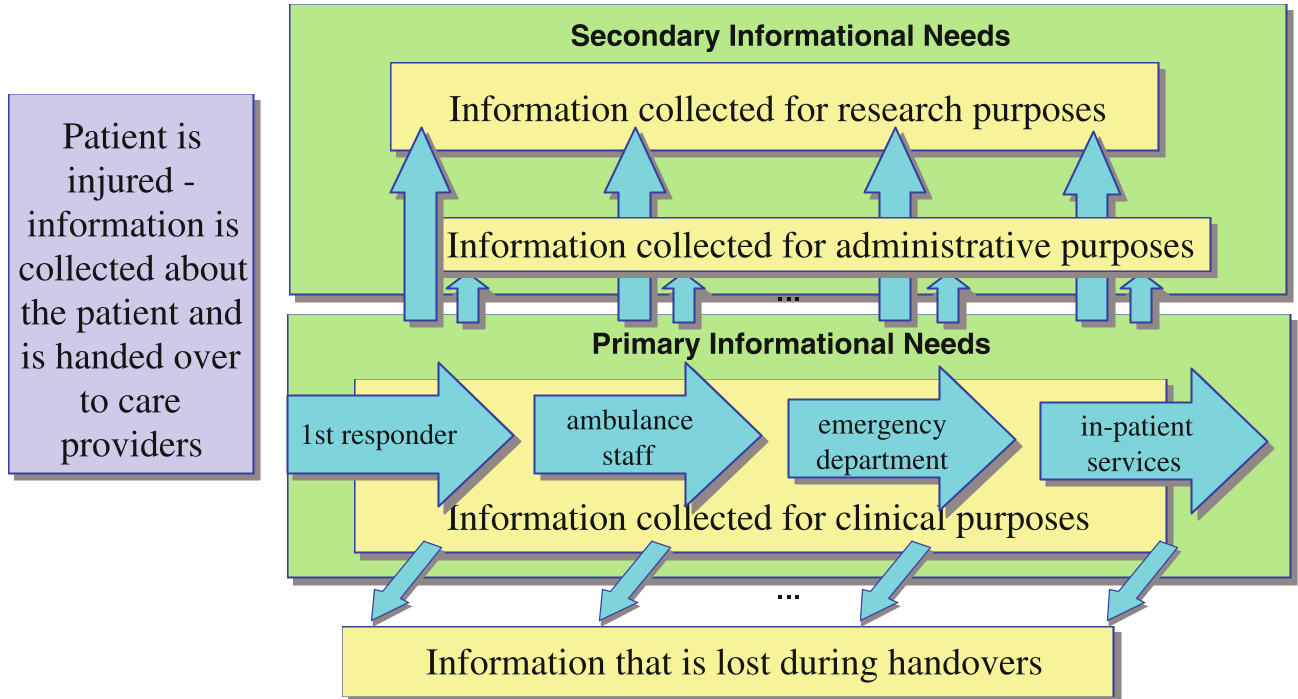
The breakdown occurs because:
- Environmental Constraints: A patroller in -20°C weather writes in a waterproof notebook; this data must then be transcribed into complex forms for insurance and workers' compensation boards.
- Conflicting Motives: The first responder prioritizes "life and limb," while the administrative systems demand data on "rental equipment" or "accident witnesses."
- Data Attrition: During each handover, "secondary" information (crucial for research and outcomes) is discarded to focus on "primary" clinical needs.
Methodology: High-Fidelity Ethnography
The researchers didn't just look at logs; they performed "chart archaeology," tracking every piece of paper and sticky note to understand the flow of information.
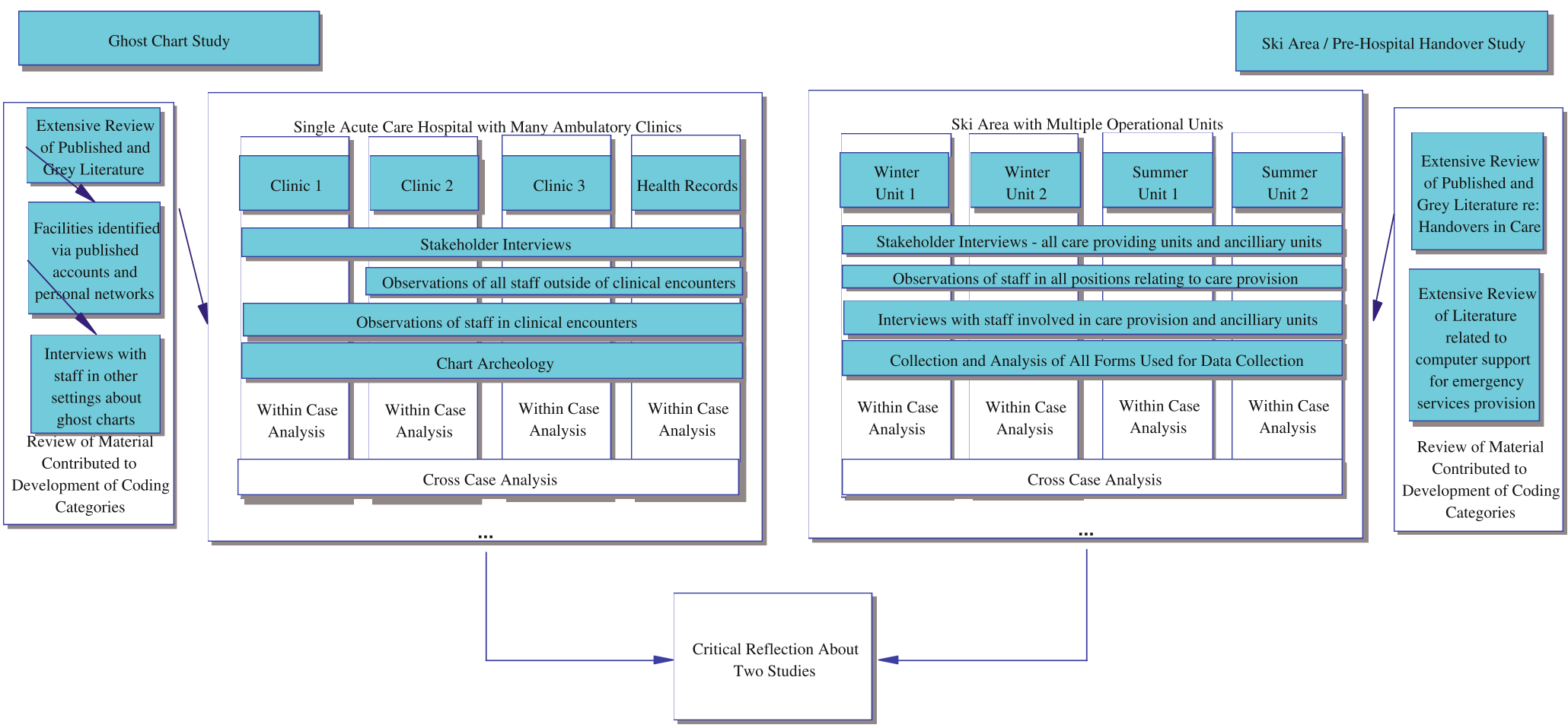
Deep Insight: Interoperability as a "Dynamic Achievement"
The most profound takeaway is that interoperability is not a destination. Because healthcare systems are always in flux—upgrading, merging, or changing regulations—interoperability must be treated as a continuous maintenance task.
The authors suggest that instead of forcing every stakeholder into a rigid data model, we must design for:
- Discipline-Specific Lenses: Allow different providers to "see" the patient through their own specialized data views.
- Ancillary Inclusion: Bring non-medical stakeholders (like workers' comp and insurance) to the table early in the design phase.
- Hybrid Flexibility: Incorporating features like document scanning can prevent data loss when automated data fields fail to align during system upgrades.
Conclusion: From Technical to Process Interoperability
If we want to reach the "Holy Grail" of a truly connected health system, we must stop treating it as a software problem. We must account for the professional, ethical, and organizational domains that dictate how data is actually handled. Until our digital systems support the management and relational continuity that "ghost charts" currently facilitate, clinicians will continue to work in the shadows.