
Skilled and Mobile: Decoding the Migration Logic of Elite AI Talent
Skilled and Mobile: Survey Evidence of AI Researchers' Immigration Preferences
This study presents survey evidence (n = 524) from top-tier AI researchers (NeurIPS/ICML authors) regarding their immigration preferences and drivers. It identifies the U.S., U.K., and Canada as primary destinations while highlighting that professional opportunities and immigration policies are critical determinants of talent flow.
The global race for Artificial Intelligence dominance is often framed as a battle of compute and data. However, the most critical "compute" resides in the minds of a few thousand elite researchers. A seminal paper, “Skilled and Mobile: Survey Evidence of AI Researchers’ Immigration Preferences,” provides a rare, direct look into the minds of the people building the future of SOTA models.
TL;DR
By surveying authors from NeurIPS and ICML, researchers found that while the U.S. is the undisputed "Gravity Well" for AI talent, its restrictive immigration policies are perceived as a systemic risk to its research edge. Conversely, countries like China face "soft power" hurdles—struggling to attract international talent despite massive R&D spending.
The "Why": Professional Opportunity is King
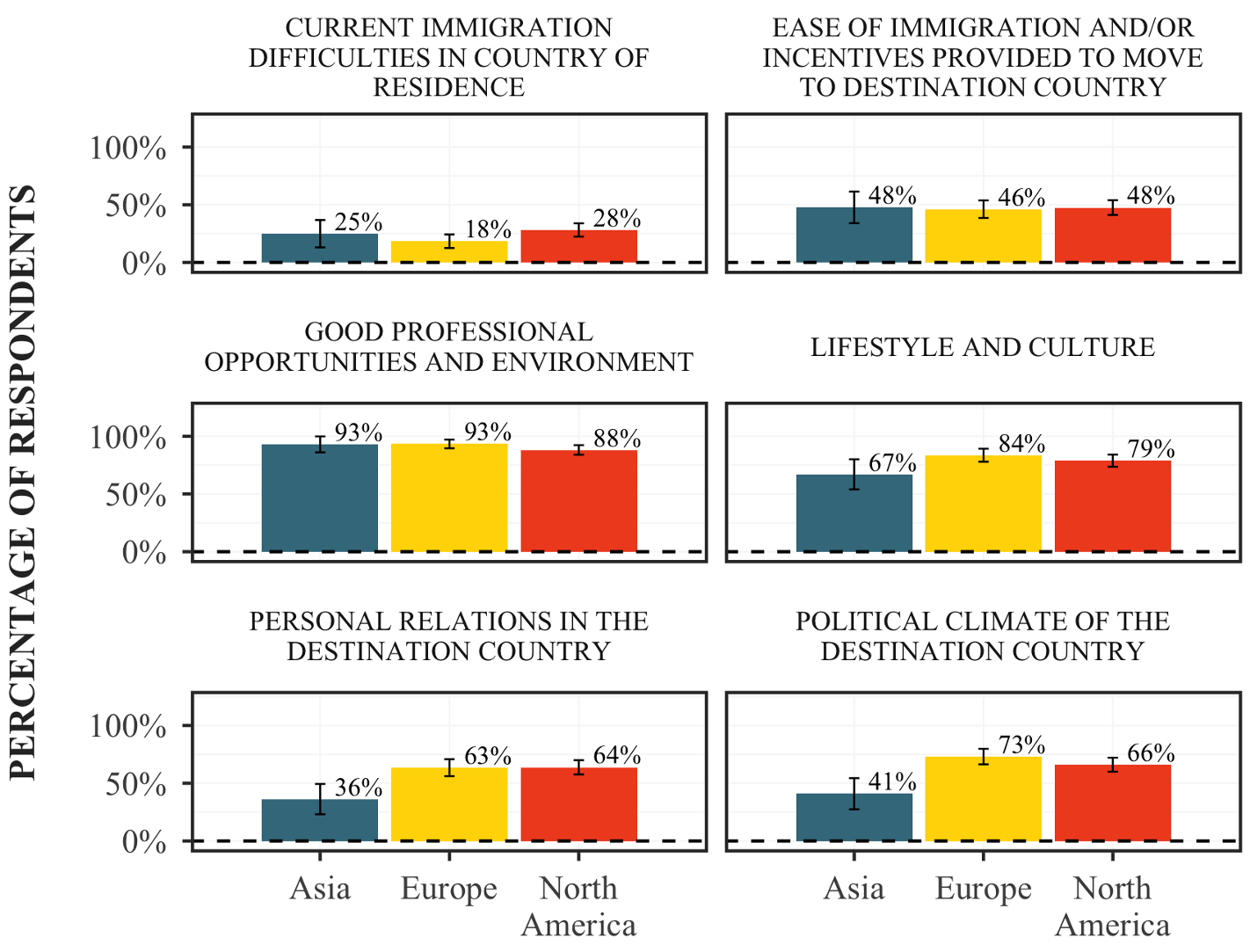
The study invalidates the idea that high-skill migration is driven purely by salary or tax incentives. Instead, it reveals a hierarchy of needs for AI researchers:
- Professional Ecosystem (91%): Access to world-class colleagues, compute, and labs.
- Lifestyle & Culture (79%): The "livability" of the research hub.
- Political Climate (66%): Increasingly, the stability and openness of a nation influence long-term commitments.
The US Paradox: Immense Appeal, High Friction
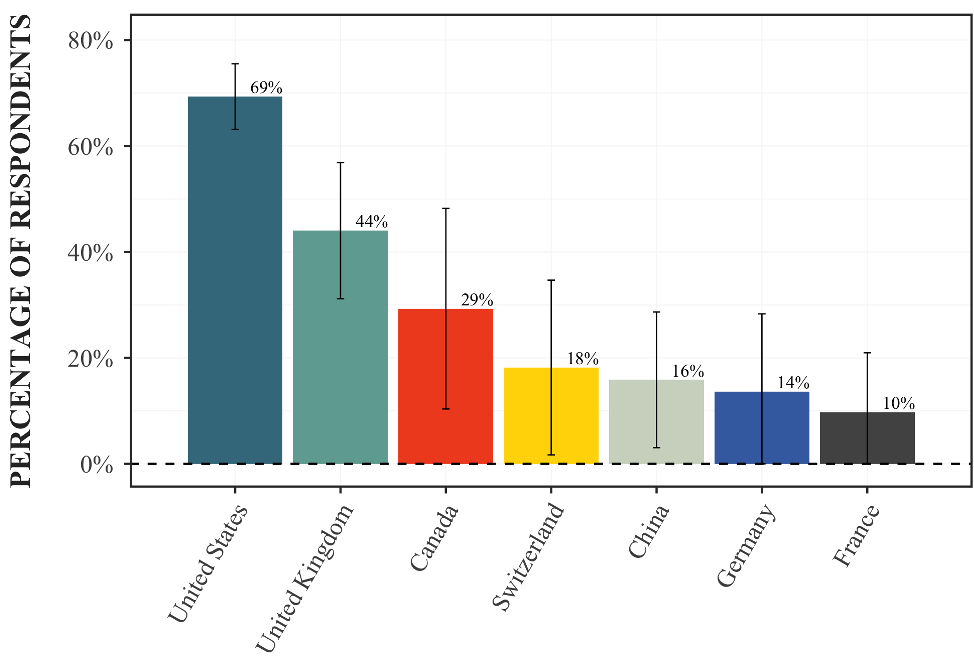
The U.S. leads the world in "attractiveness," with 58% of non-residents expressing a high likelihood of moving there. However, the data exposes a glaring vulnerability: 69% of U.S.-based researchers identify visa and immigration problems as a "serious problem" for conducting high-quality research.
This suggests that the U.S. is winning despite its policy framework, not because of it. For non-citizens (proxied by undergraduate degree location), this friction is even more acute—40% of foreign researchers in the US cite current immigration difficulties as a primary factor motivating their next move.
Regional Nuances: The "Home Field" Advantage
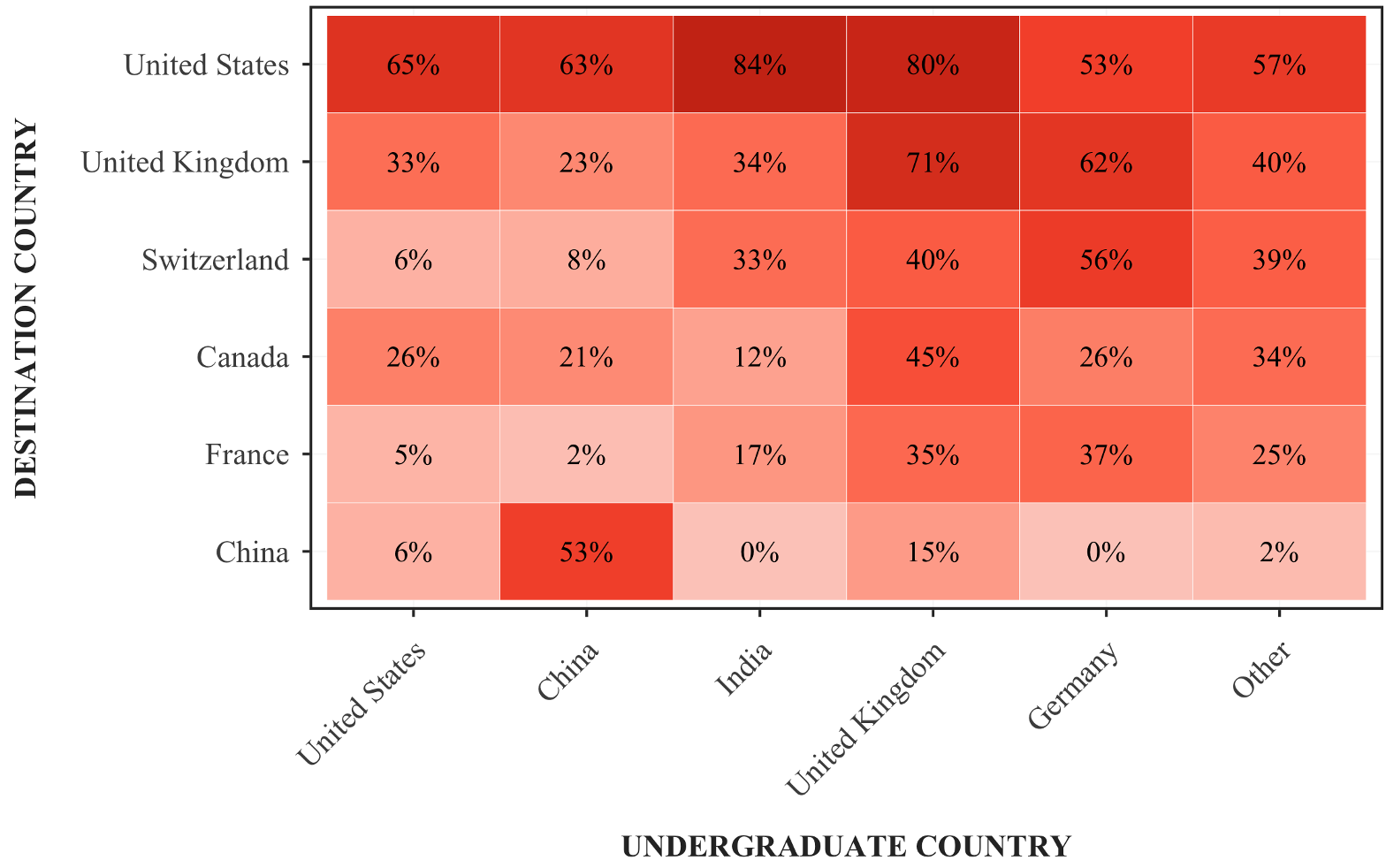
The study highlights interesting regional dynamics:
- China: Primarily attracts those who completed their undergraduate degrees there (53%). It struggles to attract "external" talent from Europe or the U.S., facing hurdles in culture and political climate.
- Switzerland & France: Show high retention rates and are perceived to have modern, efficient immigration systems with minimal bureaucratic friction compared to the Anglosphere (U.S., U.K., Canada).
Critical Insight: The Regulatory Inductive Bias
From the perspective of AI governance, this paper suggests that the Inductive Bias of a nation's immigration system directly shapes its innovation trajectory. The U.S. creates "administrative noise" that may eventually push talent toward more "electronically-efficient" visa regimes like Canada’s fast-track systems or Europe’s tech visas.
Conclusion & Takeaways
The paper concludes that AI researchers are a "highly mobile workforce" where at least two-thirds are open to relocating based on where professional opportunities and ease of living align.
- For Policy Makers: High-quality research isn't just about grants; it's about the legal "bandwidth" to keep talent in the country.
- For Researchers: This data provides a benchmark for understanding that the "immigration struggle" in the U.S. is a shared, structural experience, not a personal one.
Future Work: As AI becomes more "geopolitically sensitive" (e.g., export controls on talent or knowledge), tracking how the "Political Climate" factor evolves will be crucial for predicting the next shift in the global AI landscape.