
The MIS Skillset Revolution: Why "Soft" is the New "Hard" in the Enterprise Job Market
Skills in the management oriented IS and enterprise system job markets
This research presents a large-scale data mining analysis of the U.S. MIS job market, filtering over 2.7 million job advertisements down to 640,000 specific MIS roles. It identifies a distinct shift toward soft skills and business acumen, establishing a clear differentiation between management-oriented IS roles and technical IT positions.
TL;DR
In an era of economic turmoil and technological shifts, the definition of a "qualified" MIS graduate is moving away from pure coding toward business leadership. Analyzing 640,000 U.S. job ads, this study confirms that Management-oriented IS (MIS) roles now prioritize supervision, security, and enterprise-wide integration (SAP) over deep programming expertise, effectively bridging the gap between technical execution and business strategy.
The Problem: The Hard vs. Soft Skills Paradox
For decades, academia and industry have argued over what makes a successful IS professional.
- Traditional Surveys often highlighted "soft skills" (communication, ethics).
- Previous Job Ad Studies suggested "hard skills" (coding, logic) were the only things that mattered for getting hired.
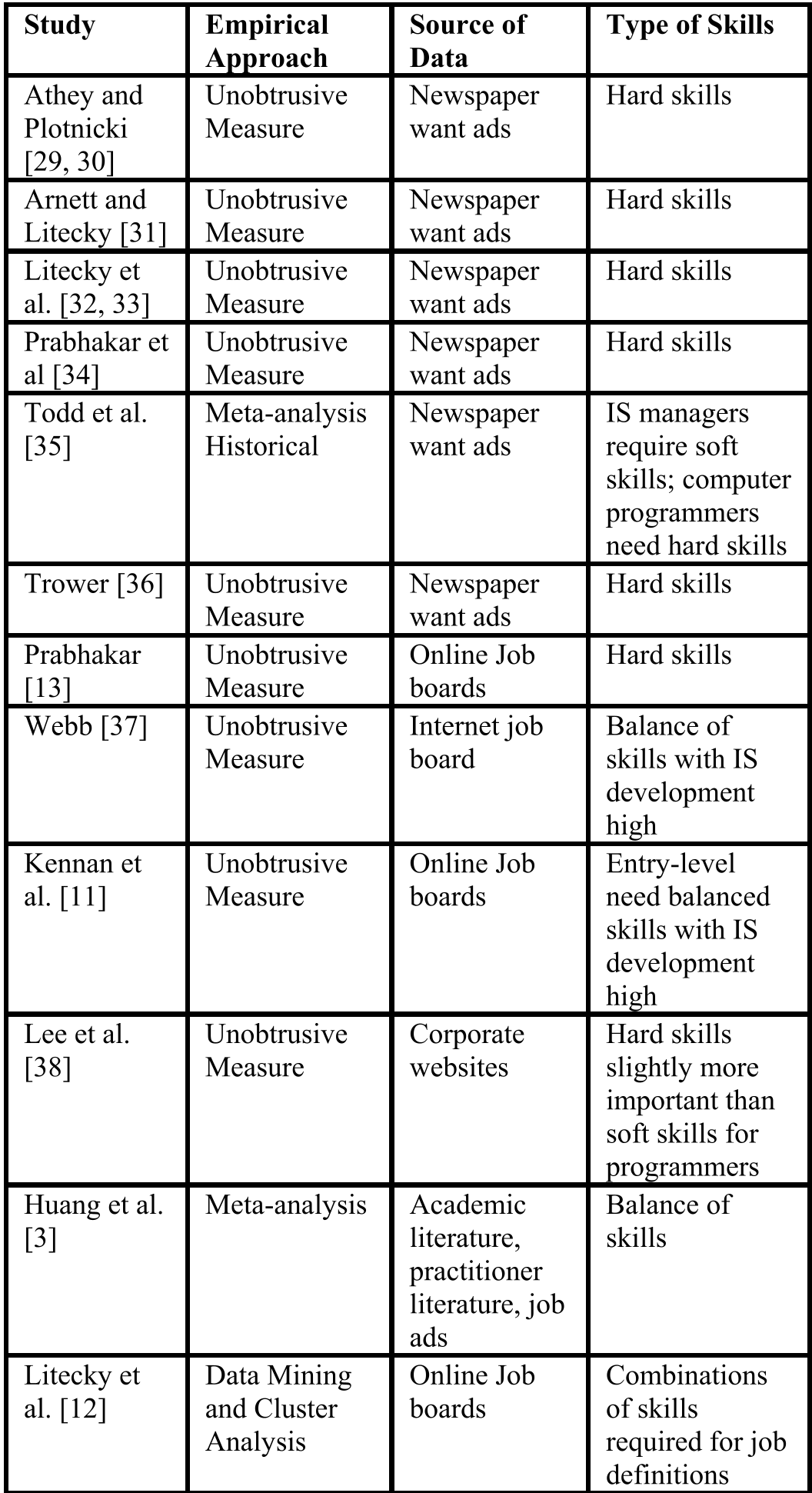
The authors identify this as a "two-stage" problem: technical skills act as a filtration criterion (the "ticket" to the interview), while soft skills determine the final hiring decision. However, as the global economy fluctuates, the "ticket" itself is changing.
Methodology: Mining 2.7 Million Opportunities
Unlike previous studies that looked at a few hundred ads, this research employed a massive data-mining approach:
- Source: Crawled five major U.S. job boards (Monster, Dice, CareerBuilder, etc.).
- Context: Filtered specifically for ads requiring MIS, CIS, or related management-computing degrees.
- Thesaurus-Based Extraction: Used a custom-built dictionary to categorize skills into Business, Soft, and Technical clusters.
The Core Insight: The MIS Identity
The results highlight a significant "Identity Crisis" solved. MIS roles are uniquely positioned in the job market, distinct from Computer Science (CS) or general IT.
1. Management and Business as Priority
The top skill demanded in MIS ads was Managing/Supervision (48%), followed by Quality (29%) and Financial (28%). This validates the "Management" in Management Information Systems. MIS professionals are no longer just "the computer people"; they are expected to understand strategy, accounting, and marketing.
2. The Shift in Technical Proficiency
While programming remains relevant, it is no longer the "alpha" skill for MIS.
- SQL (27%) and Oracle (18%) remain vital, highlighting the data-centric nature of the role.
- Security (50%) is the most frequent technical requirement, proving that "Security" is now a baseline competency for all administrators and analysts, not just specialists.
3. The Enterprise System (SAP) Phenomenon
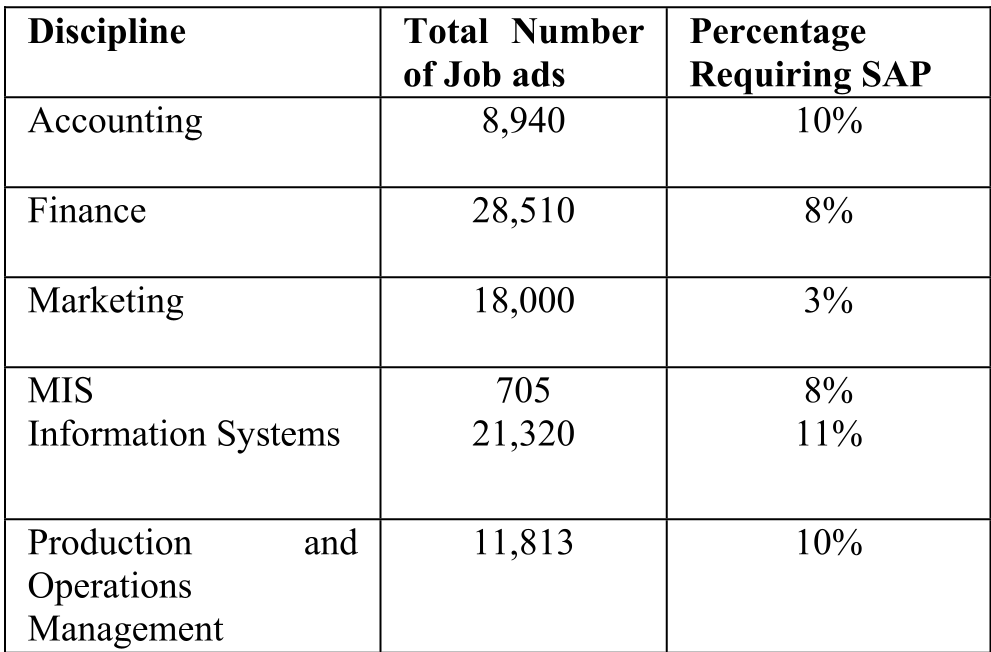
A critical finding of this study is the "migration" of IS skills. Enterprise Systems (ES/ERP) like SAP are becoming so integrated into business that they are being listed in Accounting and Operations job ads as much as, or more than, in MIS ads.
Experimental Evidence & Market Realities
The study contrasts its findings with the Australian market and previous IT-only studies. It notes that while "General IT" roles are technical, "MIS" roles are increasingly "Hybrid."
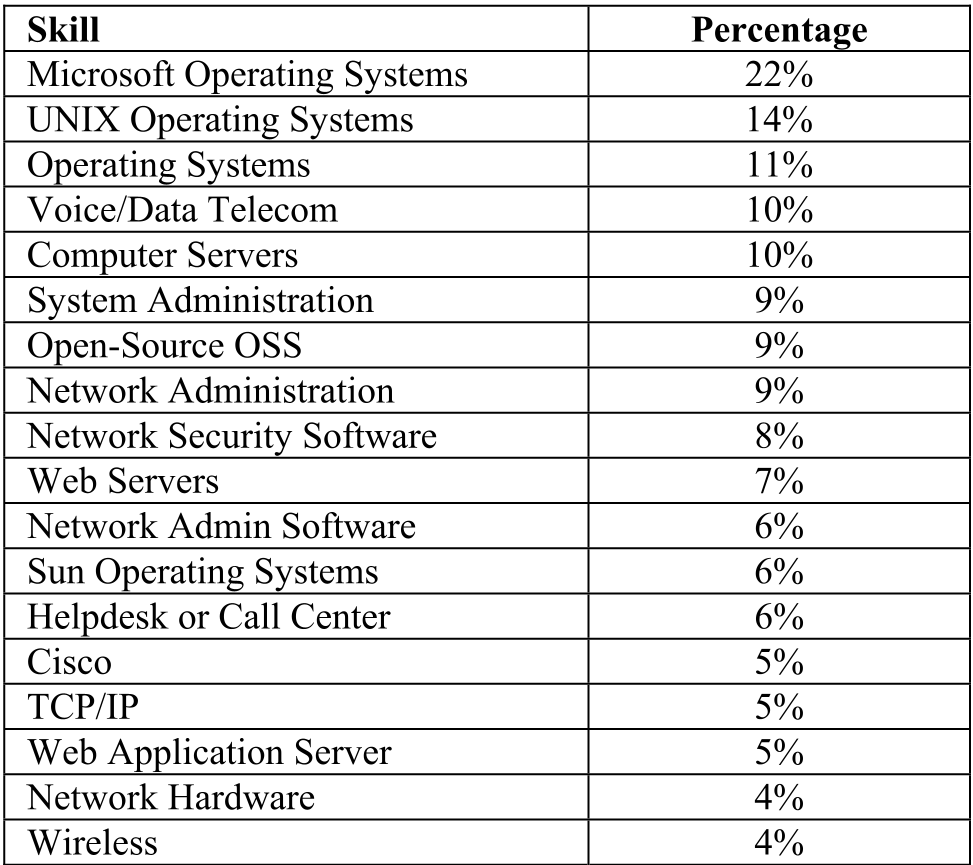
For example, Table 8 shows that Microsoft Operating Systems (22%) dominate the system administration demand for MIS grads, emphasizing a "user-facing" and "infrastructure-management" focus rather than backend kernel development.
Critical Analysis & Future Outlook
The paper concludes with a warning: The "Triple Threat" of outsourcing, the adoption of automated Enterprise Systems, and a weak economy poses a risk to traditional IS departments.
The Solution?
- Curricula Reform: Universities must stop teaching MIS as a "CS-light" program and start teaching it as an "ES-Heavy" leadership track.
- Certification: With Certification (23%) showing up as a major requirement (especially in Security), students must look beyond the degree to professional credentials.
Takeaway: The MIS professional of the future is a "Business Linguist"—someone who can speak the language of SQL and Security while leading a team through a financial audit or a marketing strategy pivot.