
BuddyClock: Why Knowing When Your Friends Sleep Reinvents Digital Intimacy
Are you sleeping?: sharing portrayed sleeping status within a social network
The paper introduces BuddyClock, a network-enabled alarm clock designed to share "portrayed sleeping status" within small social circles. It utilizes a simple icon-based interface on a bedside device to foster remote awareness and intimacy, achieving increased social connectedness through a 6-week deployment study across five social networks.
TL;DR
Researchers from CMU and the University of Washington have transformed the humble alarm clock into a social awareness tool. By sharing simple sleep/wake triggers across a network, BuddyClock proves that "analog" social cues (like knowing if a light is on) are more powerful than complex data for building remote intimacy.
Positioning: This work is a seminal exploration in Socially Translucent Systems, moving away from "tracking" and toward "sharing" as a means of behavioral influence.
The Problem: The "Silent" Gap in Remote Links
In a shared household, we naturally sense the "rhythm" of our peers—the floorboards creaking in the morning or the light slipping under a door at night. This is implicit contextual information. Digital communication (Text, Zoom) is explicit and demanding; it requires an active "ping."
The authors identified that remote friends and family lack this "low-bandwidth" peripheral awareness. Without it, we don't know when it's socially appropriate to call, and we lose the subtle sense of "living together" that defines close relationships.
Methodology: The Power of "Portrayed" Status
Rather than using invasive bed sensors or cameras, the researchers chose the Alarm Clock—an object already tied to the ritual of sleep.
The BuddyClock Interface
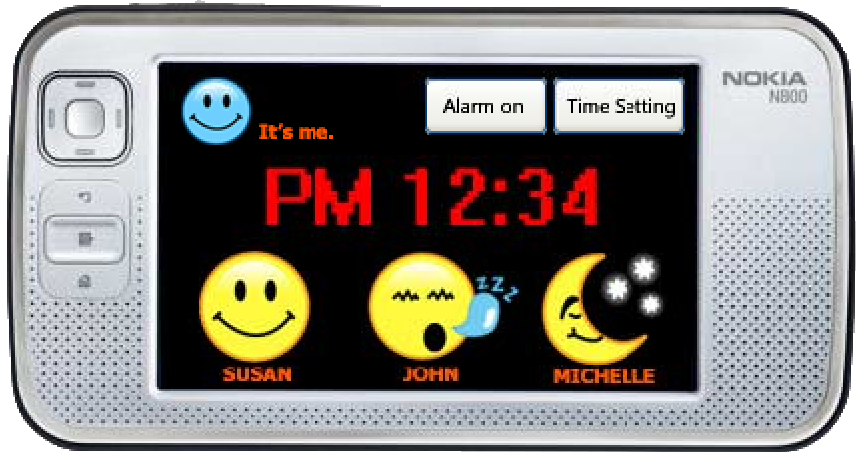
The system (built on Nokia N800 tablets) displays a simple set of icons:
- Zzz: Alarm set (Assumed Asleep)
- Snooze: Struggling to wake up.
- Smiley Face: Alarm turned off (Assumed Awake).
The Logic of Plausible Deniability
A key insight here is the Assumption of Portrayal. Because the status is triggered by the alarm, not a sensor, users retain control. If you don't want people to know you're staying up late to watch a movie, you simply don't set the alarm. This "manual" agency solves the privacy-utility paradox that kills most tracking apps.
Behavioral Insights: Beyond Just Data
The 6-week study revealed several profound social phenomena:
- The "Do-Not-Disturb" Indicator: BuddyClock became a social gatekeeper. Participants would check the clock before texting, choosing to wait if the "Asleep" icon was active.
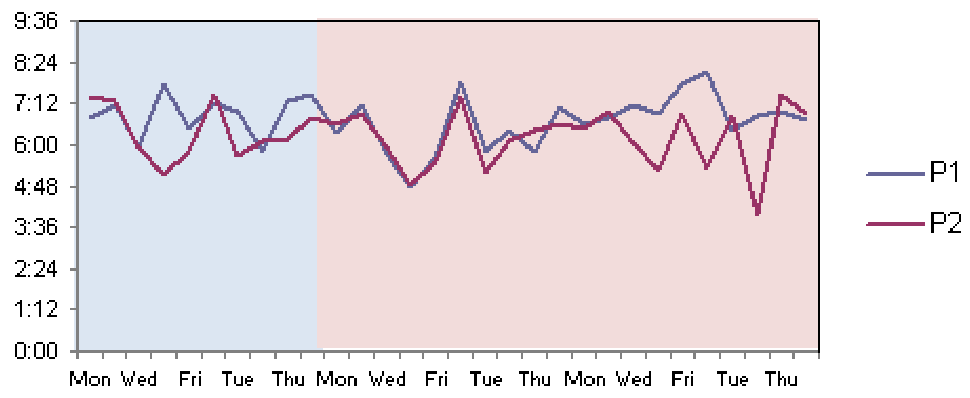
- Synchronicity as Bonding: For a dating couple in the study, their wake-up times became almost perfectly synchronized over time. The shared "rhythm" acted as a digital proxy for physical proximity.
- Social Calibration: Seeing a friend wake up at 6:00 AM every day acted as a "gentle shame" mechanism for participants who felt they were oversleeping, prompting them to reflect on their own health.
Critical Analysis & Conclusion
The Takeaway
BuddyClock succeeds because it respects the social protocol of sleep. It doesn't treat sleep as a "metric" (like a Fitbit), but as a status of availability.
Limitations & Future
The study was conducted with relatively young participants (20s-30s) who have flexible schedules. A major limitation is the reliance on the manual trigger—if a user forgets to use the alarm, the "portrayal" breaks. However, the future of this tech lies in Smart Home integration, where sleep status could automatically silence notifications across all devices, creating a "digital quiet hour" enforced by social awareness rather than rigid algorithms.
The verdict: Intimacy doesn't need high-definition video; sometimes, it just needs to know that a friend, somewhere far away, just hit the snooze button.