
SlideWiki: Breaking the Silos of Corporate Knowledge through Collaborative Presentations
SlideWiki: Elicitation and Sharing of Corporate Knowledge Using Presentations
This paper introduces SlideWiki, a crowdsourcing platform designed to transform corporate presentations into semi-structured, shared organizational knowledge. By applying Web 2.0 and Wiki paradigms to slide decks, it enables collaborative authoring, versioning, and social networking for enterprise knowledge management.
TL;DR
Corporate knowledge is often "locked" in offline presentation files (.pptx), making it nearly impossible to search, reuse, or collaboratively refine. SlideWiki is an open-source platform that brings the GitHub/Wiki philosophy to presentations. It allows teams to fork slide decks, track granular changes, and treat slides as modular, semi-structured data that can be queried and linked across an organization.
The Problem: The "Black Hole" of Slide Decks
In modern enterprises, executives spend nearly 50% of their time in meetings, where presentations are the primary currency of knowledge. However, this knowledge suffers from several critical failure points:
- The Reuse Gap: Slides stay on local hard drives. New employees often recreate slides that already exist elsewhere.
- The Versioning Nightmare: Identifying the "latest" version involves manually opening dozens of files and comparing text.
- The Interaction Deficit: Traditional slides are a one-way street; there is no structured way for the "crowd" to provide feedback or turn content into training materials.
Methodology: High-Level Architecture
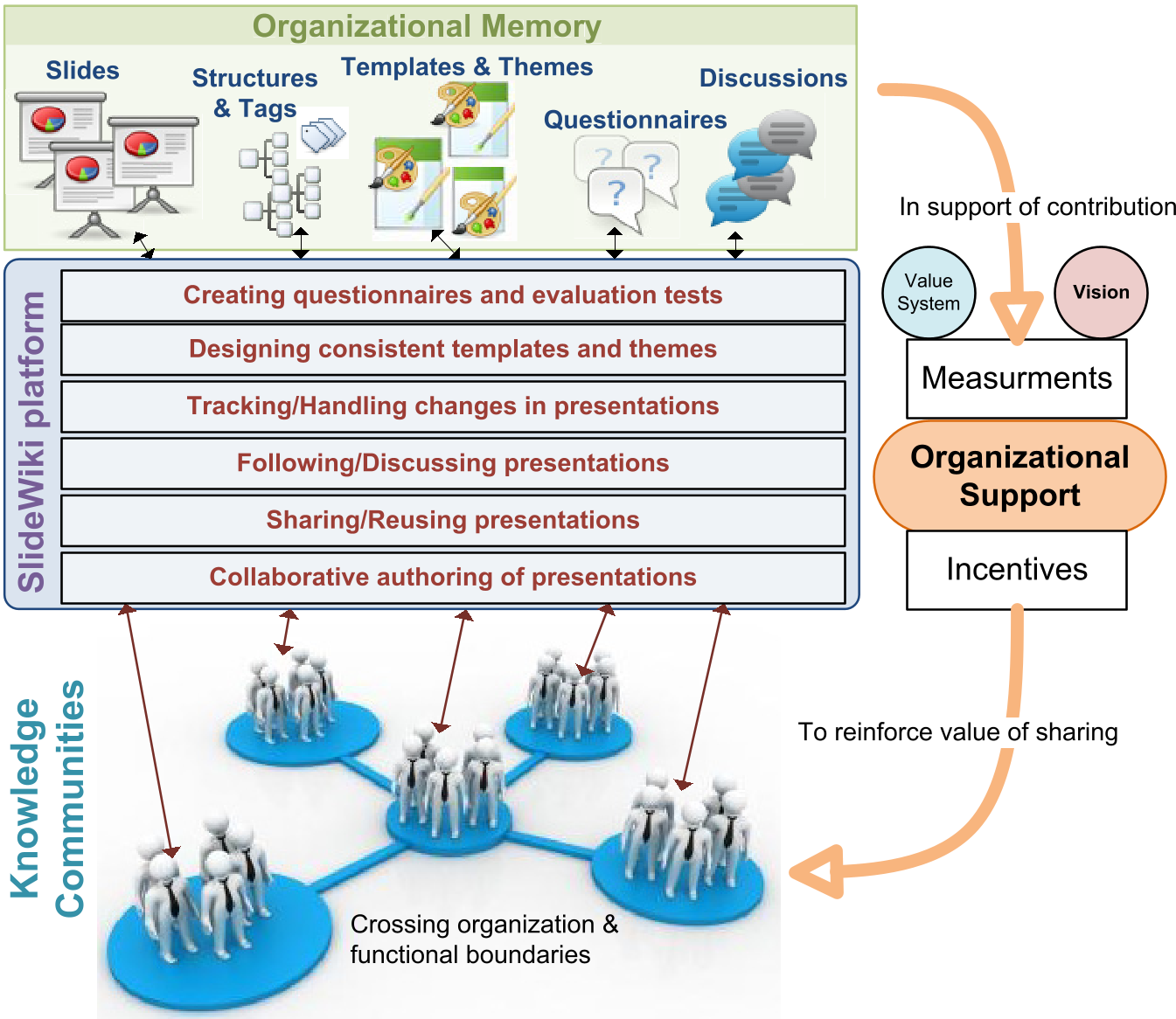
SlideWiki isn't just a Google Slides clone; it is a Knowledge Engineering tool. The architecture is built on the PLANT SEEDS framework, focusing on discoverability and ecosystem integration.
1. The Wiki Paradigm applied to Slides
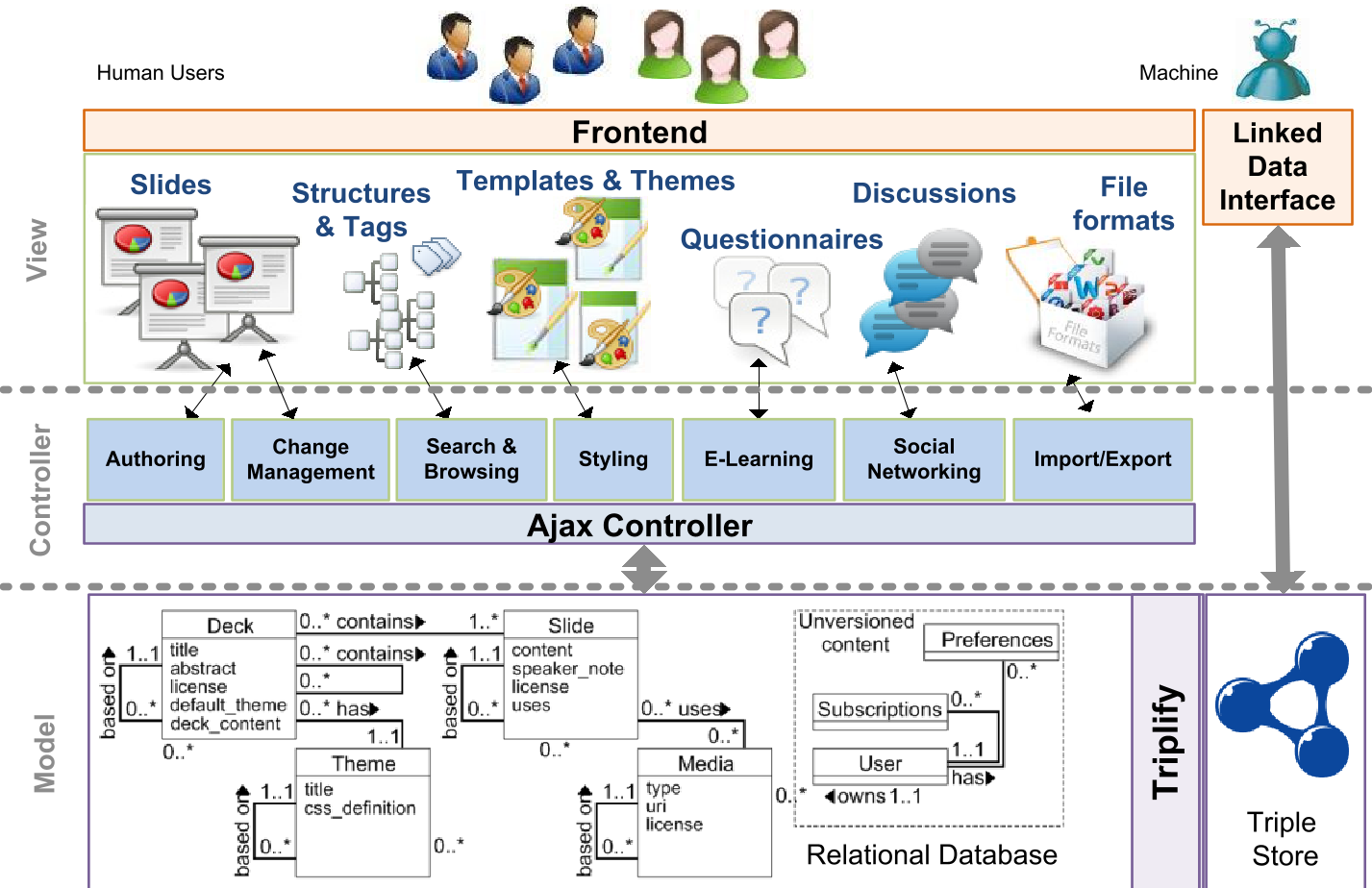
Unlike traditional editors, every slide and deck in SlideWiki is versioned. The system uses a recursive revision strategy: if a user edits a slide, not only is a new slide revision created, but the parent decks are also versioned if necessary. This ensures data integrity while allowing for the "forking" of decks for different contexts.
2. From Content to Linked Data
One of the most innovative features is the Linked Data Interface. Using the Triplify tool, SlideWiki maps its relational database content into RDF (Resource Description Framework). This transforms a presentation from a mere visual aid into a node in the "Data Web," allowing other enterprise systems to query slide content as structured metadata.
3. Change Management Logic
Managing revisions in a hierarchical deck structure is complex. SlideWiki implements a logic that triggers a new revision only under specific circumstances (e.g., identity change of the editor, or use of the deck in other contexts) to avoid "version bloat."
Experiments & Results
The authors conducted a usability study focusing on "Data Model Transparency"—can users handle the complexity of versioning without being overwhelmed?
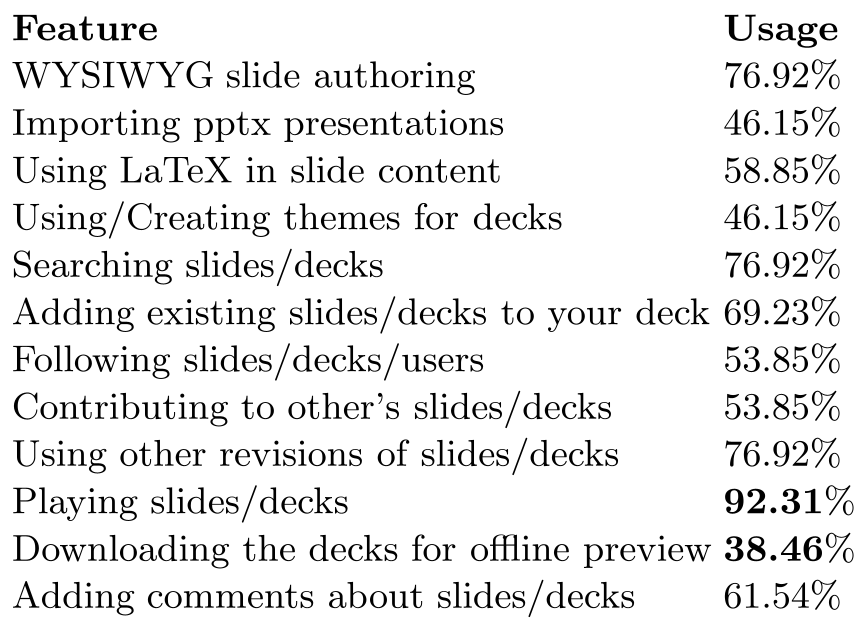
- Usability Score: On the System Usability Scale (SUS), SlideWiki scored 69.62, which is considered "Good" for a specialist tool developed in a short timeframe.
- Feature Adoption:
- 76.92% of users utilized the revision system.
- 69.23% reused existing slides in their own decks.
- Interoperability: The platform demonstrated successful import/export functionality for
.pptx,SVG, anddeck.js.
Critical Insight: Why This Matters
The core genius of SlideWiki isn't the editor—it's the Social Structure. By treating a presentation as a "Social Object," the authors allow for Ghost Sliding (collaborative hypothesis testing) and crowdsourced organizational memory.
Limitations
- Formatting Friction: Transitioning from the pixel-perfect control of PowerPoint to a web-based WYSIWYG can be frustrating for design-heavy users.
- Initial Seeding: Like any Wiki, the platform requires a "Tipping Point" of content to be useful, which requires strong leadership nudges in a corporate setting.
Conclusion
SlideWiki demonstrates that presentations should be treated as Living Documents. By combining the collaborative power of Wikis with the structured nature of Linked Data, organizations can stop losing their best ideas to the "delete" key and start building a collective, searchable memory.
Takeaway for the Industry: For AI-driven knowledge management in the future, the format of our data matters. Moving from opaque binary files (.pptx) to structured HTML5/RDF formats is the first step toward building truly "intelligent" organizations.