
ELM on Spark: Scaling Sentiment Analysis with Statistical Learning Theory
SLT-Based ELM for Big Social Data Analysis
This paper presents a high-performance framework for big social data analysis, integrating Extreme Learning Machines (ELM) with Apache Spark's distributed memory computing. The authors specifically address emotion recognition and polarity detection, achieving superior accuracy compared to traditional SVMs and Random Forests while ensuring scalability through Statistical Learning Theory (SLT) based model selection.
TL;DR
Big social data requires more than just massive compute; it requires mathematically sound models that don't break under pressure. This paper combines Extreme Learning Machines (ELM)—known for their blazing training speeds—with Apache Spark and Statistical Learning Theory (SLT). The result is a system that not only processes sentiment data in parallel but also uses "stability" metrics to pick the best model without the exhaustive cost of traditional cross-validation.
Contextual Positioning
In the landscape of Big Data, we often choose between the "efficiency" of shallow learners and the "power" of Deep Learning. This work bridges that gap by optimizing ELM—a model that mimics the benefits of deep architectures through random projections—for a distributed cloud environment. It moves beyond simple "accuracy hunting" by rooting model selection in the rigorous framework of SLT.
The Problem: The Matrix Inversion Bottleneck
Original ELM implementations rely on the Moore-Penrose pseudo-inverse: While elegant, computing for a dataset with millions of rows is a distributed computing nightmare. Matrix inversion is notoriously difficult to fragment across a cluster. Furthermore, the "No-Free-Lunch" theorem reminds us that simply having "more data" doesn't guarantee a better model; we need a way to quantify the generalization error—the gap between training performance and real-world performance—without spending weeks on k-fold cross-validation.
Methodology: Distributing the "Extreme"
The authors solve the computational hurdle by reframing ELM training as a Stochastic Gradient Descent (SGD) problem on Spark.
1. Parallel Architectures on Spark
The framework utilizes two distinct strategies based on the hidden layer size ():
- Strategy A (Small ): Precompute the activation matrix and keep it in RAM (Algorithm 2).
- Strategy B (Large ): Recompute projections "on-the-fly" to avoid memory overflow (Algorithm 3), trading CPU cycles for memory stability.

2. SLT-Based Model Selection
The paper introduces Bag of Little Hypothesis Stabilities (BLHS). Unlike standard methods that resample the whole , BLHS trains on much smaller subsets () to estimate how "stable" the algorithm is when a single data point changes. If the model prediction remains stable, the generalization error is guaranteed to be low.
Experimental Battleground: Affective Analogical Reasoning
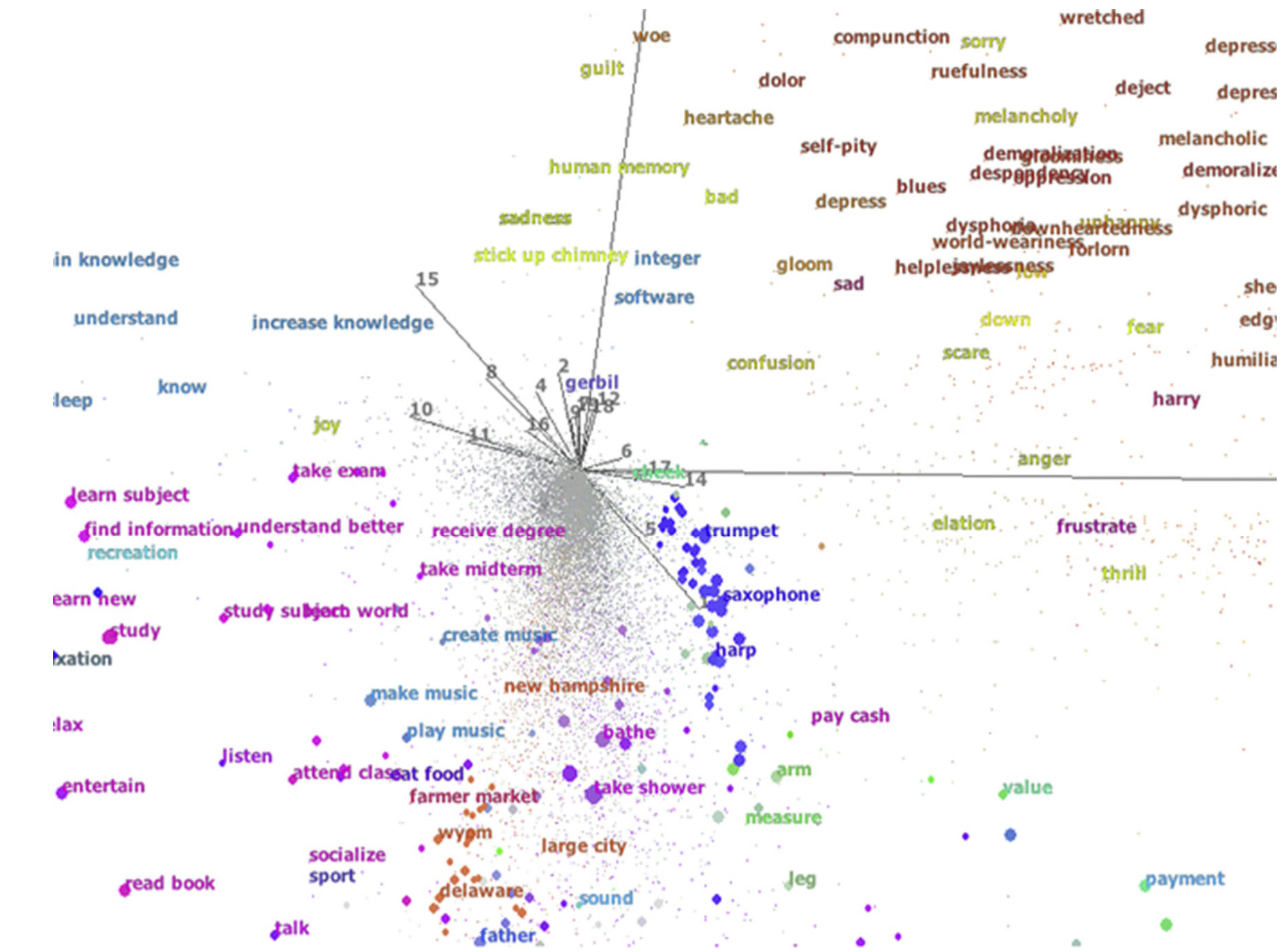
The model was tested on AffectiveSpace 1 & 2, mapping common-sense concepts to emotional dimensions (Pleasantness, Attention, Sensitivity, Aptitude).
SOTA Comparison
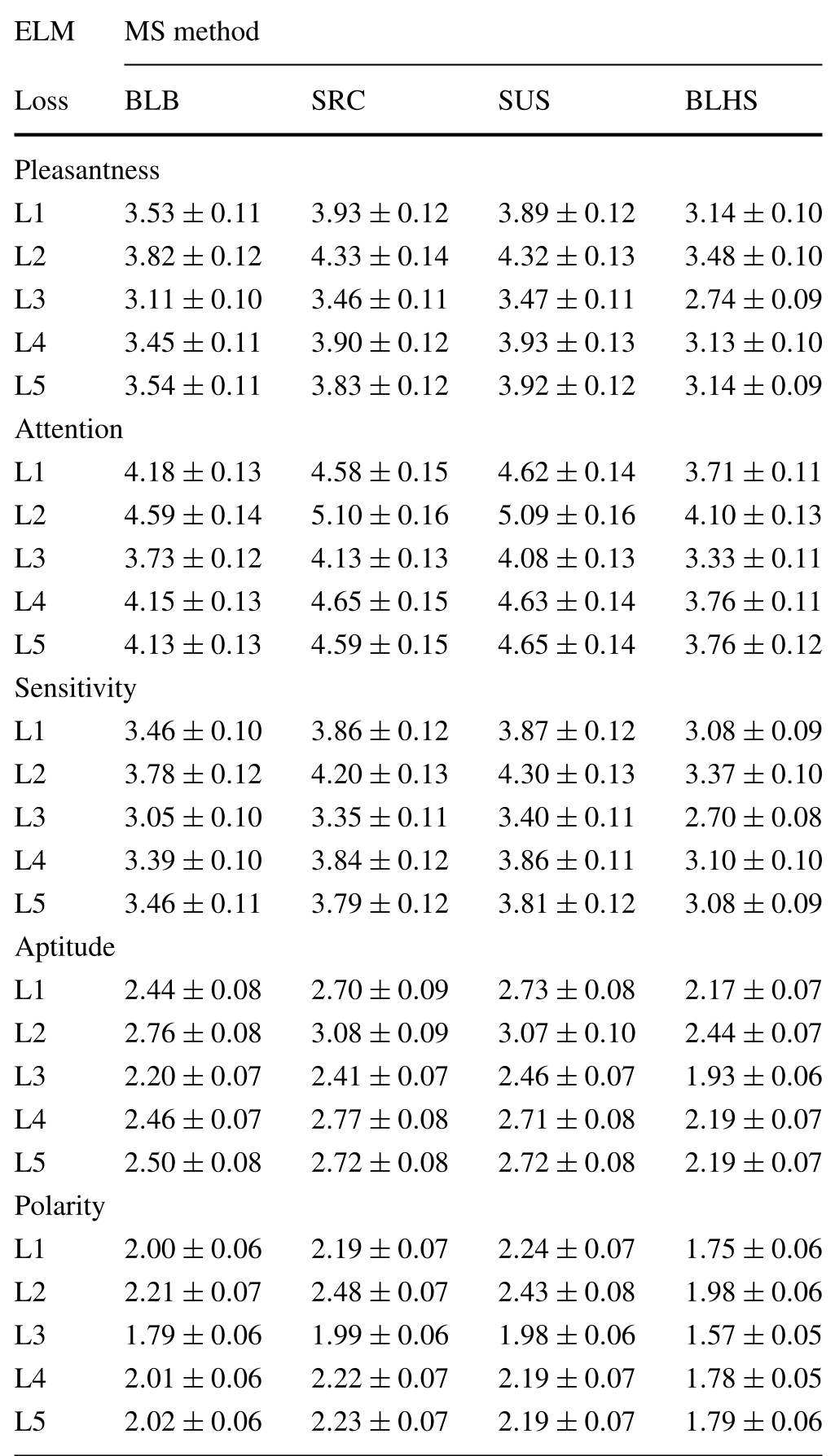
The ELM with the L3 (Hinge) loss consistently outperformed established baselines.
| Method | Polarity Error (AS2) |
|---|---|
| Proposed ELM (BLHS) | 1.57 ± 0.05 |
| Random Forest | 2.05 ± 0.07 |
| SVM (Gaussian) | 2.12 ± 0.09 |
Computational Efficiency
The authors proved that as the hidden layer complexity increases, the "on-the-fly" projection (Algorithm 3) becomes essential. When , traditional methods fail due to disk thrashing, whereas the Spark-optimized SGD approach maintains steady iteration times.
Critical Insights
- Loss Function Matters: The choice of a Hinge-typed loss (L3) provided the best results for sentiment, suggesting that maximizing the margin is more effective for binary polarity than simple least-squares (L2) in ELMs.
- Stability is the New Accuracy: The transition from Rademacher Complexity to "Hypothesis Stability" represents a shift toward more practical, data-dependent theoretical bounds that can actually be computed in a Big Data context.
Conclusion & Future Outlook
This work demonstrates that ELM is a formidable competitor for sentiment analysis when paired with Spark. The next frontier, as suggested by the authors, is Semi-Supervised Learning. Since social data is 99% unlabeled, extending these SLT-based stability bounds to include unlabeled samples could redefine how we train global-scale sentiment engines.
Takeaway: Don't just throw more hardware at your data; use stability-based model selection to ensure your "Big Data" model isn't just a "Big Noise" model.