
Small Data: The High-Leverage Architecture Hidden Within Big Data Social Networks
Small Data: Effective Data Based on Big Communication Research in Social Networks
This paper introduces the concept of "Small Data" within the context of big data communication in social networks, focusing on identifying influential nodes to optimize network performance. Using a population-based simulation of Beijing, the study demonstrates that a tiny fraction of nodes (1%) can maintain the majority of network connectivity.
TL;DR
In an era obsessed with "Big Data," this research shifts the focus to "Small Data"—the critical, high-influence nodes that anchor social networks. By analyzing topological structures in a simulation of 30 million residents, researchers found that just 1% of nodes can reach 75% of a network, proving that effectiveness, not volume, is the key to mastering big data communication.
Problem & Motivation
The sheer scale of modern social networks creates a paradox: we have more information than ever, but processing it in real-time is nearly impossible. Traditional "Big Data" approaches struggle with:
- Incomputable Complexity: The structure changes faster than algorithms can adapt.
- Resource Exhaustion: Common protocols like "Spray-and-Wait" or "Epidemic" algorithms often waste bandwidth by flooding data to inactive nodes.
- High Latency: Inefficient routing leads to massive delays in message delivery for the majority of users.
The authors argue that we shouldn't treat all data equally. Instead, we should find the "Small Data"—personalized activity loci that reflect the essential relationships within the Big Data noise.
Methodology: The Math of Influence
The core of the paper lies in its System Model, which uses weighted networks to define communities. The authors utilize the Modularization Degree () to evaluate how nodes cluster together:
Where is the total weight in a community and is the total network weight. Through five distinct theorems, the authors mathematically prove that:
- Increasing edge weights strengthens community bonds.
- Small changes in individual node weights can trigger a "re-shuffling" of the network topology, allowing for more efficient data paths.
Algorithm Design
The study proposes a dynamic algorithm to monitor these weight changes. When a node's weight increases significantly, it is identified as a potential "Small Data" node that should be prioritized for routing.
Note: The system identifies the transition of nodes between communities as weights shift, effectively filtering the most active participants.
Experiments & Results
The researchers simulated the population of Beijing (scaled to 3,000 active nodes for calculation) using the ONE (Opportunistic Networks Environment) simulator.
Key Findings:
- The 80/20 Rule: While millions of delivery events occur, only 20% of nodes are capable of delivering information at high frequency. These nodes sustain 80% of total data transmission.
- Topological Mastery: Most strikingly, 1% of nodes possessed enough neighbor connections to bridge 75% of the entire network's topology.
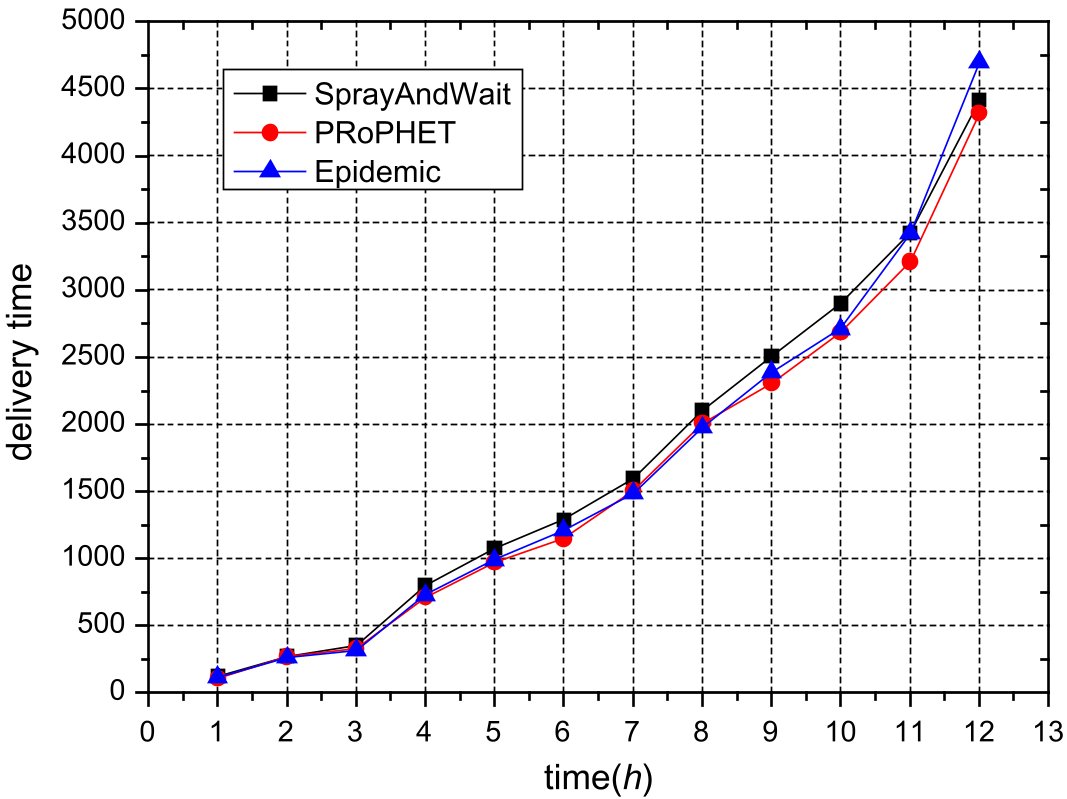 Fig 2: Data shows that as time progresses, information delivery is heavily concentrated among a select group of high-performance nodes.
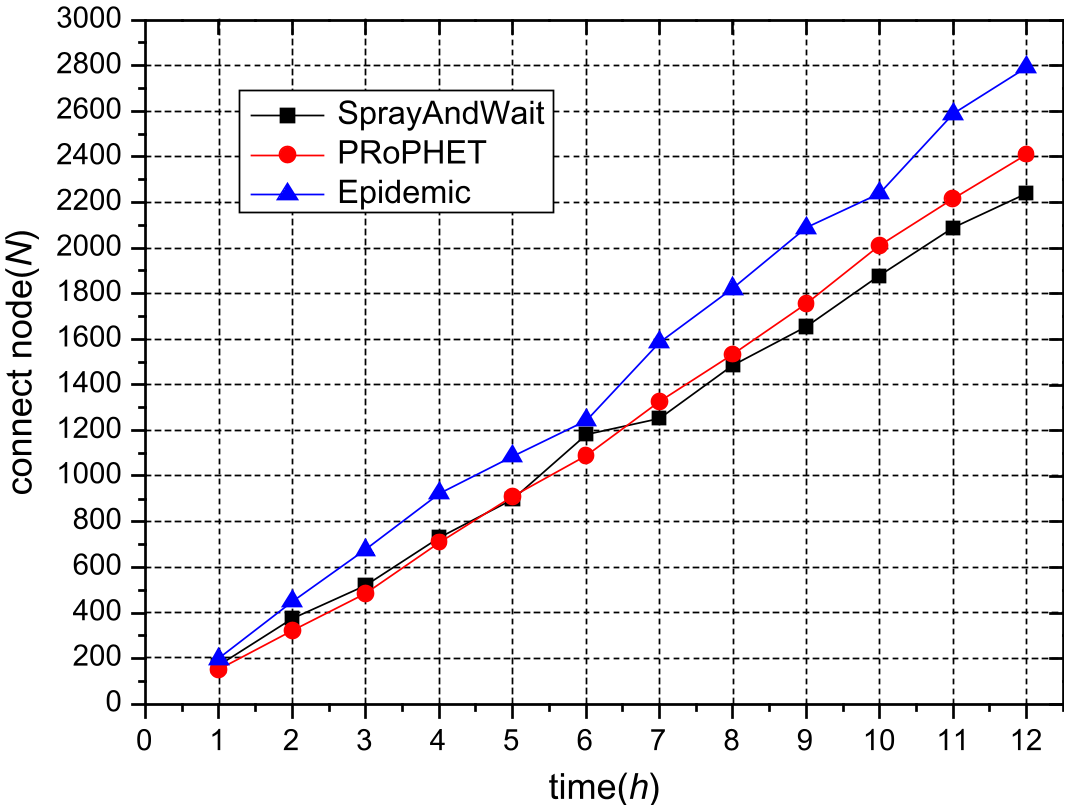 Fig 5: This chart highlights the rapid scaling of connectivity provided by influential 'Small Data' nodes over a 12-hour window.
Critical Analysis & Conclusion
Takeaway
This paper provides a refreshing perspective on the "Big Data" problem. By proving that a tiny fraction (1%) of "Small Data" nodes dictates the structural integrity of the whole, it suggests that we can optimize 5G and 6G networks not by building bigger pipes, but by identifying and empowering the most "socially active" nodes.
Limitations
- Calculated Simplification: The 1:1000 population compression simplifies the network significantly. Real-world world social dynamics might involve more "noise" that could disrupt the 1% connection threshold.
- Static Parameters: The simulation uses a 3,000-node area, whereas real-world Big Data involves billions of nodes where the modularity calculation might face its own scalability issues.
Future Outlook
The move toward "Small Data" allows for more "individuation" in AI and communication. By focusing on these high-leverage nodes, we can develop better emergency response systems and more accurate consumer recommendation engines without the overhead of processing every single byte of global traffic.