
Socialnomics in Practice: How SMEs are Transforming Social Networks into Strategic Assets
How Small and Medium Enterprises Are Using Social Networks? Evidence from the Algarve Region
This study investigates the adoption of Social Networks (SN) among Small and Medium Enterprises (SMEs) in the Algarve region of Portugal. Using Categorical Principal Component Analysis (CATPCA) and Hierarchical Clustering, the authors identify specific usage patterns and strategic alignment levels, moving beyond simple marketing to integrated business interaction.
TL;DR
Social networks are no longer just megaphones for marketing; they are becoming the backbone of SME business intelligence. This study of 70 firms in the Algarve region reveals a clear hierarchy of adoption—from passive users to "Level 3" players who integrate social data directly into their strategic decision-making and daily operations.
Context & Positioning
In the landscape of digital transformation, Small and Medium Enterprises (SMEs) face a paradox: they need sophisticated Information Systems (IS) to compete, but they lack the "army of engineers" required to maintain them. This paper frames Social Networks (SN) not as social distraction, but as a low-cost, high-impact alternative to traditional, expensive ERP and CRM systems.
The "Alignment" Problem
The authors identify a critical gap: The Alignment Issue. Many SMEs utilize social networks sporadically, but few align them with their core business vision.
- Fragmentation: Data is often trapped in silos.
- Reactive vs. Proactive: Most managers believe SN improves performance, but they lack the metrics to prove it.
- The Opportunity: By migrating to "cloud-based" social integration, firms can eliminate the need for physical servers and expensive consultants while gaining real-time market insights.
Methodology: Decoding SME Behavior
To move beyond anecdotal evidence, the researchers utilized a robust dual-statistical approach:
- CATPCA (Categorical Principal Component Analysis): This reduced the noise from the survey data to find two primary dimensions of use:
- Dimension 1 (Professional/Social): Real-time knowledge gathering (Twitter/YouTube) and client interaction (Facebook).
- Dimension 2 (Marketing Potential): Formal dissemination and brand-building (LinkedIn/Wikis).
- Hierarchical Clustering: Identifying three types of companies based on their "Social Maturity."
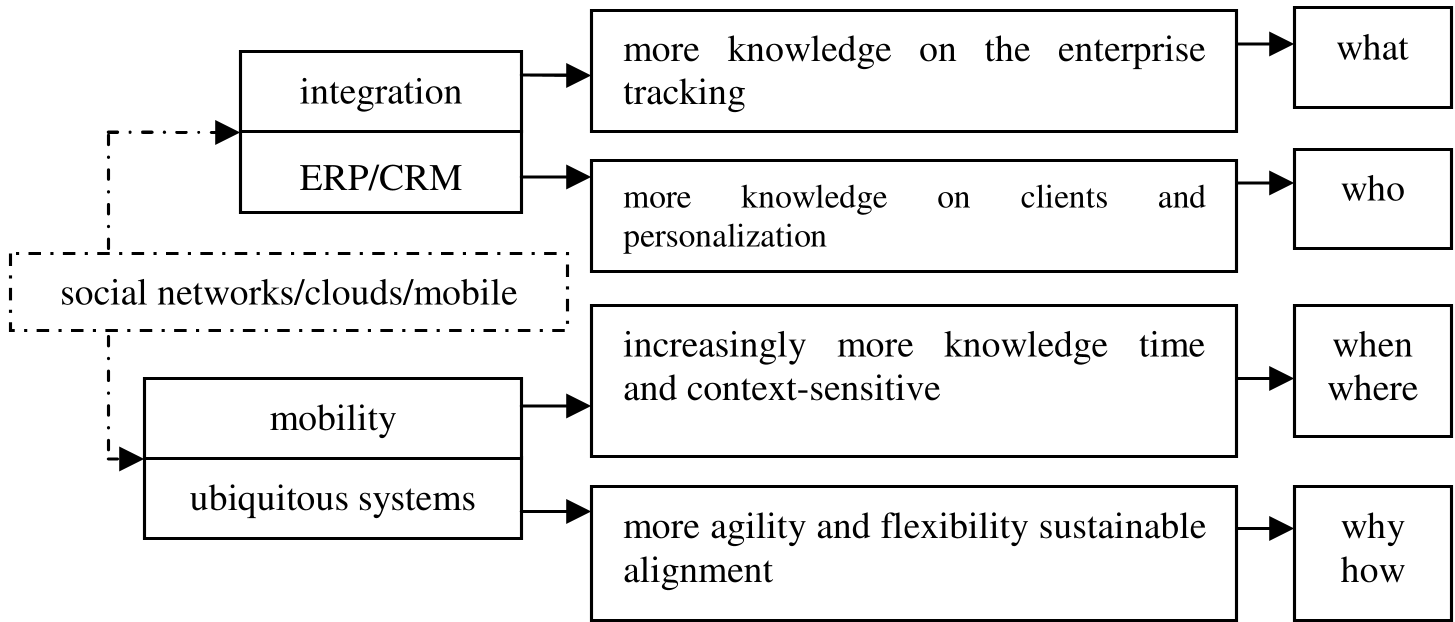 The figure above illustrates the progression from basic data processing to a sophisticated knowledge-base enabled by social and mobile platforms.
Key Results and Archetypes
The research segmented the 70 firms into three distinct "Maturity Levels":
- Cluster 1 (Level 1 - The Passives): 53% of the sample. They use SN maybe once a week and lack an integrated strategy. They have a positive opinion but zero execution.
- Cluster 2 (Level 2 - The Actives): Significant Facebook presence. Use SN daily for disseminating information and communicating with customers.
- Cluster 3 (Level 3 - The Strategists): The elite 17%. They use SN several times a day, have a dedicated team for social representation, and focus on behavioral analysis—using social data to predict what the customer wants before they ask for it.
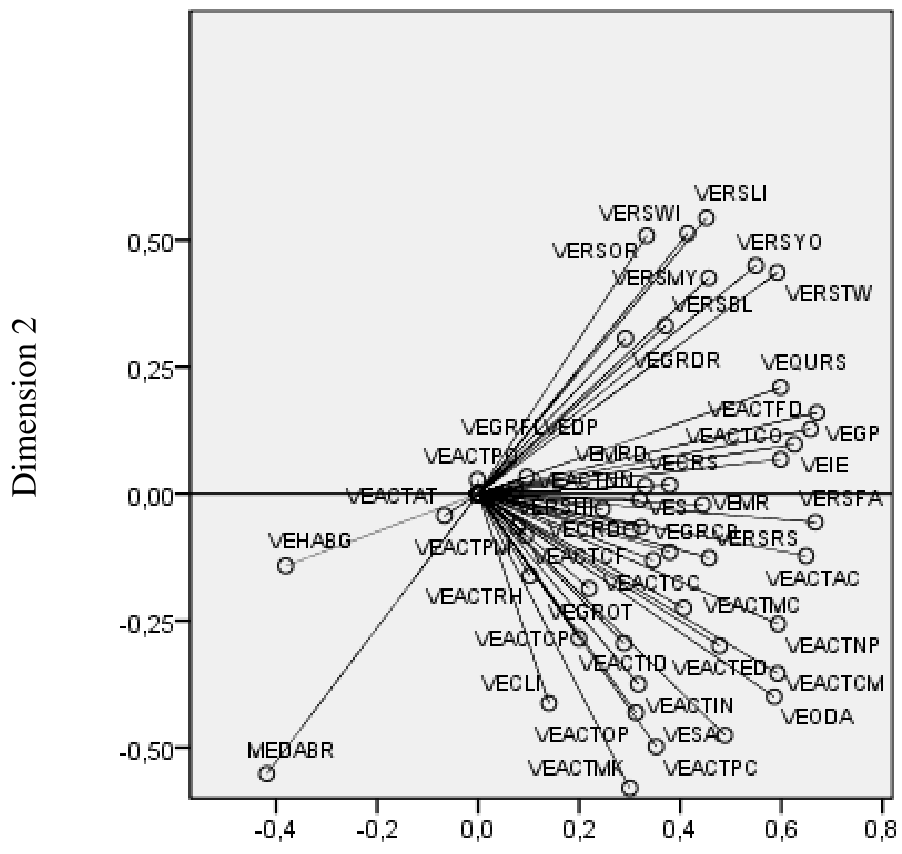 Classification of social network types: Differentiating between professional-oriented search and social-oriented interaction.
Critical Insight: Real-Time Creation
The most striking takeaway is the shift from "Knowledge Economy" to "Economy of Relations" (or Socialnomics). The authors argue that for SMEs, the competitive edge is now an intangible asset: the speed of connectivity.
However, a limitation remains: while Level 3 SMEs are more integrated, the study notes that few actually quantify the ROI. The "potential" is recognized, but the rigorous calculation of "indirect costs and benefits" is still the missing link for most small business owners.
Conclusion
Being "online" is no longer enough. The study concludes that the most successful SMEs are those that view social networks as work facilitators rather than just advertising channels. To succeed, an SME must:
- Define a "Social Media Strategy" that aligns with internal competencies.
- Foster a culture of "Real-Time Creation."
- Transition from simple marketing to deep behavioral analysis.
Social networks have leveled the playing field—but only for the SMEs smart enough to treat their Facebook feed as a data warehouse.