
Smart 3D Simulation of COVID-19: Bridging Reinforcement Learning and Epidemiology
Smart 3D Simulation of Covid-19 for Evaluating the Social Distance Measures
The paper presents a 3D agent-based simulation (ABS) framework built on the Unity engine to model COVID-19 transmission in indoor environments like grocery stores. It introduces the SEIRDV model and utilizes Reinforcement Learning (ML-Agents) to simulate realistic human movement and social distancing compliance.
TL;DR
This research develops a sophisticated 3D simulation environment using the Unity engine to analyze how COVID-19 spreads in high-traffic indoor areas like malls. By combining an extended SEIRDV infection model with Reinforcement Learning (RL), the authors move beyond static mathematical models to create "intelligent" agents that navigate spaces realistically, providing a visual and analytical tool for testing social distancing policies.
Problem & Motivation: The Limit of Differential Equations
During the pandemic, most policy decisions were based on SIR (Susceptible, Infected, Recovered) models. While mathematically sound for large populations, these models are "blind" to space and individual behavior. They cannot answer questions like: “What happens if we limit a grocery store to 30 people but they all congregate at the checkout?”
The authors identified two major gaps in current simulations:
- Lack of Ecological Validity: Most simulations use pre-defined "waypoints," making agents move like robots rather than humans.
- Simplified Biology: Standard models ignore critical states like "Vaccinated" or the temporal immunity of "Recovered" individuals, leading to over-inflated infection predictions.
Methodology: The SEIRDV Framework and Intelligent Agents
To solve these issues, the team implemented a dual-layered approach.
1. The Infection Engine
The paper proposes the SEIRDV model, which expands the state-space of each agent. By adding D (Dead) and V (Vaccinated), the simulation can reflect the real-world impact of mortality and immunization campaigns on the transmission chain.
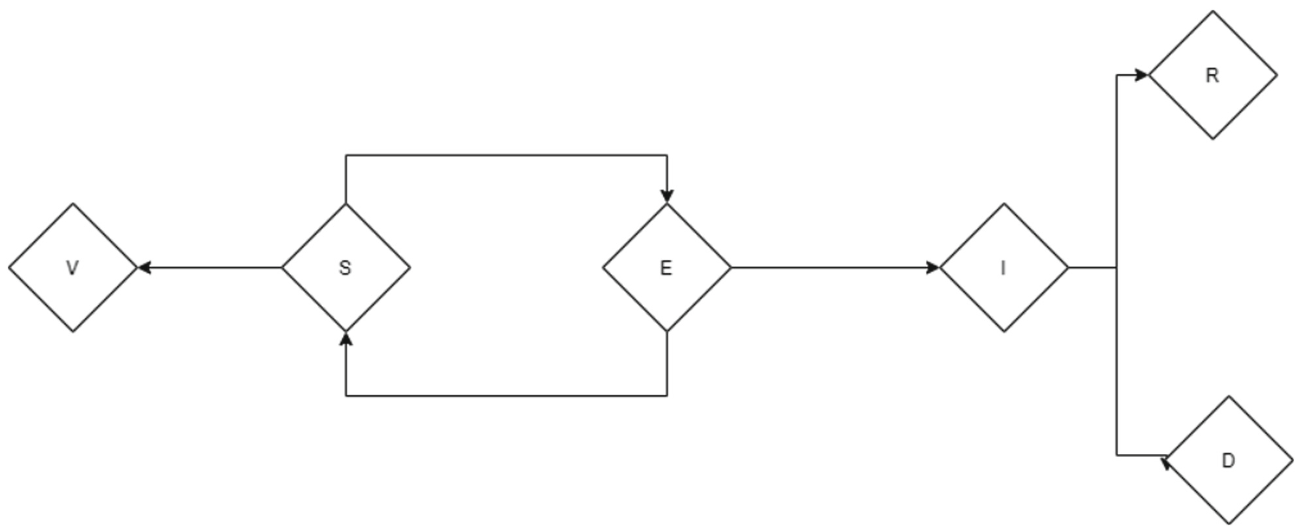 Figure 1: The transition logic between different infection states.
2. Behavioral Intelligence
Instead of simple scripts, the authors utilize:
- Unity NavMesh: For efficient pathfinding through complex 3D obstacles.
- ML-Agents: A Reinforcement Learning toolkit that allows agents to "learn" how to navigate a store, shop, and queue in a way that mimics human shoppers. This creates emergent behavior, where social distancing violations occur naturally rather than being hard-coded.
Experiments & Results: Validating Social Distance
The preliminary phase focused on a Unity Grocery Store Simulation. The authors calibrated the model using empirical COVID-19 parameters, testing varying "infection distances" (the radius within which the virus can jump between agents).
| Parameter | Initial Value |
|---|---|
| Store Capacity () | 30 |
| Initial Infected () | 5 |
| Distance () | 4–12 ft |
Key Finding: The research demonstrated a clear correlation between the chosen infection model and results. The SEIR model showed significantly lower infection rates compared to the SEI model. This is because "Recovered" agents effectively act as firewalls, breaking the chain of transmission—a dynamic that simpler models fail to capture.
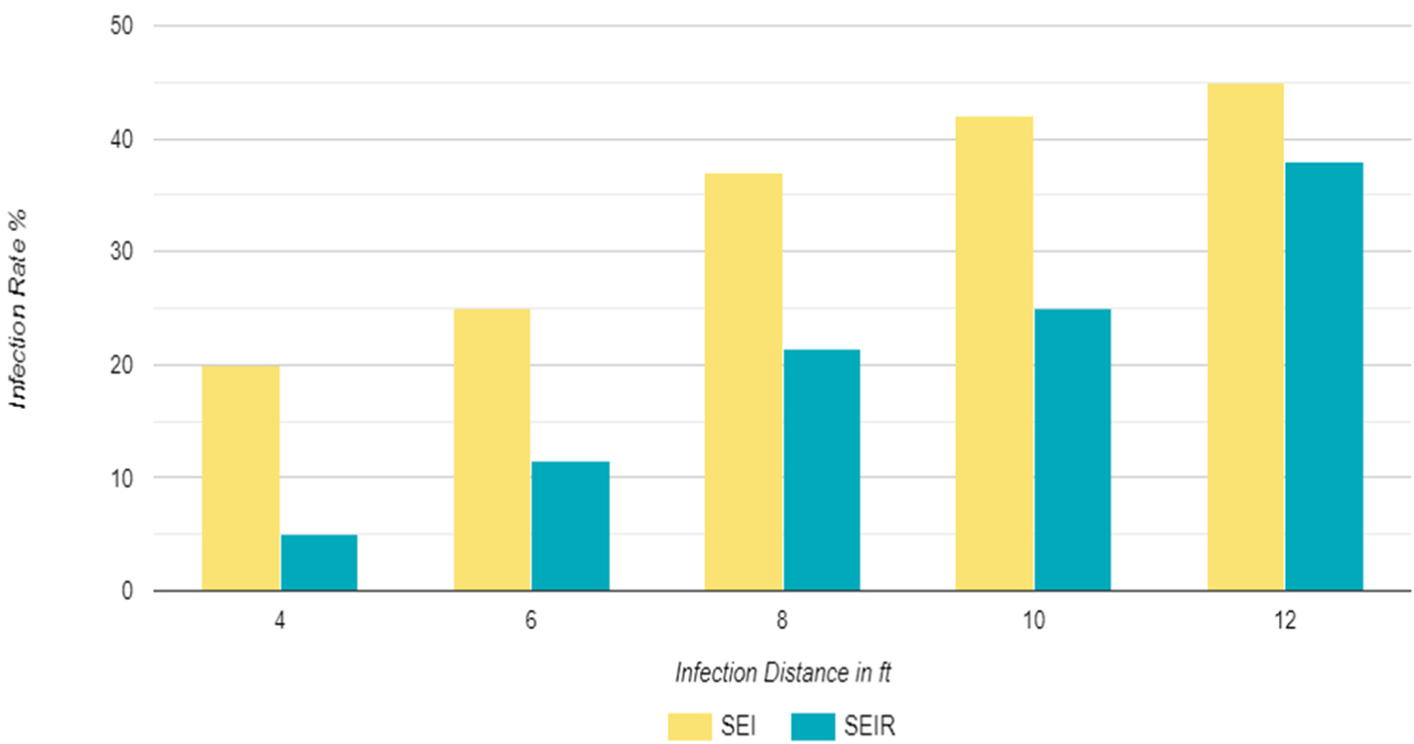 Figure 2: Performance comparison showing lower infection rates in SEIR due to the inclusion of immunity.
Critical Analysis & Conclusion
This work represents a vital shift towards Visual Analytics in public health. By using 3D graphics, the simulation becomes accessible to non-specialist stakeholders (government officials), allowing them to "see" the spread rather than just looking at a spreadsheet.
Limitations: As an "ongoing work," the paper primarily focuses on the framework setup. Future iterations will need to integrate more diverse agent profiles (different ages, compliance levels) and environmental factors like ventilation rates to further increase accuracy.
The Takeaway: The integration of Reinforcement Learning into epidemiological modeling marks a new era for Smart City planning, where "What If" scenarios can be stress-tested in digital twins before impacting human lives.