
Empowering Global Progress: A Holistic Smart Computing Framework for the SDGs
A Smart Computing Framework Centered on User and Societal Empowerment to Achieve the Sustainable Development Goals
This paper proposes a multi-disciplinary Smart Computing framework designed to address United Nations Sustainable Development Goals (SDGs). By integrating six dimensions—Economics, Domain Knowledge, Interaction Design, UI Design, User Empowerment, and Societal Empowerment—the framework was validated through "Ustawi," a mobile system combatting "Hidden Hunger" in Africa.
Executive Summary
TL;DR: Researchers have developed a six-dimensional Smart Computing framework that moves beyond mere "app development" to solve systemic global challenges like "Hidden Hunger." By prioritizing user and societal empowerment over raw sensor data, the framework offers a roadmap for achieving UN Sustainable Development Goals (SDGs) through coordinated, informed decision-making.
Background Positioning: This work represents a shift from Technocentric ICT to Systems-Oriented Social Engineering. It bridges the gap between high-level policy goals (SDGs) and ground-level technological implementation in developing economies.
Problem & Motivation: Why Current "Apps" Fail
Broadly speaking, the digital world is full of agricultural and health apps that fail to scale. The authors argue this is because these solutions treat problems like poverty or hunger as purely technical information gaps. In reality, these are coordination failures.
When a farmer doesn't know what his neighbor is planting, or a household doesn't understand the micronutrient deficiency in their energy-adequate diet, it is due to information asymmetry. Existing frameworks (like Agri-IoT or AgriSuit) often focus on "how to collect data" but ignore the "Economics" and "User Empowerment" necessary to make that data actionable and culturally relevant.
Methodology: The Six Dimensions of Empowerment
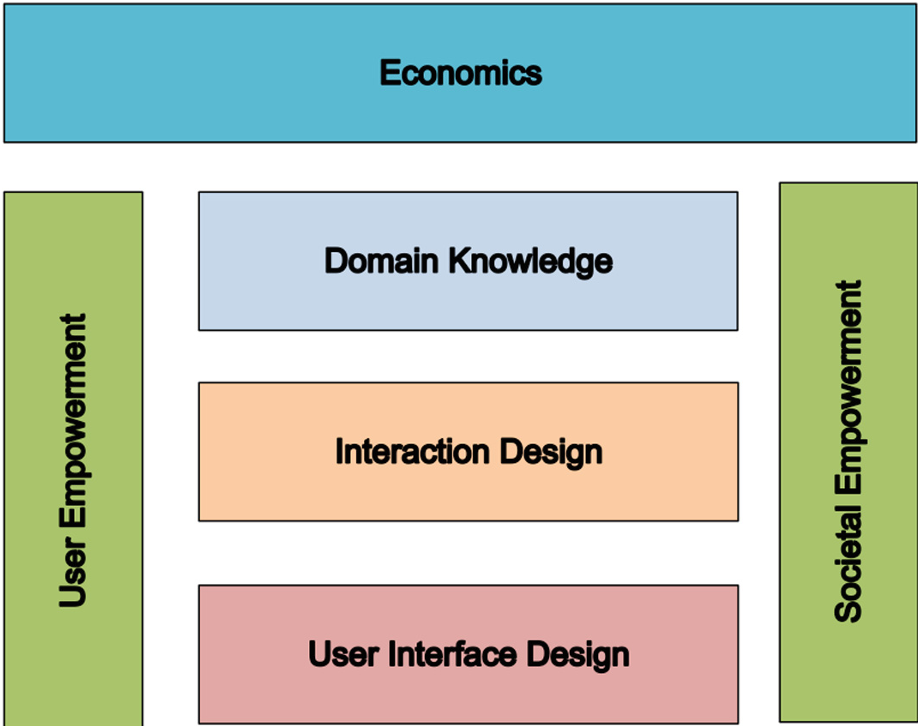
The proposed framework rejects the "build it and they will come" mentality. Instead, it integrates six distinct layers to ensure a solution is both viable and adopted:
- Economics: Analyzing the root cause (e.g., lack of food diversity) and the value of action vs. inaction.
- User Empowerment: Grounded in Empowerment Theory, this layer provides users with choices to achieve meaningful personal goals.
- Societal Empowerment: Focusing on horizontal and vertical value networks to ensure the community benefits as a whole.
- Domain Knowledge: Integrating quasi-static (literature) and real-time (production levels) expertise.
- Interaction Design: Moving from "static maps" to "actionable intelligence" (similar to the evolution of GPS).
- User Interface Design: Tailoring the experience to local literacy levels, languages, and cultures.
Case Study: Tackling "Hidden Hunger" with Ustawi
To validate the framework, the team developed Ustawi, a mobile app targeting "Hidden Hunger"—a state where people consume enough calories but suffer from micronutrient deficiencies.
How Ustawi Works:
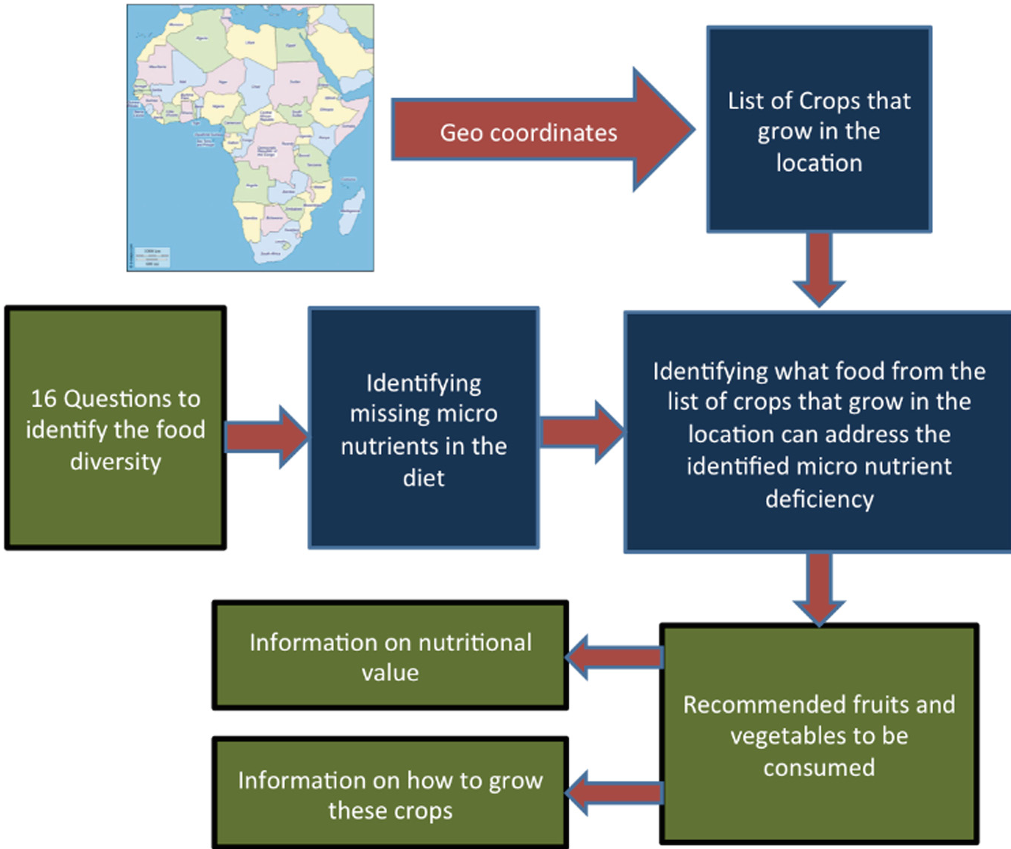
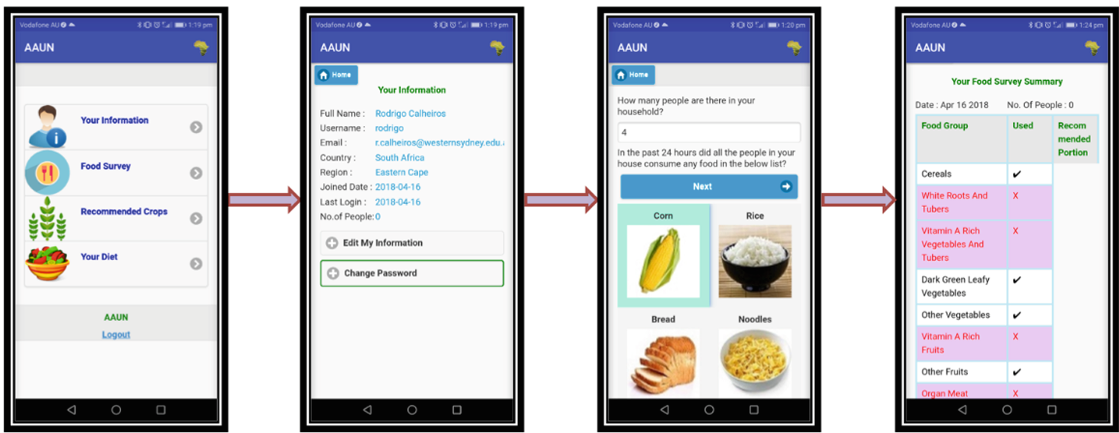
- The Survey: Users complete a 24-hour visual dietary recall.
- The Gap Analysis: The system identifies missing food groups (e.g., Vitamin A or Iron).
- The Solution: Based on GPS and microclimate data, the app recommends specific local crops that can be grown in the user's own backyard to fill those nutritional gaps.
Experimental Results & Human Impact
The evaluation focused on two fronts: Expert Validation and End-user Behavior Change.
- Expert Insights: Nutritionists and crop scientists highlighted the need for "Nutrition-driven agriculture," suggesting the app link directly to online markets to further decrease the "search cost" for healthy food.
- The "Potato" Moment: During usability testing, one farmer realized through the app's guidelines that his lifelong potato-planting method was inefficient. This immediate "Aha!" moment serves as high-fidelity evidence of User Empowerment in action.
Critical Analysis & Future Outlook
Takeaway
The genius of this framework lies in its holistic perspective. It treats a technical artefact (an app) as a cog in a much larger socio-economic machine. By focusing on "Interaction Design" that mirrors the intuitive nature of modern GPS, the researchers have lowered the barrier to entry for low-literacy users.
Limitations
While the framework is robust, the "Societal Empowerment" (Social Networking) component is the most difficult to implement. It requires a critical mass of users to be effective. Currently, the system is more effective for individual households than for community-wide market coordination.
Future Work
The next frontier is the integration of "Social Computing" to allow farmers to trade surplus nutritious crops within the app, effectively turning a health tool into a localized economic engine. This would complete the loop of the first three SDGs: No Poverty, Zero Hunger, and Good Health.