
Smart DSS: Bridging Data and Intuition in Modern Healthcare
A Comprehensive Review on Smart Decision Support Systems for Health Care
This paper provides a comprehensive review of Smart Decision Support Systems (DSSs) in the healthcare sector, categorizing them via Power’s taxonomy into Data-driven, Knowledge-driven, and Model-driven systems. It introduces an integrated framework that leverages Data Mining (DM) and Artificial Intelligence (AI) to enhance clinical decision accuracy and efficiency.
TL;DR
The medical field is drowning in data but starving for actionable insights. This comprehensive review explores the evolution of Smart Decision Support Systems (DSSs), classifying them into data, knowledge, and model-driven frameworks. By integrating Data Mining (DM), Artificial Intelligence (AI), and IoT, these systems aim to transform raw medical records into high-precision diagnostic and prognostic tools.
Problem & Motivation: The Data Complexity Overload
Medical practitioners are no longer just healers; they are data managers. The explosive growth of Electronic Health Records (EHRs), wearable sensor data, and genomic information has created a bottleneck. Traditional clinical methods struggle with:
- Uncertainty and Complexity: Biological data is inherently noisy and heterogeneous.
- Latency: Critical care environments, such as ICUs, require real-time interventions that human analysis cannot always provide fast enough.
- Siloed Knowledge: Valuable expert intuition and massive statistical datasets often remain disconnected.
The authors argue that the next generation of healthcare requires "Smart" systems that don't just store information, but actively assist in the reasoning process.
Methodology: The Taxonomy of Intelligence
The paper utilizes Power’s Taxonomy to organize the landscape of healthcare DSS into three primary pillars:
1. Data-Driven DSS
Focuses on accessing and manipulating time-series data. This includes the use of IoT to collect ubiquitous data and On-line Analytical Processing (OLAP) to provide real-time clinical support.
2. Knowledge-Driven DSS
Uses AI techniques and "Inference Engines." A key focus here is Ontology Engineering, which provides a semantic structure to medical facts, allowing machines to "understand" the relationships between symptoms and diseases rather than just matching keywords.
3. Model-Driven DSS
These systems simulate outcomes using mathematical models. They employ advanced Machine Learning (ML) algorithms like Support Vector Machines (SVM), Random Forests (RF), and Artificial Neural Networks (ANN) to predict disease progression or treatment outcomes.
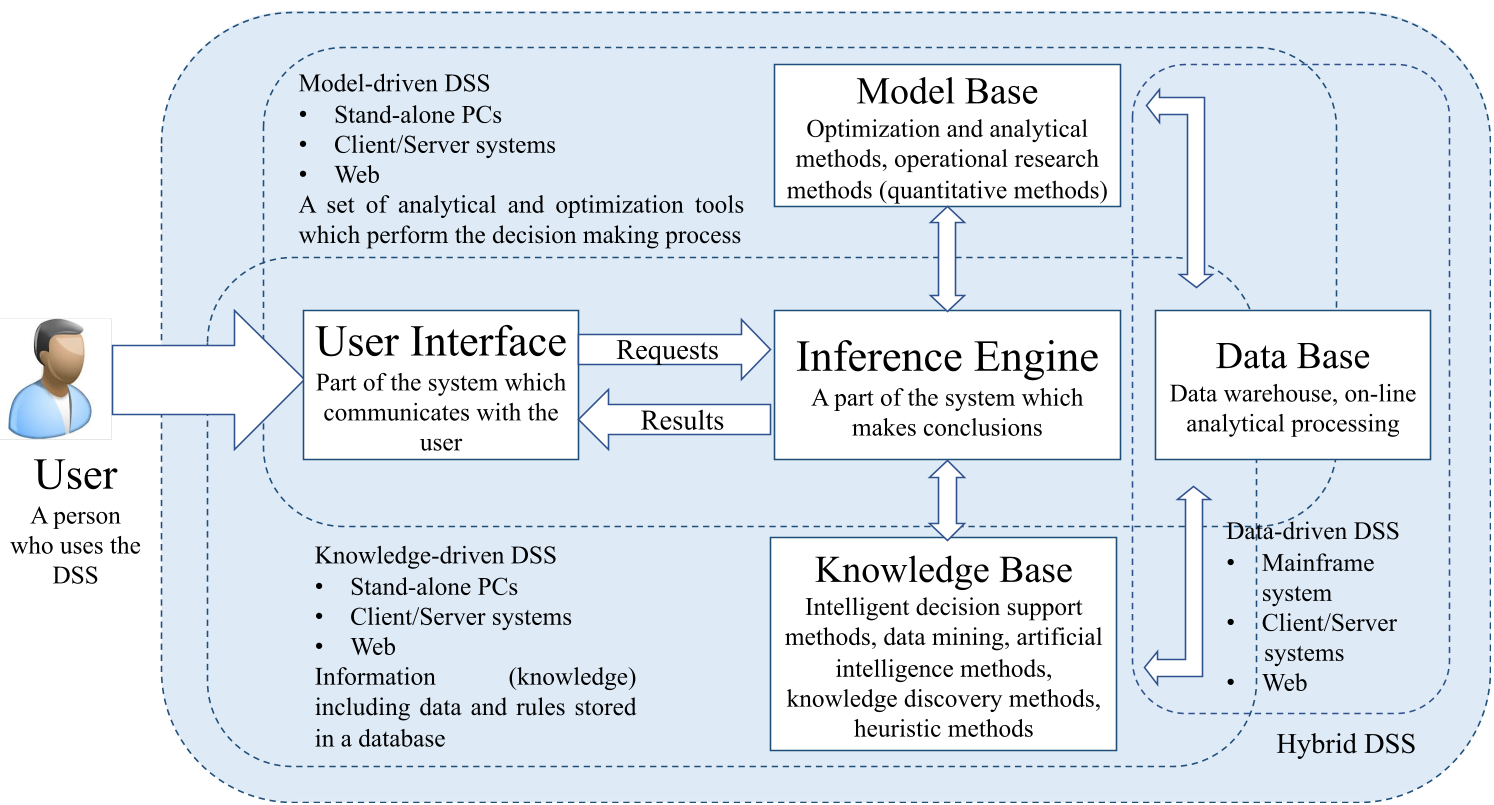 Figure 1: Overall framework illustrating the main categories of DSS in healthcare, emphasizing the flow from data sources to expert decision-making.
Experimental Analysis & Comparative Study
The review analyzes various implementations, such as the SMARTDIAB platform for diabetes management and icuARM for intensive care units.
Key findings from the comparative analysis include:
- Preprocessing is King: Studies show that careful data cleaning and attribute discretization can significantly boost predictive accuracy.
- Hybrid Power: The most successful systems are often hybrids, combining the interpretability of rule-based (knowledge-driven) systems with the predictive power of data-driven ML models.
- Visualization Matters: In neonatal illness prediction, combining binary outputs with probabilistic evidence through spatiotemporal maps proved most effective for clinical adoption.
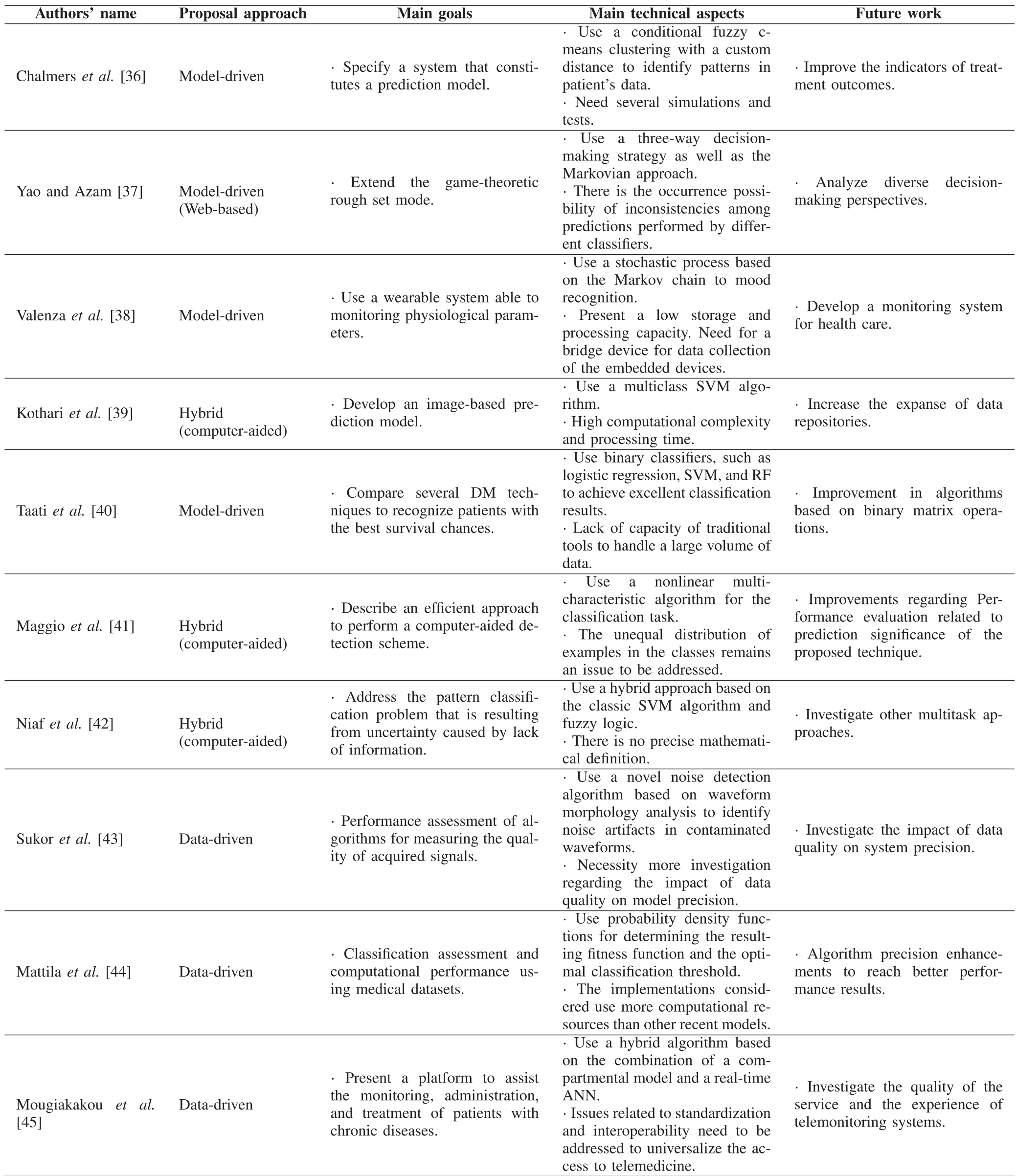 Figure 2: Summary of meaningful solutions, highlighting proposal approaches (Model vs. Data-driven) and their technical contributions.
Critical Insight: The Three Frontiers
The paper identifies three "Open Issues" that will define the next decade of medical AI:
- Big Data Analytics: Moving beyond storage to high-speed "role-specific" database solutions and advanced visualization.
- Advanced Data Mining: Shifting from classical statistics to "Deep Learning" that can recognize patterns in unstructured medical data (images, audio).
- Semantic IoT: Solving the "interoperability" problem, ensuring that a wearable device from one manufacturer can seamlessly talk to a hospital's diagnostic engine.
Conclusion & Future Outlook
The transition toward Smart DSS marks a shift from reactive to proactive medicine. While technical hurdles like data security and algorithm "black-box" nature remain, the integration of context-aware AI promises a future where medical errors are minimized, and personalized treatment is the standard, not the exception.
Takeaway: The future of healthcare lies in the synergy of human expertise and machine intelligence—specifically, the ability of DSS to provide the right info to the right expert at the exact moment it is needed.