
Smart Grids as the Backbone of Smart Cities: Beyond ROI to Societal Value
18684_Smart (Electricity) Grids for Smart Cities Assessing Roles and Societal Impacts.
This paper explores the foundational role of smart grids within the "system-of-systems" architecture of smart cities. It proposes an extended Cost-Benefit Analysis (CBA) methodology that integrates economic, environmental, and social metrics to evaluate smart grid deployments beyond traditional financial returns.
TL;DR
As cities transition into "smart" ecosystems, the electricity grid is evolving from a passive utility into a dynamic "system-of-systems" enabler. This paper argues that traditional financial metrics are insufficient to justify this transition. Instead, it proposes an Extended Cost-Benefit Analysis (CBA) that integrates environmental footprint, social equity, and technical flexibility into a unified decision-making framework.
The "Smartness" Multiplier: Problem and Motivation
Why is "smartness" so hard to define and fund? The authors argue that a smart city isn't just a collection of sensors; it is a complex "System-of-Systems" (SoS). In this hierarchy, smartness exists at three levels:
- Component Level: Sensors and actuators providing situational awareness.
- System Level: Autonomous coordination of energy or transport.
- SoS Level: The integration of energy, water, and mobility to meet high-level societal goals.
The primary pain point is the investment gap. Decarbonizing a city requires massive upfront capital, while the benefits (cleaner air, resilience) are often long-term and non-monetary. Without a way to "prove" these benefits, projects often stall at the pilot phase.
Methodology: Mapping Assets to Society
The core of the paper is a 7-step methodology designed to bridge the gap between a physical circuit breaker and a social policy goal.
The Asset-Functionality-Benefit Chain
The authors propose a mapping logic where an investment in a physical Asset (e.g., a Smart Meter) enables a Functionality (e.g., Demand-Side Management), which ultimately produces a Benefit (e.g., Reduced Electricity Bills or Carbon Emissions).
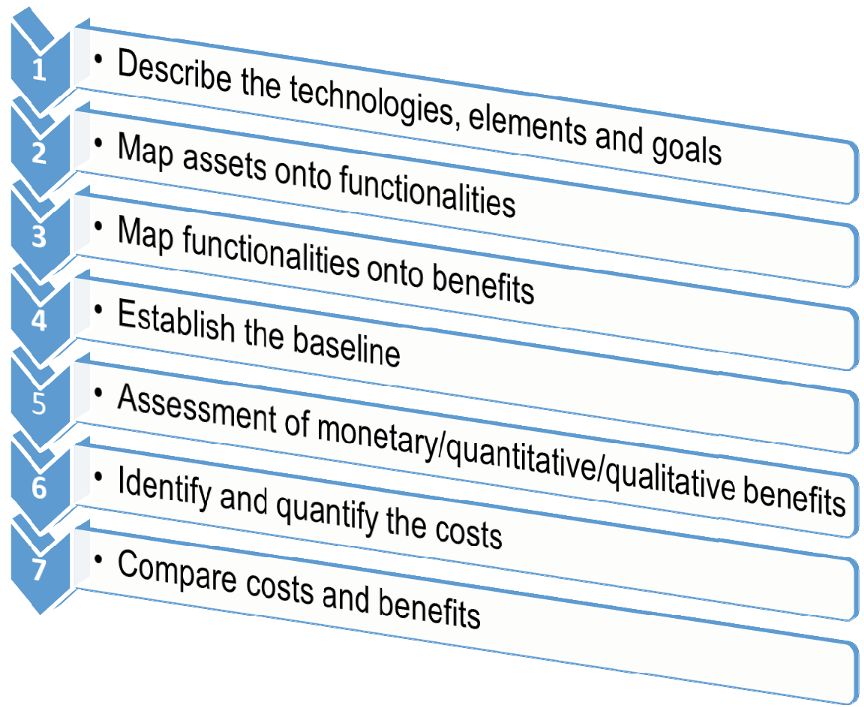 Fig 1. The 7-step Extended CBA process, moving from scenario definition to multidimensional integration.
Monetizing the Intangible
For impacts that cannot be easily priced—like "consumer awareness"—the methodology uses Key Performance Indicators (KPIs) and expert judgment. This forces decision-makers to view the grid not as a cost center, but as a platform for energy democracy and market innovation.
Experimental Insights: The Italian Case Study
To validate the theory, the authors analyze a 10-year deployment scenario (SG10) versus a Business-as-Usual (BaU) baseline in Italy.
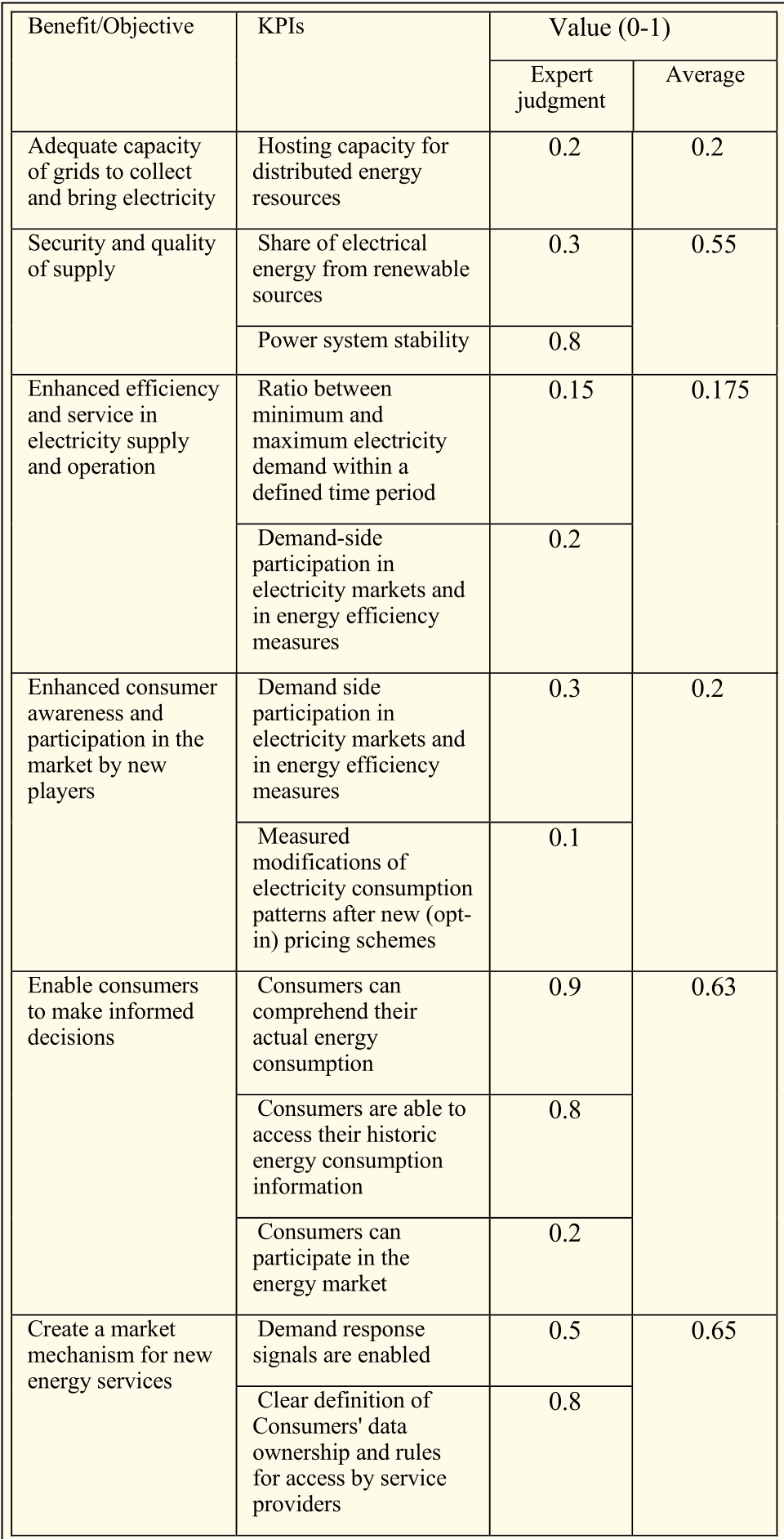 Table 1. Quantitative assessment of grid objectives using KPI-based expert judgment.
Key findings from the case study include:
- Environmental Impact: CO2 and pollutant savings accounted for a significant portion of the societal benefit, valued at over €1.2M annually when carbon pricing and health externalities were included.
- Consumer Empowerment: The framework showed that "Informed Decision-Making" (KPI 0.63) and "Security of Supply" (KPI 0.55) were the most significant non-monetary gains.
Critical Analysis & The "Social License"
The most profound insight from the paper is the concept of a "Social License." Because smart grid projects are so invasive (affecting every home and street), they require explicit social acceptance. A "failed" smart grid project—one that lacks transparency or results in high tariffs—acts as a deterrent for the entire smart city vision.
Limitations
- Uncertainty: The 10-year horizon involves massive assumptions regarding energy prices and technology maturity.
- Scalability: While the framework is robust, it relies heavily on "expert judgment" for qualitative metrics, which could introduce bias depending on who the "experts" are.
Conclusion
The transition to smart cities is a "socio-techno-economic" reality, not just a hardware upgrade. By expanding the definition of "Benefit" to include environmental health and consumer participation, this paper provides a roadmap for policy makers to justify the "electrification of society" as a tool for a fairer, more resilient urban future.