
Smart Governance: Bridging the Gap Between Legislation and Public Opinion via Commonsense AI
Smart Governance Through Opinion Mining of Public Reactions on Ordinances
This paper introduces a Smart Governance framework that links urban ordinances with public reactions on Twitter using Smart City Characteristics (SCCs). The authors propose a novel mapping algorithm that leverages Commonsense Knowledge (CSK) to bridge the semantic gap between formal legislative language and informal social media posts, achieving up to 88% precision in ordinance-to-SCC classification.
TL;DR
Researchers have developed a system that uses Commonsense Knowledge (CSK) to automatically link local laws (ordinances) to public tweets. By categorizing both into Smart City Characteristics (SCCs), the system provides urban planners with a direct "satisfaction score" for specific policies, revealing that while New Yorkers generally support city initiatives, environmental policies require significant improvement.
Background: The Transparency Dilemma
In the evolution of Smart Cities, "Smart Governance" remains a difficult frontier. While cities like Barcelona and Amsterdam have automated their physical infrastructure (buses and lights), the feedback loop between legislative action and public sentiment remains manual and fragmented. This paper addresses the "Big Data" challenge of connecting thousands of formal laws to millions of chaotic, informal social media reactions.
The Core Challenge: Semantic Heterogeneity
Why can’t we just use keyword searches?
- Linguistic Dissonance: An ordinance might discuss "source separation of recyclable materials," while a tweet merely says "shambles of a trash pickup today." No shared keywords exist.
- Lack of Training Data: Sophisticated deep learning models require labeled datasets. As a pioneering work in "Ordinance Mining," no such dataset previously existed.
- Scale: Directly comparing every tweet to every ordinance creates a massive quadratic search space that is computationally exhausting.
Methodology: The Transitive SCC Mapping
The authors solve the mapping problem through a "transitive property": If Ordinance A and Tweet B both relate to "Smart Environment," they are likely related to each other.
1. Commonsense Knowledge (CSK) Integration
To automate the logic that "Pre-K education" relates to "Smart People," the system uses WebChild and WordNet. These repositories provide the "hidden links" that allow a machine to understand that "unemployment" is an "Economy" issue without being explicitly told.
2. The Combined Algorithm
The process follows two main stages:
- Ordinance/Tweet to SCC Mapping: Uses weighted terms from specific Domain KBs to assign loyalty to one or more of the six SCC categories.
- Sentiment Polarity: Utilizes SentiWordNet to score the mapped tweets, capturing subtle human judgments (e.g., distinguishing between "estimable" as a calculation vs. a virtue).
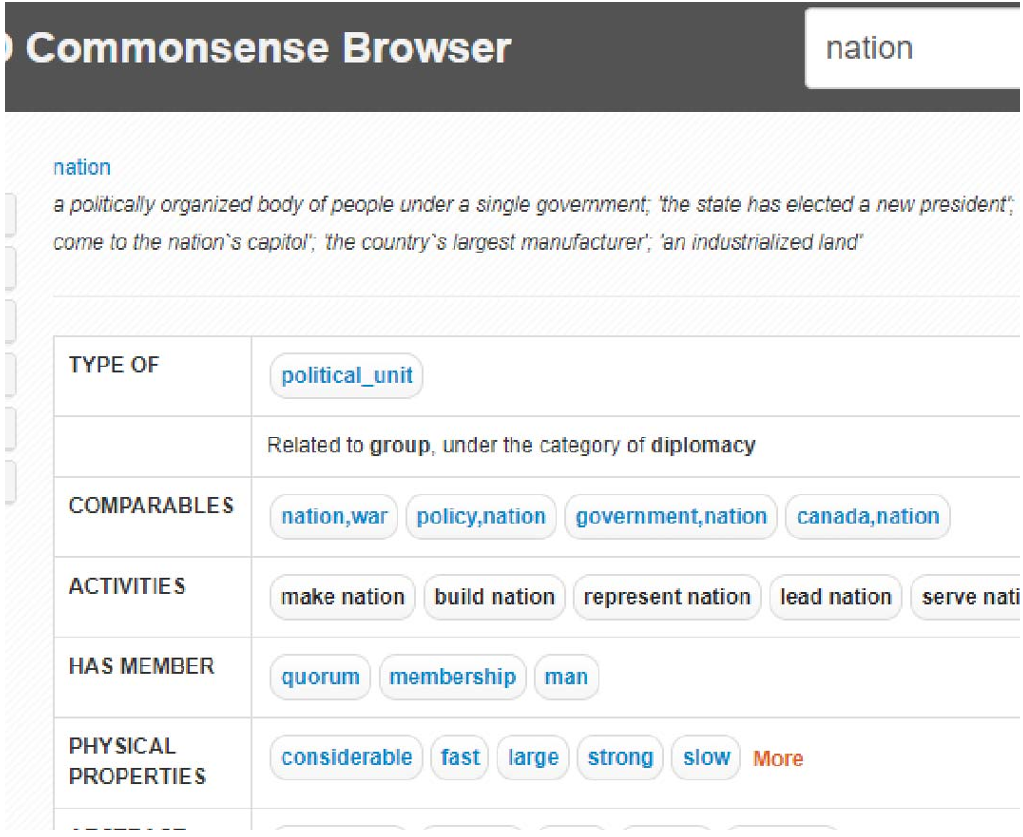 Fig 1: The proposed workflow for mapping through SCC indicators.
Experimental Results: NYC Case Study
Testing the system on New York City data, the researchers achieved impressive precision rates:
- Ordinance Mapping: ~88% Precision.
- Tweet Mapping: ~82% Precision.
Key Insight: The "Environment" Gap
The sentiment analysis (opinion mining) results provided a clear report card for NYC governance. While "Smart Living" (56% positive) and "Smart People" (52% positive) performed well, "Smart Environment" lagged significantly at only 33% positive sentiment.
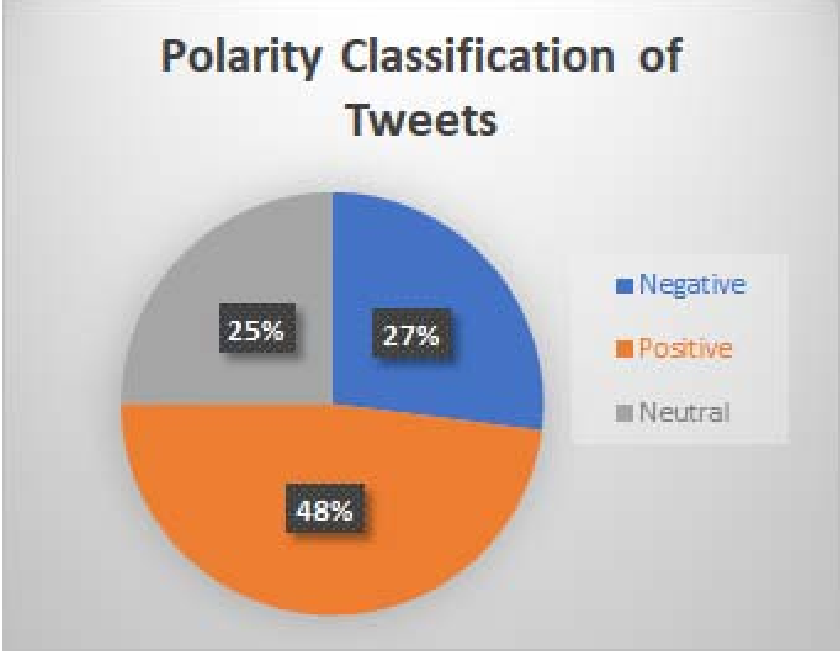 Fig 2: Overall public reaction polarity across all categorized ordinances.
Critical Analysis & Future Outlook
Strengths: The use of CSK is a brilliant workaround for the "small data" problem in niche legal domains. It provides an interpretable bridge that typical "black-box" neural networks lack.
Limitations: The authors acknowledge that social media is rife with acronyms and informal grammar (slang) that still trip up the system. Furthermore, the reliance on a transitive mapping (via SCCs) means the system provides a "broad" connection rather than a pinpoint link to a specific sub-clause of a law.
The Takeaway: This work represents a shift toward Evidence-Based Policy Making. By quantifying public reaction through the lens of Smart City goals, urban agencies no longer have to guess how their legislation is being received—they have a data-driven dashboard for democracy.
Future Directions
The researchers aim to refine the granularity of the mapping and incorporate more advanced NLP techniques to handle the ambiguity of Twitter's "Wild West" linguistics.