
Smart Health Care: The IoT Revolution in Personalized Medicine
16574_Everything You Wanted to Know about Smart Health Care Evaluating the Different Technologies and Components of the Internet of Things for Better Health
This paper provides a comprehensive review of Smart Health Care (SHC) enabled by the Internet of Things (IoT). It categorizes SHC architectures into app-oriented, things-oriented, and semantics-oriented frameworks and highlights the shift from traditional reactive medicine to autonomous, proactive health management.
TL;DR
Smart Health Care (SHC) is no longer a futuristic concept but a multi-hundred-billion-dollar reality. This paper explores how the integration of IoT, Big Data, and AI is moving healthcare from the hospital to the "always-on" personal environment. By leveraging on-body sensors, cloud computing, and advanced security protocols, SHC aims to provide autonomous, remote, and proactive medical services.
Positioning: This work serves as a foundational architectural survey and a strategic roadmap for researchers in VLSI, embedded systems, and digital health.
Problem & Motivation: Beyond the Hospital Walls
The primary pain point is the inefficiency of the conventional doctor-patient model in the face of a global population explosion. Traditional systems are reactive (treating illness after it occurs) rather than proactive.
The author's core insight is that for "Smart Health" to be effective, it must operate across a spectrum of ambient intelligence. It’s not just about a wristband measuring heart rate; it’s about a semantic system that understands the context of those vitals and can trigger emergency responses without human intervention.
Methodology: The Three Dimensions of SHC
The authors break down the complexity of Smart Health Care into a structured hierarchy:
- Configuration: The physical layer—assembling the right sensors (ECG, glucose, motion) in the right environment.
- Organization: The hierarchy of technologies—how data moves from a Body Area Network (BAN) via Bluetooth/Wi-Fi to the Cloud.
- Framework: The "software" soul—utilizing machine learning and big data libraries to transform raw sensor data into actionable medical insights.
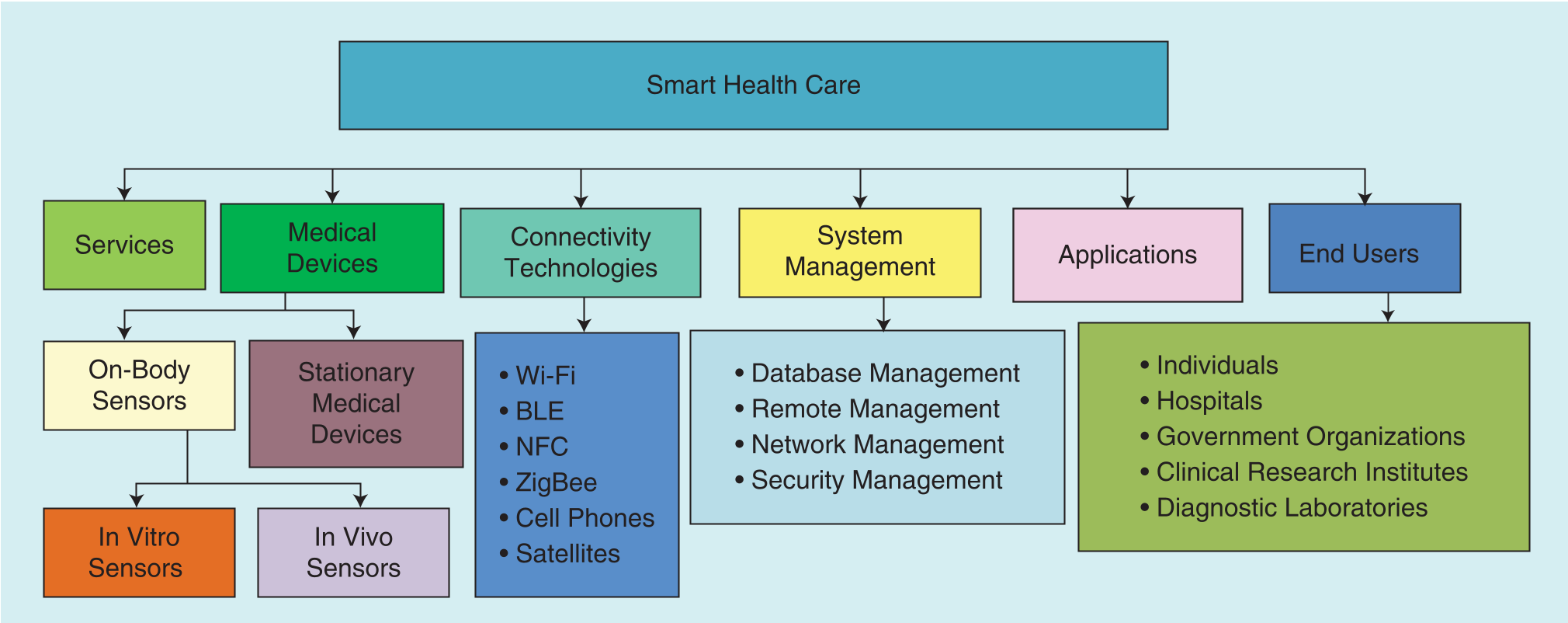 Figure 1: The comprehensive classification of the SHC market, ranging from services and devices to specific connectivity technologies like 6LoWPAN and BLE.
The Semantic Edge
A key differentiator highlighted is the "Semantic-oriented" architecture. Unlike simple "Things-oriented" systems that just report numbers, semantic systems use Natural Language Processing (NLP) and behavioral patterns to enrich the user experience, making the technology truly "ubiquitous."
Specialized Applications: Nanotech and The "Pill Camera"
One of the most impressive examples of SHC methodology in practice is the Pill Camera. By shrinking a high-resolution camera, RF transmitter, and LED lights into a swallowable form factor, it replaces invasive endoscopy.
- Performance: Capable of 800,000 images in 8 hours.
- Innovation: Uses induction charging and magnetic activation to eliminate the need for large internal batteries or storage.
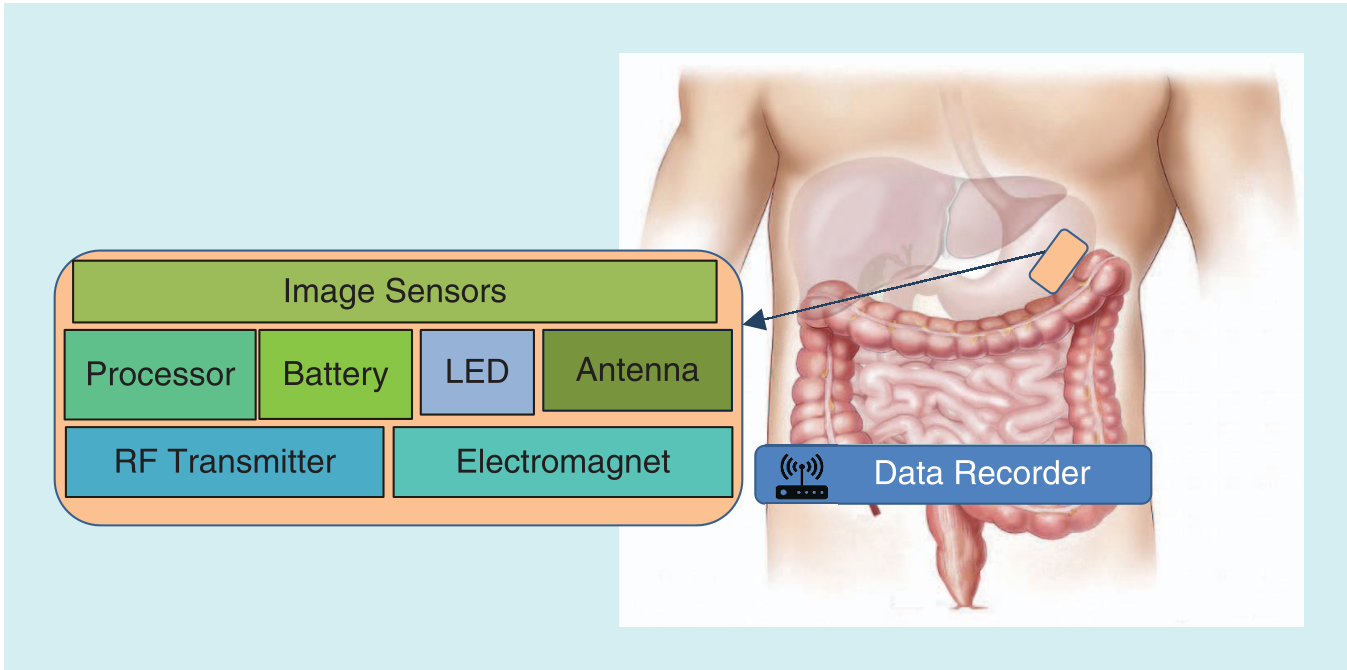 Figure 2: The internal layout of a Pill Camera, demonstrating the extreme miniaturization required for SHC.
Security: A Life-or-Death Priority
As healthcare becomes connected, it becomes hackable. The paper provides a chilling case study: Hijacking an insulin pump. Because medical devices often use low-power processors with limited memory, they lack robust encryption.
The authors propose Rolling Code Protocols (similar to one-time-pad cryptography) where the control code changes randomly every time, making it nearly impossible for an attacker to "replay" a command to deliver a lethal dose of insulin.
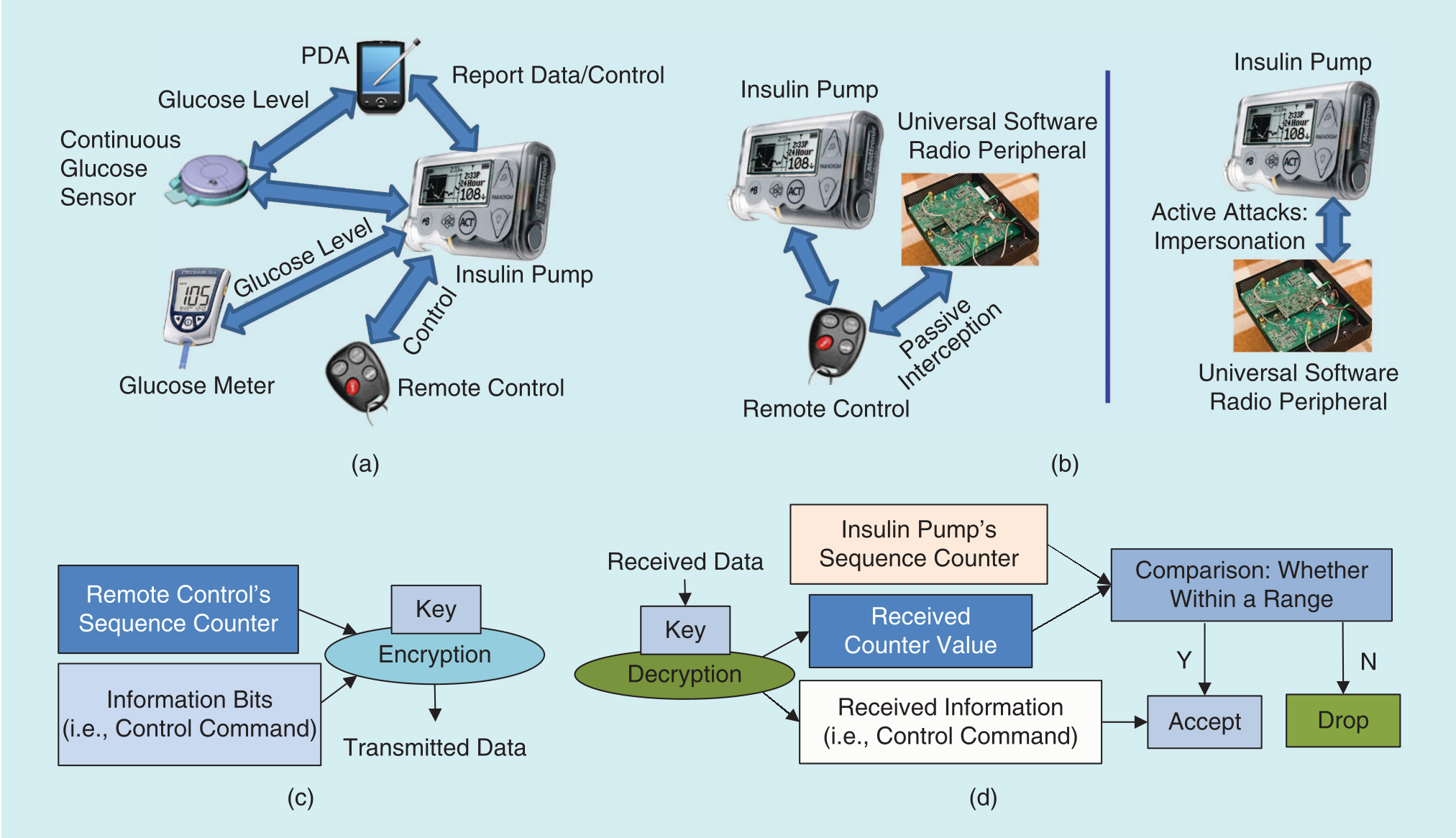 Figure 3: Visualization of passive vs. active attacks on an insulin delivery system and the proposed signal-strength defense.
Critical Analysis & Conclusion
Takeaway
Smart Health Care is shifting the focus from "treating the sick" to "maintaining the healthy." The integration of the IoT allows for a continuous, seamless monitoring grid that transcends geographical limits.
Limitations
- Energy Constraints: Most on-body sensors are still limited by battery life.
- Data Silos: While the paper discusses architecture, the real-world challenge of "Data Variety" across different manufacturers remains a hurdle.
- Clinical Trust: Technology is moving faster than clinical adoption. Convincing healthcare professionals to trust AI-driven algorithms remains a "process of education."
Future Outlook
The SHC market is projected to grow 18% annually. The next frontier will likely involve Body-Coupled Communication (BCC), where the human body itself acts as the transmission medium, providing an inherent layer of physical security against remote hackers.