Smart Refrigerator: Bridging Computer Vision and Dietary Healthcare
Smart Refrigerator for Healthcare Using Food Image Classification
This paper introduces a prototype "Smart Refrigerator" system designed for healthcare, utilizing multi-sensor integration and Fisher's Linear Discriminant Analysis (FLDA) for food image classification. The system successfully automates food intake monitoring and shelf-life estimation to provide dietary coaching via a mobile application.
TL;DR
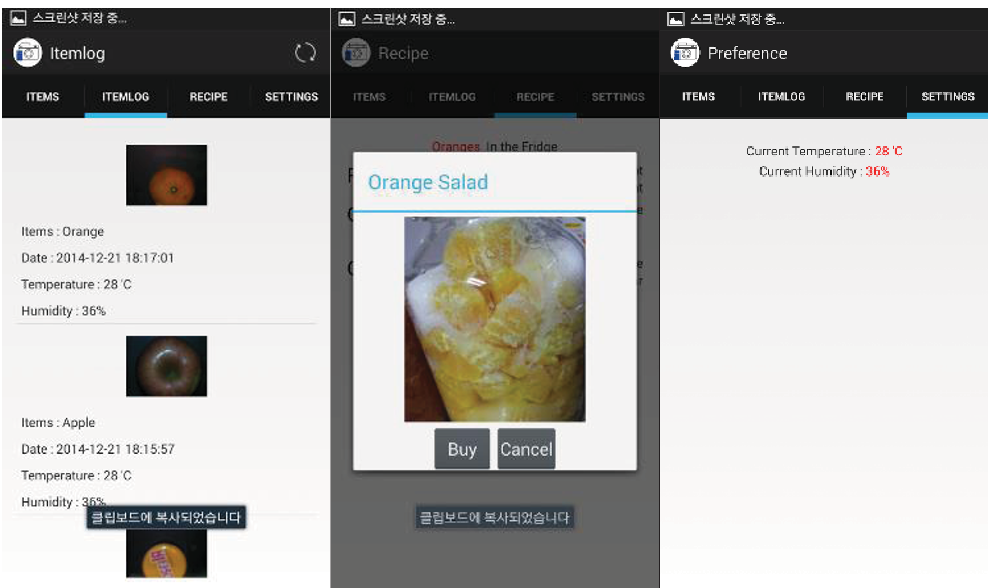
This research presents an integrated "Smart Refrigerator" system that uses food image classification and environmental sensing to automate dietary monitoring. By combining hardware (Arduino/Raspberry Pi) with machine learning (FLDA), the system identifies food items, tracks expiration dates via humidity/temperature sensors, and provides personalized health recommendations through a mobile app.
Academic Positioning: This work serves as an early-stage prototype (2016) in the "Internet of Things (IoT) for Healthcare" domain, moving beyond simple storage toward active nutritional coaching.
The Motivation: Why Automate the Fridge?
The "Quantified Self" movement often hits a wall when it comes to nutrition. Manual logging—typing every apple or soda into an app—is tedious and inaccurate. The authors identified two major gaps in existing consumer electronics:
- Human Error: Users forget to log or miscalculate portions.
- Environmental Ignorance: Standard fridges don't track the freshness of internal items, leading to food waste and potential health risks.
Their insight was to create a "sensor-equipped container" that acts as a silent observer, capturing the state of the fridge every time the door closes.
Methodology: The Tech Stack
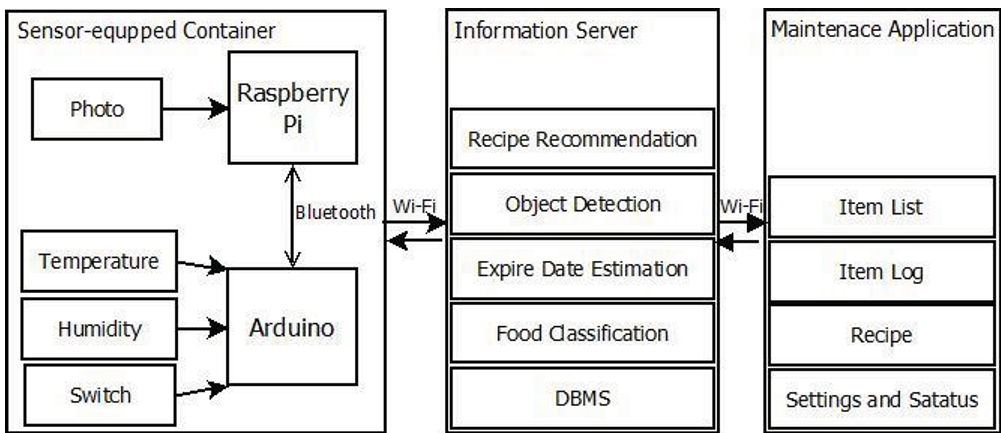
The system is bifurcated into a local sensing unit and a remote information server.
1. Hardware & Architecture
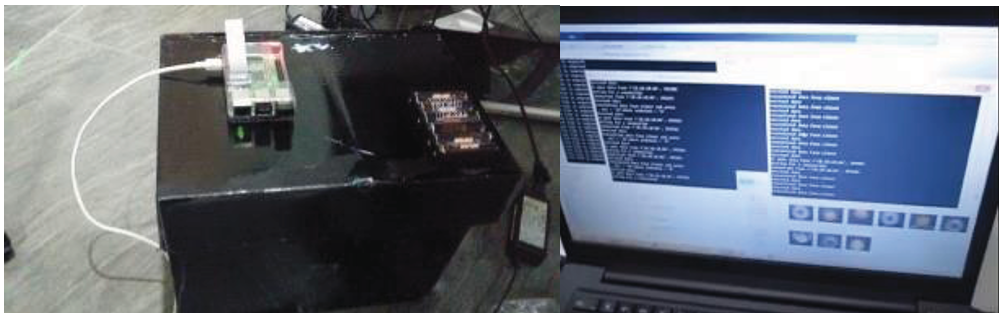
The system uses an Arduino Uno for low-level sensor polling (1Hz sample rate for temperature/humidity) and a Raspberry Pi for image acquisition. A physical switch detects the refrigerator door state, triggering a high-resolution photo capture only when the door is closed to ensure consistent lighting and positioning.
2. The Classification Logic
Unlike modern black-box Deep Learning approaches, this system uses Fisher’s Linear Discriminant Analysis (FLDA).
- Preprocessing: Objects are identified via color detection against a black background.
- Feature Extraction: FLDA maximizes the ratio of between-class scatter to within-class scatter, ensuring the food items (apples, bananas, etc.) are as distinct as possible in the feature space.
- Classification: Identification is performed by calculating the Euclidean distance of weighted features.
Experiments and Performance
The authors tested the system on a dataset featuring four classes: Apple, Tangerine, Banana, and Energy Drinks.
- Metric: The primary metric used was Equal Error Rate (EER).
- Performance: The system achieved a 0.0356 EER on the testing set.
- Ablation/Validation: Using 2-fold cross-validation repeated 100 times, the results showed high stability in the classification of these distinct food categories.
Result Comparison Table
| Set | EER |
|---|---|
| Training Set | 0.0340 |
| Testing Set | 0.0356 |
Critical Analysis & Conclusion
Takeaway
The "Smart Refrigerator" succeeds as a proof-of-concept. It demonstrates that integrating simple environmental sensors with classical machine learning can provide a functional dietary log without user intervention. The addition of recipe recommendations based on "what's inside" adds a layer of actionable intelligence that standard IoT devices often lack.
Limitations
- Scalability: The dataset used (40 images total) is extremely small by modern standards. The reliance on a black background for "rapid preprocessing" suggests the system might struggle with the cluttered reality of a typical family refrigerator.
- Algorithm: FLDA is a linear method; it may fail to distinguish between visually similar foods (e.g., a peach vs. a nectarine) or handle occlusions (food behind other food).
Future Outlook
As noted by the authors, the next step involves moving to Deep Neural Networks (DNN) and larger datasets like "Open Food Facts." The future of this technology lies in 3D Volume Estimation—knowing not just that you have an apple, but how large it is—to provide precise caloric tracking.