
Smart Tutor: Bridging Cognitive Gaps via Adaptive Machine Learning for Autism
A Smart Tutoring Aid For The Autistic
The paper introduces a "Smart Tutor," an e-Learning tutoring model designed for children with Autism Spectrum Disorder (ASD). It utilizes Machine Learning (Neural Networks and Apriori algorithm) to dynamically personalize lesson plans, modalities, and durations based on the learner's real-time mood, attention span, and historical performance.
TL;DR
This research presents a Smart Tutoring Aid that transforms traditional Learning Management Systems (LMS) into intuitive, "aware" environments for learners on the Autism Spectrum. By leveraging Machine Learning—specifically Neural Networks for real-time adjustments and the Apriori algorithm for profile building—the system replaces manual teacher intervention with an automated, context-aware pedagogical engine.
Academic Positioning: This work moves beyond simple "web accessibility" (WCAG standards) into the realm of Adaptive e-Learning, targeting cognitive rather than just physical disabilities.
Problem & Motivation: The Personalization Paradox
For neurotypical learners, personalization is a luxury of "taste." For autistic learners, it is a functional necessity. The paper highlights several critical pain points:
- Inconsistent Engagement: A child might be highly receptive at 10:00 AM but non-responsive by 10:15 AM due to sensory overload.
- The "Manual" Bottleneck: Currently, personalization depends on a human therapist’s intuition to alter lesson plans on the fly.
- Hidden Performance Metrics: Traditional grades don't capture an autistic child's progress; metrics like "Response Time" and "Sustained Interest" are far more indicative of cognitive growth.
Methodology: The Dual-Layer Brain
The authors propose a structural split in how the Smart Tutor processes information, mimicking human cognitive architecture:
1. The Conscious Level (Immediate Interaction)
At the start of a session, the "Smart Tutor" engages the child in a 5-10 minute interaction. This isn't just a greeting—it's a Mood Assessment. By measuring the Response Time (Rt) to different modalities (Video, Game, Text), the system calculates the child’s current concentration level.
- High Attention: Assigns a full-length lesson (e.g., 30 mins).
- Low Attention: Dynamically shrinks the lesson duration (e.g., 10 mins) to prevent frustration.
2. The Sub-conscious Level (Long-term Expertise)
While the session runs, a background process uses the Apriori Algorithm to mine association rules from the "Generalized Dataset." It learns, for instance, that "Raghu consistently responds faster to Video than Text," eventually automating the choice of media for future lessons.
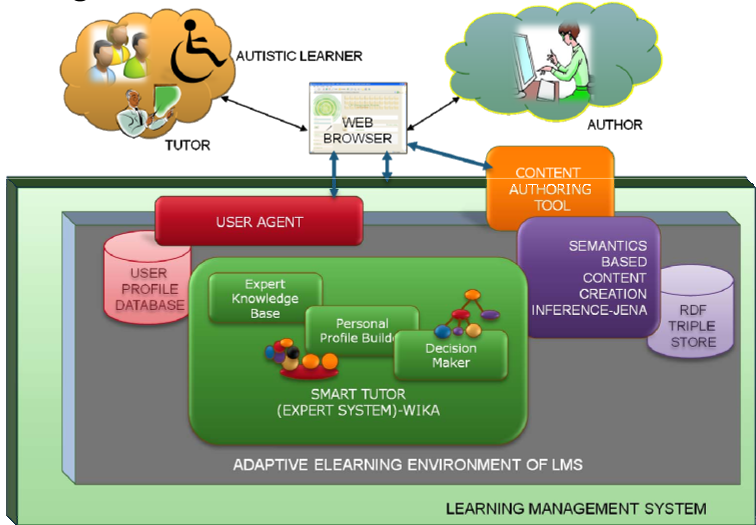 Figure 1: The integration of the Smart Tutor Expert System within the e-Sikshak Framework.
Mathematical Logic of Personalization
The paper formalizes the lesson planning using a series of computational phases. The Neural Network acts as the decision-maker for three parallel tasks:
- Concentration Estimation: Mapping
ResponseTimetoAttentionLevel. - Time Prediction: Calculating
LessonTimebased on the attention level. - Level Progression: A supervised rule (Back-propagation) that checks if the last three sessions hit a specific performance threshold to trigger a
Level Change (L+1).
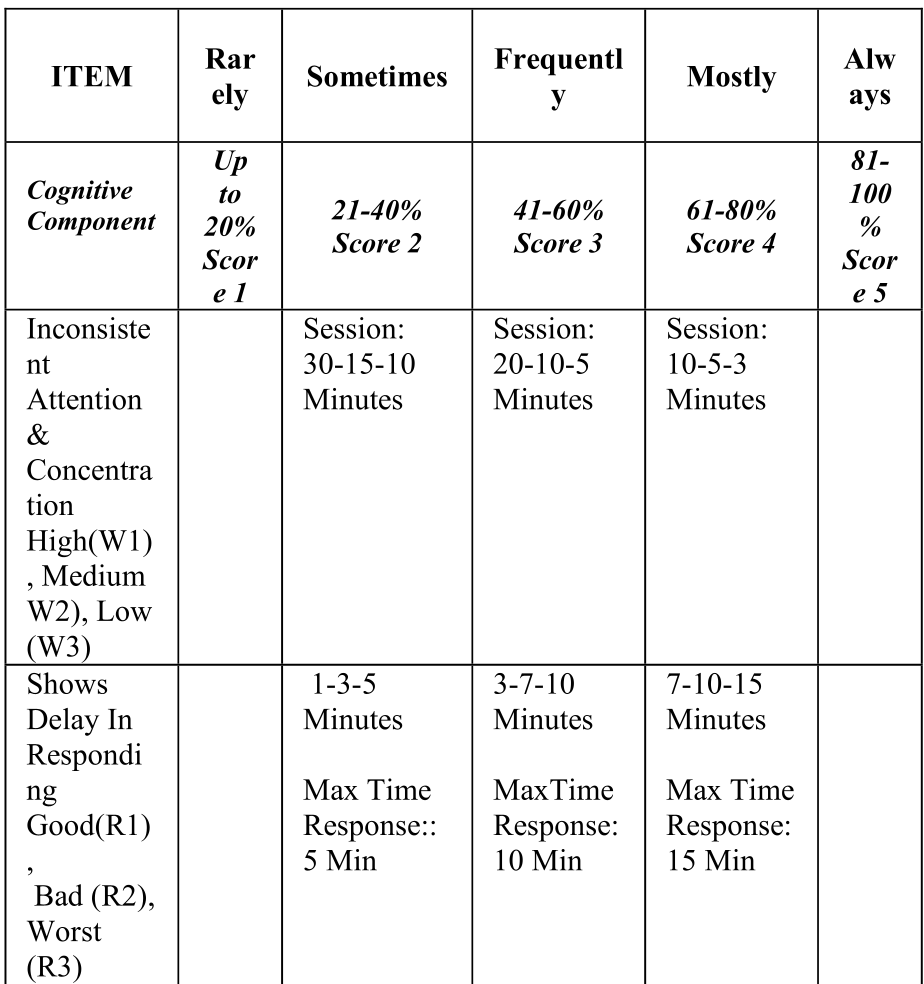 Table 1: Mapping ISAA Cognitive Components to digital Session Time and Response weights.
Experiments & Results
The prototype was tested using the WEKA Machine Learning workbench. Key observations included:
- Dynamic Session Shortening: For a learner classified as DS2 (Mild Autism), if the mood assessment showed a "Worst" response time (>5 mins), the system intelligently reduced or skipped the subject to avoid cognitive overload.
- Modality Optimization: After observing 3 sessions where a child spent more time on game-based modules vs. text, the system updated the user profile to prioritize Game-Based Modality (LM) for future planning.
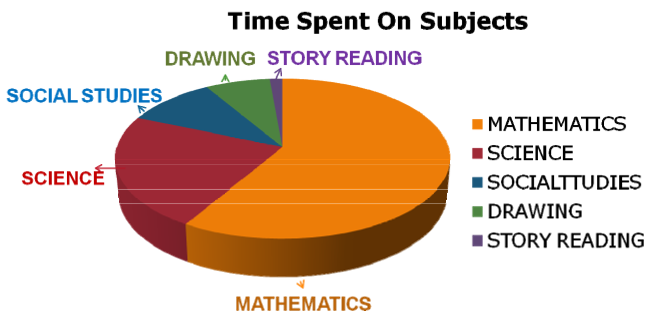 Figure 2: Tracking time spent on subjects to infer "Favorite Activities" and cognitive trends.
Critical Insight & Conclusion
The Smart Tutor's core value lies in its use of Response Time as a primary input for machine learning. In the context of Autism, "speed" isn't just about efficiency; it's a window into the user's neurological readiness.
Limitations: The current model relies on a "Mood Assessment" interaction which itself requires some level of engagement. Future versions could benefit from non-invasive biometric monitoring (e.g., eye-tracking or heart rate) to build context without requiring the child to answer preliminary questions.
Summary: This paper provides a robust blueprint for how AI can act as a "Virtual Shadow Teacher," providing the "intuition and flexibility" that domain experts agree is vital for ASD intervention.