
Monster & Gold: Bridging Physiology and Gaming for Smart Cardiovascular Training
12295_Smarter Phones for Healthier Lifestyles An Adaptive Fitness Game.
The paper presents "Monster & Gold," a mobile context-aware fitness game designed to motivate outdoor jogging at optimal aerobic intensities. It utilizes real-time heart rate data via pulse oximetry and GPS speed tracking to dynamically adapt game rules, ensuring users remain within 50-75% of their HRMax for cardiovascular benefits.
TL;DR
"Monster & Gold" is a mobile physical-activity game that acts as a personal trainer. By integrating real-time heart rate and GPS data, it transforms a standard jog into a "Reach-or-Avoid" challenge where game rewards (gold) and obstacles (monsters) are dynamically generated to keep the user's heart rate in the perfect aerobic zone (50-75% HRMax).
The "Blind" Exercise Problem
Despite the proliferation of step counters and heart rate monitors, most users struggle with intensity management. Beginners often run too fast, leading to burnout or injury, while others don't push hard enough to gain cardiovascular benefits. Existing games like Fish’n’Steps or UbiFit Garden reward quantity (steps) but are "blind" to the user's interior physiological state. Without a feedback loop that understands effort (Heart Rate) rather than just movement (Steps), fitness games remain simple trackers rather than intelligent coaches.
Methodology: The Bio-Cybernetic Loop
The heart of "Monster & Gold" is its ability to translate physiological data into game mechanics. The system creates two primary tasks:
- Proceed-on-trail (PROC): The baseline jogging state where the system calculates your
MeanHR. - Reach-or-Avoid (ROAV): A challenge event triggered by your previous performance.
The game implements a clever OptSpeed formula:
OptSpeed = MeanSpeed * (OptHR - RestHR) / (MeanHR - RestHR)
This formula predicts how fast a user should run to reach their target heart rate. If the user's heart rate is too high, a "Monster" appears, forcing them to slow down to avoid losing Health Points (HPs). If it’s too low, "Gold" appears far ahead, requiring a speed burst to catch it.
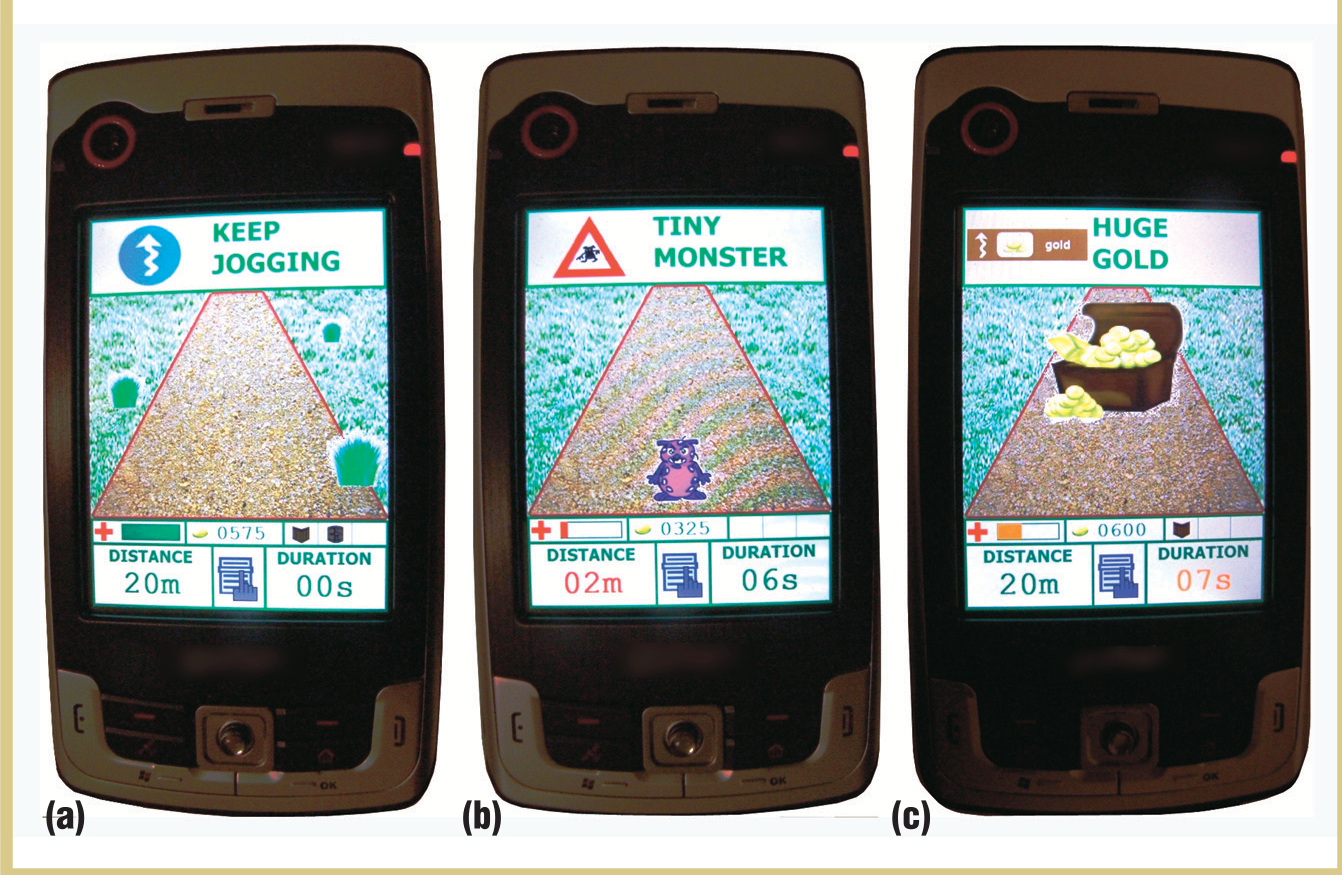 Figure 1: (a) Steady jogging (PROC); (b) A monster requiring deceleration; (c) Gold requiring acceleration.
Evaluation and Technical Refinement
The authors conducted two rounds of user studies. A key discovery in the first round was that users didn't always understand the punitive nature of monsters—some even ran towards them to "fight."
In the second iteration, the team enhanced the audio feedback using an affective voice approach:
- Calm voice: Early warning to slow down.
- Anxious tone: When the user is halfway to the monster.
- Shouting: When the user is at critical risk of collision.
This refinement resulted in a significant performance jump: users successfully avoided monsters and caught items, staying in the optimal heart rate zone 69.4% of the time.
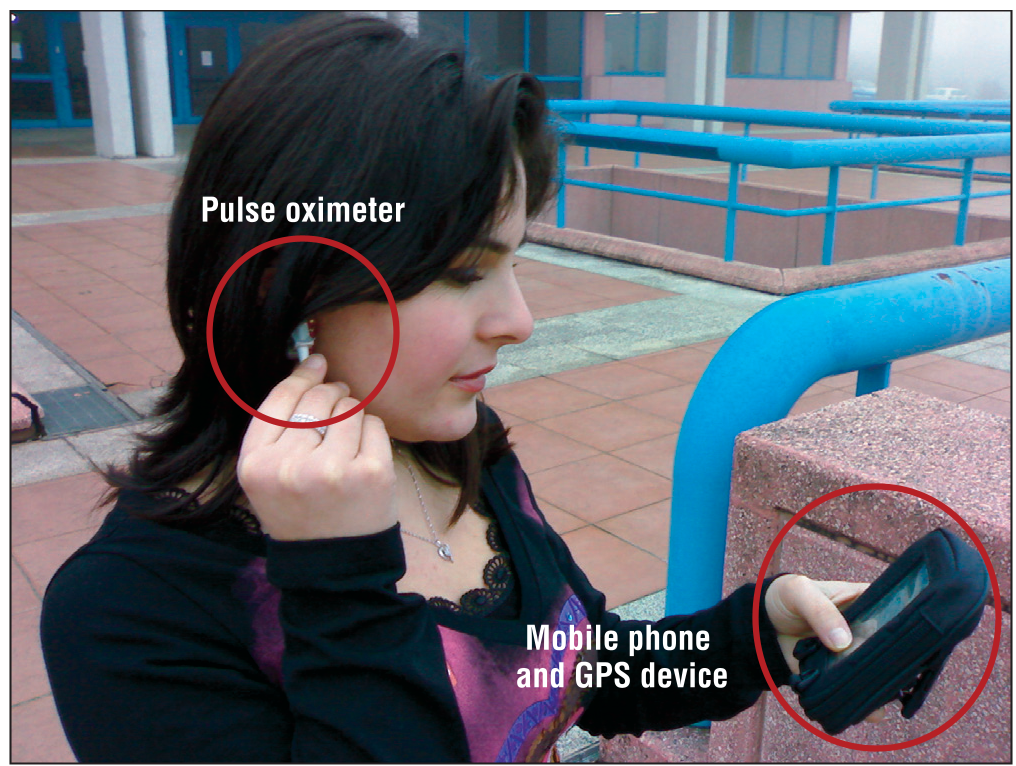 Figure 2: User wearing the equipment (a) and the comparative ratings between the first (b) and second (c) evaluations.
Critical Insight: Why This Matters
The breakthrough of "Monster & Gold" is its context-aware adaptation. It recognizes that "optimal intensity" is a moving target that changes with age, fitness level, and even the daily recovery state of the user. By utilizing a "Health Point" system, the game creates a tangible consequence for physiological overexertion, effectively gamifying the safety boundaries of medicine.
Conclusion & Future Outlook
While the study used ear-clipped pulse oximeters (which the authors admit are cumbersome), the logic is easily transferable to modern smartwatches. The future of this technology lies in Long-term Adaptation: adjusting game difficulty over weeks as the user’s resting heart rate drops and their speed-to-heart-rate efficiency improves. As we move toward ubiquitous health monitoring, games that "know how your heart feels" will become the gold standard for preventative medicine.