
SmartSales: Bridging the Expertise Gap in FinTech Telemarketing via AI Coaching
SmartSales: An AI-Powered Telemarketing Coaching System in FinTech
This paper introduces SmartSales, an AI-powered telemarketing coaching system tailored for the Chinese FinTech industry. It utilizes a hybrid architecture of offline knowledge accumulation and online real-time coaching, integrating ASR, intent mining, and response recommendation to empower junior sales representatives.
TL;DR
SmartSales is a domain-specific AI system designed to solve the "expert scarcity" problem in telemarketing. By mining high-quality sales pitches from senior staff and providing real-time response recommendations to juniors, it creates a closed-loop coaching environment. Deployed at WeBank, it leverages ASR, CNN-based intent detection, and Learning-to-Rank (LTR) to achieve over 90% accuracy in intent classification.
Background & Motivation: The Training Bottleneck
In the FinTech sector, telemarketing remains a crucial bridge to customers. However, the industry suffers from a high turnover of junior staff and a "knowledge silo" problem—senior agents have the best "scripts" in their heads, but transferring that knowledge manually is inefficient.
The authors identify a critical gap: existing AI coaching works mostly in sports or general education, but rarely in the high-stakes, real-time environment of Chinese financial telemarketing. SmartSales was built to turn every phone call into a learning opportunity.
Methodology: The "Knowledge-to-Action" Architecture
The system is split into two logical halves: Offline Knowledge Accumulation and Online Coaching.
1. Offline KnowledgeBase Construction
Instead of manually writing scripts, the system mines them. It uses a classifier to distinguish meaningful questions from noise in historical dialogues and then uses semantic similarity (Sentence Embeddings and Topic Distribution) to pair them with the most effective answers.
2. Online Real-time Pipeline
Individual modules work in sequence during a live call:
- ASR (Acoustic Model): Uses a Kaldi "Chain" model combined with a BERT-powered rescoring mechanism (L2RS) to ensure high transcript accuracy.
- Intent Mining: A CNN-based classifier categorizes customer intent into 35 granular categories (e.g., "Refusal," "Interest," "Inquiry").
- Response Recommendation: This uses a sophisticated "Retrieve then Rank" strategy. It identifies candidates via cosine similarity and then applies a pairwise Learning-to-Rank (LTR) model to present the Top-3 best responses to the agent.
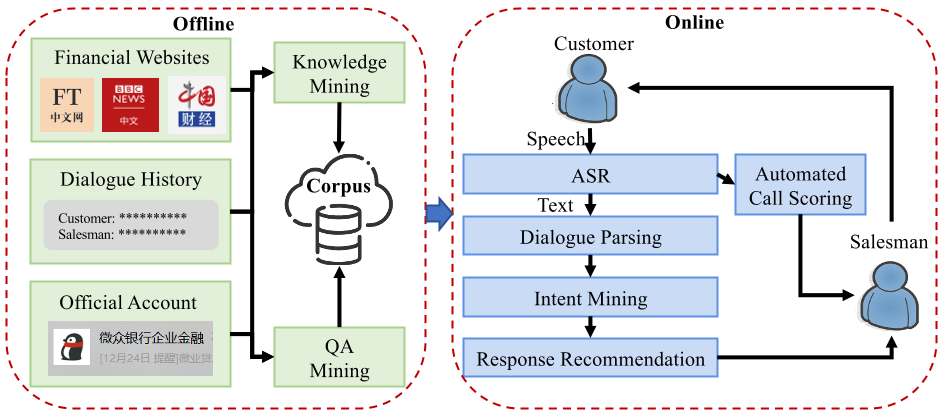 Figure 1: The dual-phase workflow of the SmartSales system.
Experimental Results: Precision under Pressure
The system was validated on 15,000 real-world recordings. In the FinTech domain, where terminology is specific and errors are costly, the performance metrics are impressive:
- Intent Detection: F1-score of 90.1%, crucial for understanding customer needs instantly.
- QA Mining: Accuracy of 85.3%, ensuring the knowledge base remains high-quality.
- Reranking: F1-score of 83.5%, providing relevant and persuasive responses.
 Figure 2: Performance analysis across Intent Detection, QA Mining, and Recommendation tasks.
Deep Insight: Beyond Simple Transcription
The core genius of SmartSales is not just "Speech-to-Text," but the Recommendation Logic. By using a Feedforward Neural Network to learn the correlation between query-answer pairs (Eq. 4 and 5), the system moves from being a passive recorder to an active participant.
The inclusion of Profanity Detection and Sentiment Analysis in the "Automated Call Evaluation" module provides a safety net for the enterprise, ensuring that while agents are being coached to sell, they are also adhering to compliance and branding standards.
Conclusion & Future Outlook
SmartSales represents a significant step in AI-human collaboration. It successfully productizes complex NLP research into a tool that provides immediate business value.
Future Work: While the current system uses a retrieval-based approach for responses, the next logical step would be integrating Generative AI (like LLMs) to provide more natural, context-aware suggestions, though this would require robust guardrails to prevent "hallucinations" in the strictly regulated financial space.