
Can a Robot’s Vulnerability Unlock Prosociality? The "Smile-Help" Chain in ASD Therapy
Smiles of Children with ASD May Facilitate Helping Behaviors to the Robot
This study investigates whether a humanoid robot (NAO) can serve as a recipient of help to facilitate prosocial behaviors in children with Autism Spectrum Disorder (ASD). The authors propose that "smiles" act as a precursor and facilitator for instrumental helping behaviors, achieving improved engagement through a robot-assisted intervention.
TL;DR
This research explores a shift in Robot-Assisted Intervention (RAI): instead of the robot helping the child, the child helps the robot. By measuring facial expressions, the study reveals that smiles function as a critical catalyst, facilitating helping behaviors in children with Autism Spectrum Disorder (ASD).
The "Feel-Good, Do-Good" Intuition
In social psychology, the "feel-good, do-good" phenomenon suggests that a positive mood increases the likelihood of helping others. For children with ASD, who often face challenges in nonverbal communication and empathy, traditional interventions focus on imitation or following instructions.
The authors of this paper pivot to instrumental helping—the act of assisting someone in achieving a physical goal (like picking up a dropped pen). They hypothesized that if a robot could induce a smile, that positive affect would lower the threshold for the child to engage in prosocial "helping" actions.
Methodology: The Robot as a Younger Sibling
The researchers employed the NAO robot, a child-sized humanoid. Its non-sophisticated, somewhat clumsy movement was intentionally used to create a "younger sibling" persona that required assistance.
The Intervention Flow:
- Stage 1 (Greeting): NAO acknowledges the child.
- Stage 2 (Play): Interactive games (Rock-Paper-Scissors) to induce positive mood.
- Stage 3 (The Helping Test): The therapist prompts: "The robot needs help to walk." The child’s willingness to hold NAO's hands or steady it is measured.
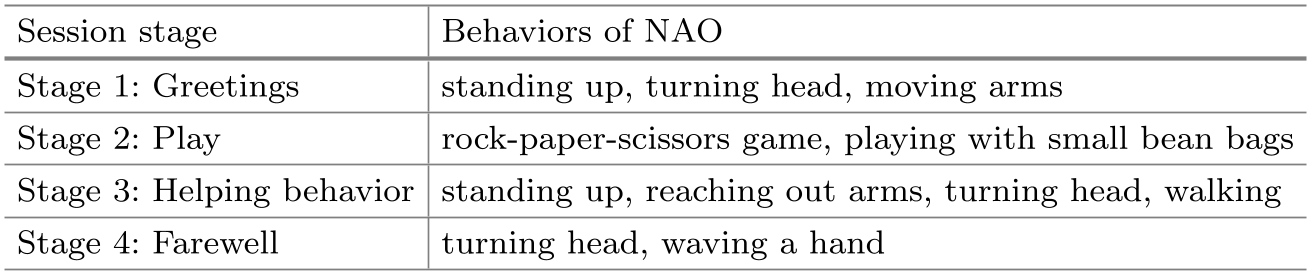 Table 1: The four-stage interaction design used to observe the transition from play to prosocial behavior.
The study utilized a Wizard-of-Oz (WoZ) method, where a hidden operator controlled NAO’s responses in real-time to ensure the interaction remained fluid and emotionally responsive.
Key Insights from Behavior Analysis
The researchers analyzed two primary metrics: Smile frequency (via NAO’s forehead camera) and Helping duration (via ceiling cameras).
1. The Correlation is Real
The results indicated that when children with ASD showed an increase in smiles between sessions, their helping behaviors also increased. Conversely, a drop in smiles correlated with less engagement in helping the robot walk.
2. ASD vs. Typically Developing (TD) Children
While TD children responded almost immediately (~99% helping proportion), children with ASD required more time and showed more variance. However, the critical takeaway is that all participants with ASD demonstrated helping behaviors, proving the robot’s efficacy as a recipient of help.
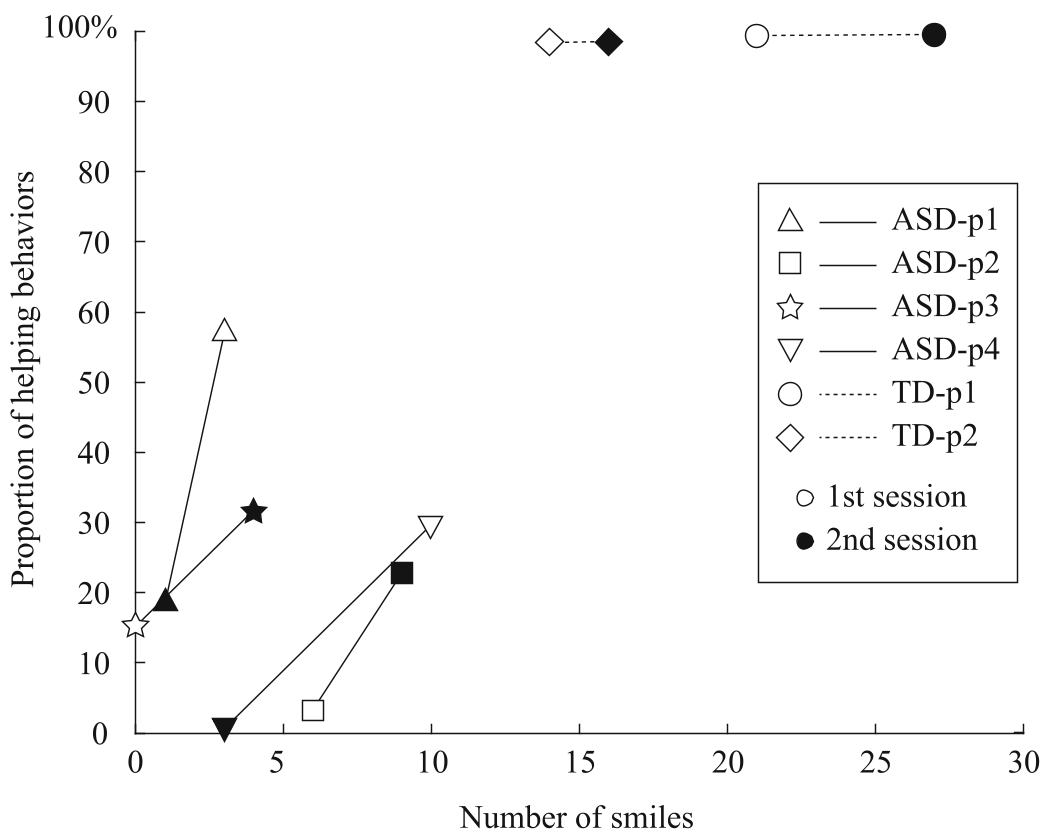 Figure 4: The clear trend showing the relationship between the number of smiles and the proportion of helping behaviors.
Critical Analysis: Why This Matters
This work highlights the importance of affective state in therapy. We often treat ASD interventions as "skill training," but this study suggests it is also "mood management." By using a robot like NAO—which is perceived as less intimidating and more "understandable" than a human—we can create a safe space for children to practice the foundational steps of empathy.
Limitations:
- Small Sample Size: As an exploratory study with a limited number of participants, the results are preliminary.
- Camera Angles: Using RGB cameras to detect smiles is difficult when children move; future work plans to use wearable EMG (Electromyography) sensors for more precise facial muscle detection.
Conclusion
The "Smile-Help" chain offers a promising blueprint for future ASD therapies. If we can design robots that not only teach but also "need" us, we can help children bridge the gap from simple instrumental help to complex emotional empathy.
Takeaway for the field: To increase prosocial behavior, first increase the joy of the interaction. The smile isn't just a byproduct; it's the engine.