
Forecasting Smog-Health Hazards: When Social Media Meets Physical Sensors
Forecasting smog-related health hazard based on social media and physical sensor
This paper presents a novel predictive analytics framework for forecasting smog-related health hazards by integrating social media data (Weibo) with physical sensor observations. The method employs an Artificial Neural Network (ANN) to learn non-linear relationships, successfully achieving superior performance in next-day health risk prediction across eight major Chinese cities.
TL;DR
Researchers from Zhejiang University and the University of Aberdeen have developed a first-of-its-kind system that predicts next-day smog-related health risks by "listening" to social media. By combining physical sensor data (AQI, wind speed, humidity) with the collective "complaints" on Weibo, the model achieves a 20% increase in accuracy over traditional methods, particularly during extreme pollution events where hardware sensors might lack human context.
Academic Positioning: This work is a pioneering bridge between Urban Computing and Public Health Informatics, shifting the focus from "what is the air quality" to "how is the air quality affecting people right now."
Problem & Motivation: The Gap Between Sensors and Symptoms
Standard air quality monitoring is purely physical. We know the parts-per-million of PM2.5, but we don't always know how that translates to the immediate health burden on a city's population.
The authors identified two major gaps:
- Prior Work Lag: Historical studies on smog health impacts often rely on hospital records, which are delayed and don't capture the "pre-clinical" stage where people have dry throats or itchy eyes but haven't seen a doctor.
- Linearity Fallacy: Physical sensors alone often fail to capture the non-linear "panic" or "complaint" threshold of a population.
The insight here is that social media functions as a real-time "human sensor" network. When the smog gets bad, the "signal" doesn't just appear in the text; it diffuses through retweets and likes, creating a quantifiable measure of public health hazard.
Methodology: Fusing Social and Physical Signals
The framework consists of two pillars: Measurement and Forecasting.
1. Modeling Human Sentiments as Indices
The authors extracted two key indices from Weibo:
- Public Health Index (PHI): Frequency of health hazard phrases (e.g., "respiratory," "throat irritation").
- Smog Severity Index (SSI): Frequency of descriptors for the smog itself.
- The Diffusion Factor (/): By accounting for retweets and likes, they weighted the "importance" of a health complaint based on its social reach.
2. The ANN Architecture
To handle the non-linear relationship between wind speed, historical pollution, and social complaints, the authors utilized Artificial Neural Networks (ANNs). They specifically highlighted the Extreme Learning Machine (ELM), a single-hidden-layer feed-forward network known for high generalization performance and rapid training speeds.
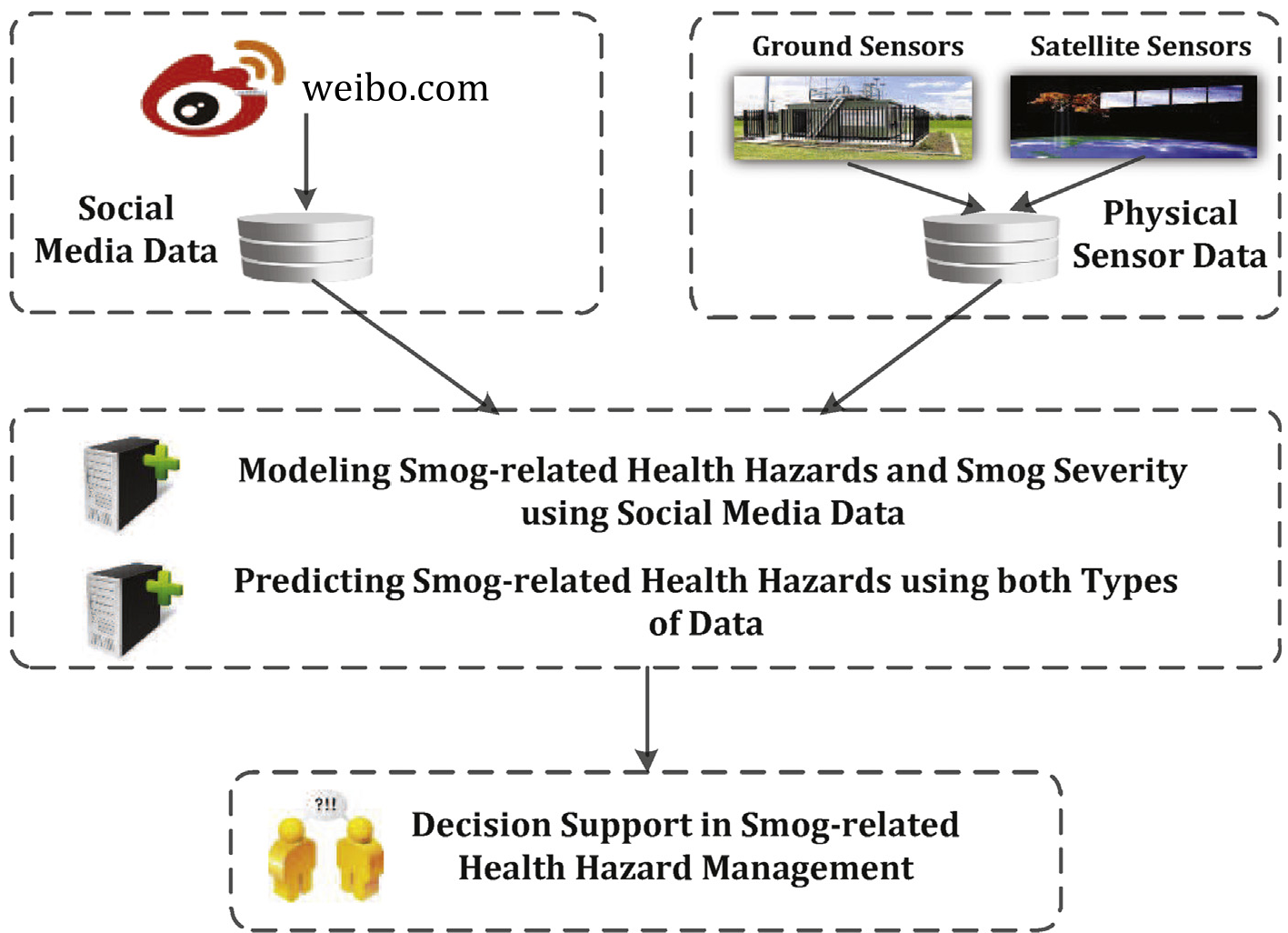 Figure 1: The proposed research framework integrating social and physical data streams.
Experiments & Results: The Power of Fusion
The model was tested across 8 major cities (including Beijing and Shanghai) using 315 million tweets and 592 million sensor records.
Key Findings:
- Fusion works best: The (Physical + Social) model consistently outperformed baseline SVR and Random Forest models.
- Extreme Weather Accuracy: In days where , social media data became a better predictor than physical sensors. This is likely because severe smog triggers a massive surge in social media activity (14.5% increase), providing more data for the model to learn from.
- Diffusion Matters: Incorporating the social network's "retweet" mechanism improved accuracy by approximately 7.6% to 10.5%.
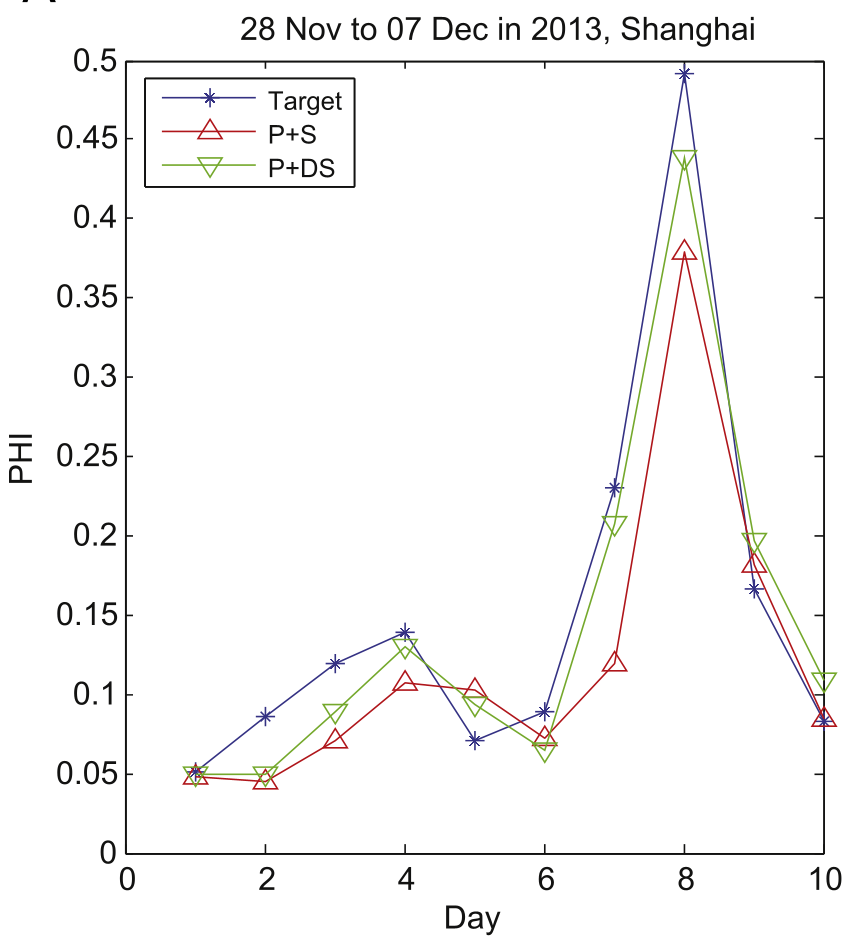 Figure 2: Real-world case study results showing the tight alignment between predicted and actual health hazard targets in Shanghai and Beijing.
Critical Analysis & Conclusion
Takeaway
This paper proves that "Big Data" in the urban context is more than just hardware. The synergy between what machines measure (physical sensors) and what people feel (social media) creates a holistic view of urban disasters.
Limitations & Future Work
- Semantic Noise: Using keywords for health monitoring is prone to errors (contextual ambiguity).
- Demographic Bias: Social media users are typically younger and urban-dwelling; the "health hazard" captured might not reflect the elderly population, who are most vulnerable to smog.
- Future Path: The integration of Visual Analytics to help policymakers "see" the hazard clusters in real-time is the logical next step for this research.
In conclusion, by treating the city's residents as a distributed sensor network, the authors have provided a robust tool for early warning systems that go beyond mere air quality numbers to actual human impact.