
SNAC: Mapping the Social Graph of Human History Through Archives
16142_SNAC the social networks and archival context project.
The paper introduces SNAC (Social Networks and Archival Context), a digital library prototype that aggregates and merges biographical data from diverse archival records (EAD) and library authority files (LCNAF, VIAF, ULAN). It creates a unified, searchable social network of historical figures, families, and organizations, establishing a "biographical context" for archival research.
TL;DR
The Social Networks and Archival Context (SNAC) project bridges the gap between libraries and archives by creating a unified search interface for historical figures. By merging fragmented records into a cohesive social network, SNAC allows researchers to see not just who a person was, but how they were connected to organizations, other individuals, and primary historical documents across global repositories.
Background: The Fragmented History Problem
For decades, historical research has been a game of "connect the dots" played across disconnected institutional silos. A researcher studying George Washington might find letters in the Library of Congress, financial records in Virginia, and mentions in international authority files. The problem? Archival descriptions (EAD) and Library authority files (LCNAF/VIAF) rarely talked to each other.
Existing infrastructures lacked a centralized "biographical context," making it nearly impossible to automatically link the creator of a record at Institution A with the subject of a record at Institution B.
The SNAC Vision: From Records to Relationships
The SNAC project's core innovation lies in its shift from record-centric discovery to entity-centric discovery. Instead of searching for a document, you search for a person (or family/organization), and the system reconstructs their world.
The Technical Engine: Matching and Merging
The research team employed a "staged approach" to data integration:
- Data Ingestion: Harvesting EAD records and converting them into EAC-CPF (Encoded Archival Context for Corporate Bodies, Persons, and Families).
- Entity Resolution: Using high-confidence data (like the Virtual International Authority File - VIAF) to serve as an anchor.
- Heuristic Merging: Combining records based on name variants, existence dates, and biographical notes to resolve duplicates.
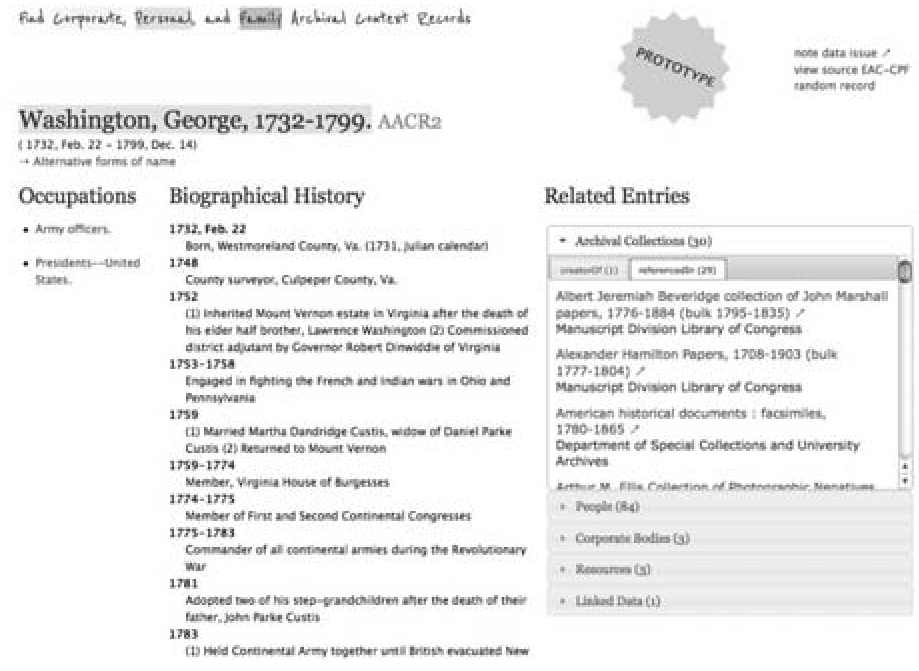 Figure 1: The SNAC browsing interface, allowing access via occupations and subjects.
Visualizing the Network: The George Washington Case Study
The power of SNAC is best illustrated through its record displays. Unlike a traditional library catalog, a SNAC entity page functions like a "Historical LinkedIn."
For an entity like George Washington, the system displays:
- Biographical Context: Summaries of his life and roles (Soldier, President, etc.).
- Social Connections: Explicit links such as "Corresponded With" or "Associated With."
- Distributed Resources: A list of archival collections nationwide that contain materials related to him.
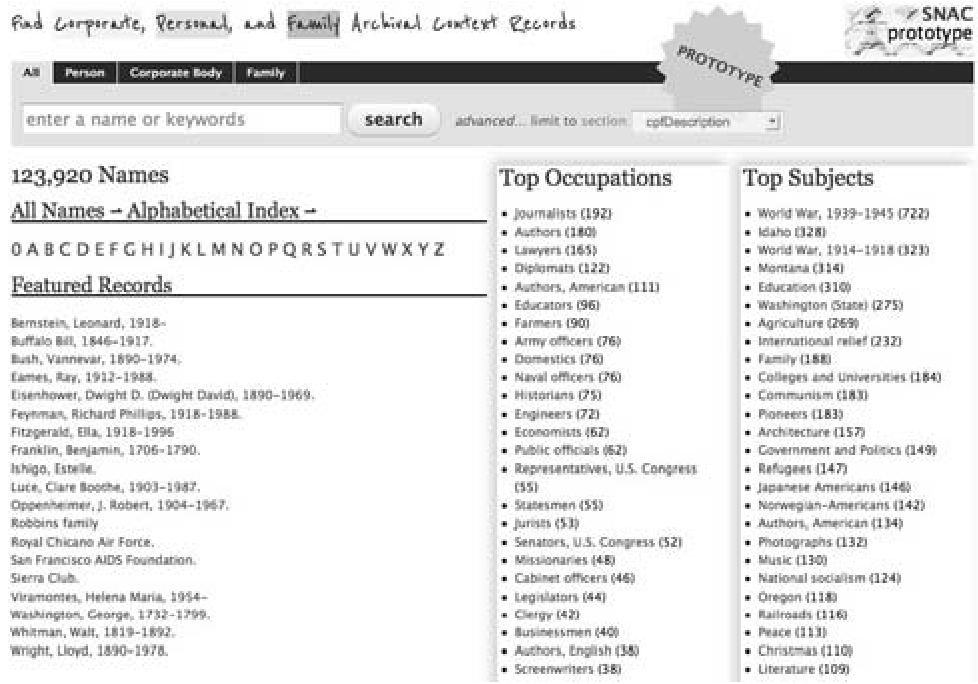 Figure 2: Comprehensive entity record showing linked archival resources and relationships.
Impact and Future Directions
SNAC transitioned from a prototype into a major collaborative tool in the digital humanities. By standardizing how we represent "Identity" in an archival context, it has:
- Reduced Duplication: Streamlining how archivists describe entities.
- Enhanced Discovery: Allowing scholars to find "hidden" primary sources through social links.
Limitations: At the time of this publication, the matching algorithms were still in development, and the reliance on exact string matching sometimes led to false positives or missed merges. However, the foundational move toward Linked Open Data (LOD) paved the way for the modern semantic web in cultural heritage.
Conclusion
SNAC is more than just a search engine; it is a fundamental reconfiguration of archival intelligence. By focusing on the creators of history, it provides a much-needed bridge between the world of books and the world of unique historical artifacts.