
SNAG: Gamifying Social Connections to Rescue Student Retention in Computer Science
SNAG: using social networking games to increase student retention in computer science
The paper introduces SNAG (Social Networking and Games), a suite of mobile and web-based games designed to facilitate social interaction and community building. Focusing on the flagship game "Snag'em," the study demonstrates how gamified "human scavenger hunts" can increase professional and academic networking, particularly for students in Computer Science.
TL;DR
Retention in Computer Science (CS) is a critical challenge, particularly for women and minorities who often feel isolated. This paper presents SNAG (Social Networking and Games), featuring Snag'em, a mobile social game that turns networking into a "human scavenger hunt." By gamifying the act of meeting peers, the researchers aim to build a stronger sense of community—a proven precursor to academic persistence and success.
Problem & Motivation: The "Belonging" Gap
Research has long shown that students who feel like they are part of a larger academic community are significantly more likely to stay in their major. However, social interaction doesn't just "happen." In STEM departments, minority students often study alone, missing out on the collaborative learning environments that their peers enjoy.
The authors argue that:
- Social Inequality: Native language or social status can create barriers in conference and university settings.
- Costly Interventions: Existing programs to foster community are often too expensive or require massive structural changes to the curriculum.
- The Need for a "Social Lubricant": Students need a low-pressure, intentional design to initiate interactions.
Methodology: The Mechanics of Snag'em
The core of the SNAG suite is Snag'em, a game that bridges the gap between digital interaction and physical "in-person" networking.
1. The Human Scavenger Hunt
Players create profiles with "tags" (e.g., "Works in the Game Lab"). Other players receive missions to "SNAG" someone with those tags. To complete the mission, the player must physically find the person and enter their unique 4-digit SnagID.
2. Network Connectivity Incentives
Unlike standard social media, Snag'em rewards Network Connectivity.
- Strong Connections: Formed when two people "snag" each other mutually (Friendship).
- Weak Connections: Formed when the interaction is one-way.
- Bonuses: The game awards more points for building a "full" network and interacting with people outside of one's usual social circle.
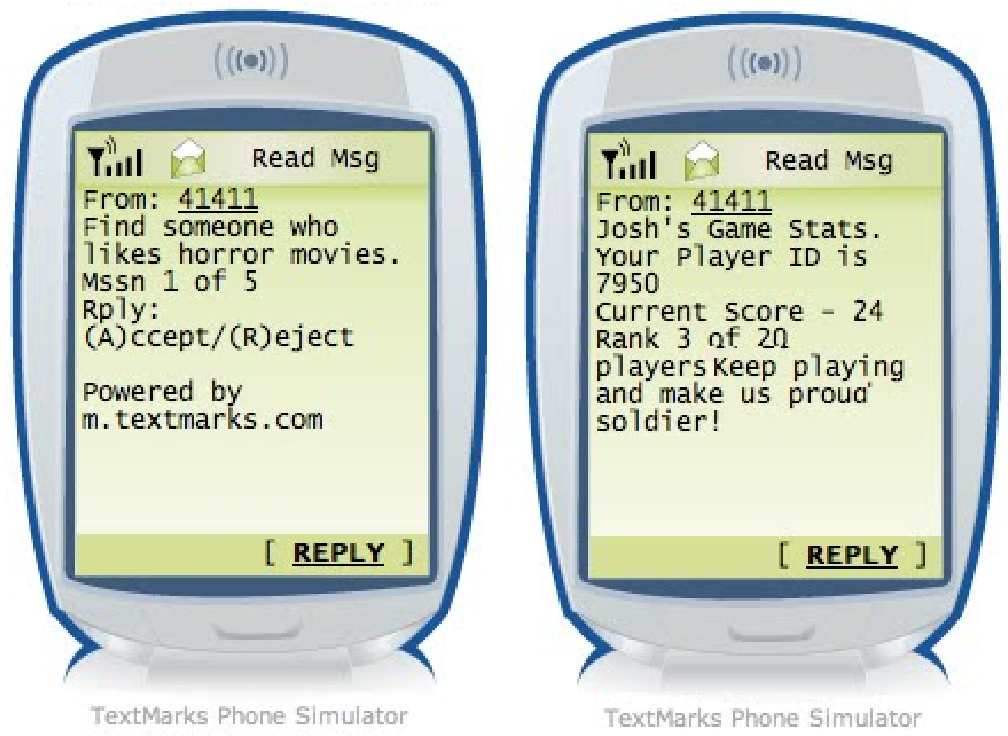 Figure 1: Mockup of the user interaction via mobile SMS/Web interface.
Experiments & Results: Real-World Engagement
The researchers piloted Snag'em at the STARS Celebration, a large conference for Broadening Participation in Computing.
- High Activity: Despite server crashes and hacking attempts by enthusiastic CS students, 50% of participants actively engaged with the game.
- Ad-hoc Networking: Students played from 8:30 AM to 10:00 PM, using the game as a conversation starter during coffee breaks and lunches.
- Qualitative Success: Participants noted that the game helped them meet more people than any previous conference. One student indicated it gave her the self-assurance needed to interact with her peers.
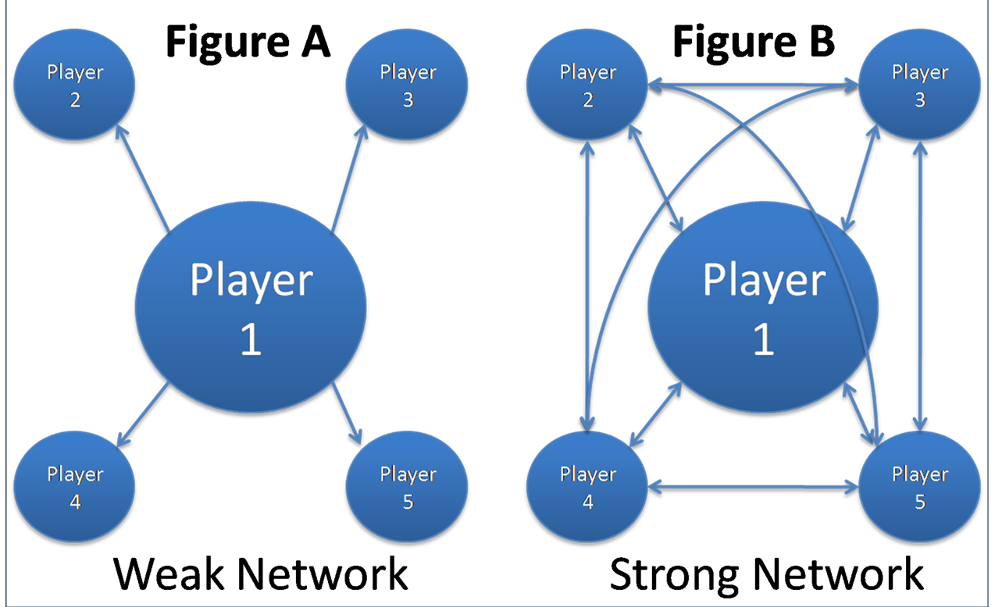 Figure 2: Representation of player social networks, distinguishing between weak and strong ties.
Critical Analysis & Conclusion
Takeaway
The SNAG project demonstrates that community building doesn't require a total overhaul of the CS department. Instead, ubiquitous, lightweight tools can lower the barrier to social entry. By incentivizing students to step out of their silos, we can create the peer-to-peer support systems essential for retention.
Limitations
- The "Social" Bias: It is currently unclear if the game primarily attracts already-social students or if it actually helps "introverts" break out of their shell.
- Hardware Access: The initial focus on mobile phone applications, while effective for "in-the-moment" play, may limit participants who do not have compatible devices (though SMS support mitigates this).
Future Outlook
The next phase of this research involves a long-term study using the Sense of Community Index 2 (SCI-2) to quantify exactly how these games impact a student's desire to stay in the Computer Science major. If successful, SNAG could become a standard "onboarding" tool for universities worldwide to protect and nurture diverse talent in STEM.