
SNDocRank: Leveraging Your Social Circle to Solve the Personalized Search Puzzle
SNDocRank: Document Ranking Based on Social Networks
SNDocRank is a personalized document ranking framework that integrates traditional content-based relevance (tf-idf) with social network topology. It utilizes a novel Multi-level Actor Similarity (MAS) algorithm to efficiently compute user proximity in large-scale social graphs, significantly outperforming standard ranking methods in social search tasks.
TL;DR
SNDocRank is an innovative ranking framework that proves your "friends" are the key to better search results. By combining traditional keyword matching with a sophisticated Multi-level Actor Similarity (MAS) algorithm, this approach ensures that the documents you find are not just relevant to the query, but resonant with your social identity.
Background Positioning
In the landscape of Information Retrieval (IR), we have seen a shift from content-only ranking (tf-idf) to link-based ranking (PageRank). SNDocRank represents a pivotal step toward Socially-Aware IR, treating the social graph as a primary signals for relevance.
The Pain Point: Search is Socially Blind
Why does a search for "Animation" yield the same results for a professional animator and a casual fan? Most search engines suffer from "averaging"—they optimize for the general population. While some personalized models look at your past clicks, they ignore a fundamental human truth: Homophily. We tend to associate with others who share our interests. If the "owner" of a document is socially close to the "searcher," that document is statistically more likely to be relevant.
Methodology: The MAS Algorithm
The core challenge of social ranking is scale. Calculating similarity between millions of nodes is computationally expensive. The authors introduce Multi-level Actor Similarity (MAS) to solve this:
- Hierarchical Clustering: Using fast community detection, the network is grouped into clusters (communities), and those clusters into higher-level "abstract nodes."
- Weighted Similarity: It calculates similarity at the "backbone" level and then propagates it down.
- Hybrid Scoring: The final rank is a function , where is the social structural similarity between the searcher and the content creator .
 Note: The MAS approach reduces complexity by analyzing the backbone network rather than every individual connection.
Experiments & Results
Testing on YouTube data revealed three critical insights:
- Effectiveness: SNDocRank (specifically using MAS) consistently yielded higher NDCG scores than tf-idf.
- The "Popularity" Boost: Users with more friends (higher degree) saw better results, as the algorithm had more social context to work with.
- Network Scale: The benefits of social ranking become more pronounced as the social network grows, suggesting a "network effect" for search quality.
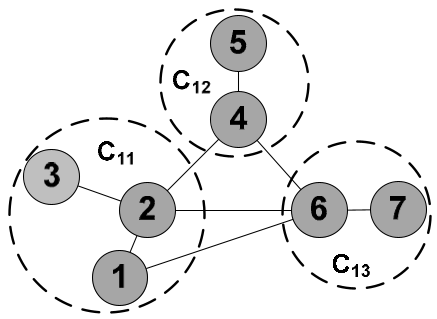 The experimental setup utilized real-world YouTube metadata to validate interest-based ranking.
Critical Insight & Conclusion
SNDocRank shifts the paradigm of search from "What is this document about?" to "Who produced this for whom?"
The "Social" Takeaway for Users:
To get better search results in a socially-ranked world, you should:
- Expand your network: Join larger communities.
- Engage more: Higher degrees lead to better personalization.
- Connect with Experts: Alignment with large interest groups improves the precision of the MAS algorithm.
Limitations: While powerful, the reliance on document "ownership" can be a bottleneck. In many modern contexts (like news), the document "owner" might be a corporate entity, requiring a more nuanced definition of the "social relationship" beyond simple ownership.
Future Outlook: Integrating these structural graph features into modern Large Language Models (LLMs) could provide the "social grounding" that today's AI search engines currently lack.