
The Double-Edged Sword of Granular Privacy: Why WeChat's Settings Both Help and Hurt Social Bonds
When SNS Privacy Settings Become Granular: Investigating Users' Choices, Rationales, and Influences on Their Social Experience
This paper investigates how users adopt granular audience control settings on WeChat to manage information privacy. Through interviews with 24 long-term users, the study reveals that while these tools provide fine-grained control, they also introduce significant cognitive burdens and unintended social frictions, such as perceived interpersonal distance and emotional disturbance when restrictions are discovered.
TL;DR
Granular audience control—the ability to pick exactly who sees which post—is often hailed as the "holy grail" of online privacy. However, a deep-dive study into WeChat users reveals a complex reality: while these settings empower users to share more freely, the visibility of these restrictions often backfires, causing emotional hurt, damaged trust, and "relational distance" between friends.
Context Collapse and the Motivation for Control
In our physical lives, we are social chameleons. We tell different jokes to our colleagues than we do to our parents. On Social Network Sites (SNSs), however, these worlds collide in a phenomenon known as Context Collapse.
Previous solutions like Facebook's "Friends Only" were too blunt. The authors of this study looked at WeChat, a platform that offers surgical precision through:
- Tags: Grouping contacts for specific post visibility.
- Don't Share: A total "blackout" for specific individuals.
- Time Limit: Making your history disappear after 3 days or 6 months.
Methodology: Beyond the Lab
Unlike prior studies that asked participants to sort "fake" friends in a lab, this research interviewed 24 real-world users who had used WeChat for years. This longitudinal perspective allowed researchers to see how privacy isn't a one-time setup, but an evolving negotiation.
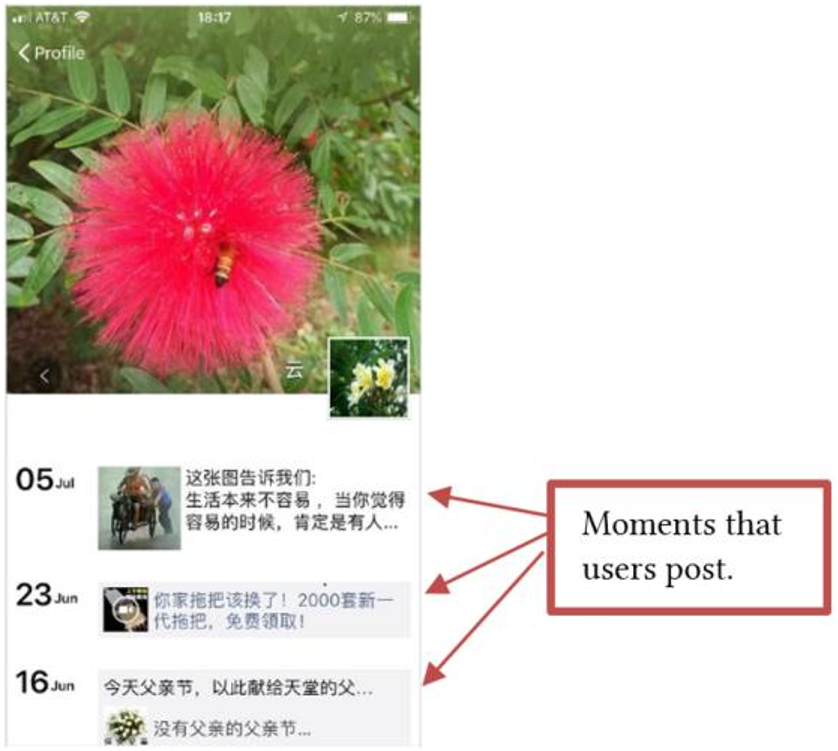 Figure 1: The architecture of Moments—a semi-closed sphere where settings dictate the flow of social data.
Key Insights: The Rationale for Restriction
The study identified that users don't just block people because they dislike them. The rationales are highly nuanced:
- Indirect Relationships: Users tag out "relatives of parents" to prevent information from leaking back to their parents.
- Perceived Personality: If a contact is "judgmental" or "gets jealous easily," they are systematically excluded from positive life updates.
- Evolving Ties: Settings are not static. As a "bakery salesman" becomes a friend, or an "internship colleague" fades into an acquaintance, the tags are updated.
The "Privacy of Privacy Settings": A New Design Challenge
The most striking finding is the social cost of being caught. WeChat's interface (and the human gossip network) often reveals when someone is being restricted.
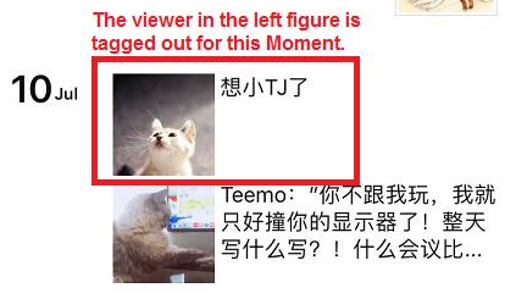 Figure 2: The "Gray Line" and blank pages—digital signatures that tell a contact "You are not trusted."
When a contact discovers they are on a "Don't Share" list or can only see 3 days of posts, they feel "unequally treated" and "distanced." One participant noted that finding out they were tagged out felt like "a thunderbolt out of a clear sky," leading them to delete the friend entirely.
Critical Analysis & Future Outlook
The study highlights a fundamental tension: Perceived Control vs. Cognitive Burden. Users want the granular control, but they hate the manual labor of maintaining tags.
Takeaways for Designers:
- Subtlety is Key: Interfaces should not explicitly signal that a user is restricted (e.g., replace the "3-day limit" notice with a more natural-looking empty feed).
- Contextual Nudges: Systems should suggest privacy adjustments as they detect shifts in interaction frequency (Inductive Bias toward relationship decay).
- Justification Tools: Allow users to provide a "soft" reason for restrictions to mitigate emotional hurt.
Ultimately, this paper shifts the academic focus from "how to secure data" to "how to secure the social relationship" while securing data. Privacy is not just a technical wall; it is a social signal.