
Beyond the Algorithm: Why Social Context is the "Make or Break" for Negotiation AI
Social Acceptance of Negotiation Support Systems
The paper investigates the social acceptance of mobile Negotiation Support Systems (NSS) through an online survey of 120 participants across five distinct use-scenarios. It demonstrates that NSS adoption is heavily context-dependent and introduces a modified Technology Acceptance Model (TAM) that emphasizes "subjective norm" as the primary driver of intention to use.
TL;DR
A study from Delft University of Technology reveals that the success of mobile Negotiation Support Systems (NSS) depends more on social signals than raw computational power. Using a modified Technology Acceptance Model, researchers found that while we may find an AI negotiator "useful," we won't use it if we think our boss or peers will judge us.
Background Positioning
While most AI research in negotiation focuses on Game Theory or automated bidding agents, this work shifts the lens toward Human-Computer Interaction (HCI) and Social psychology. It addresses the "Reality Gap": why don't people use these high-performing tools in real-world, high-stakes meetings?
The Problem: The Social Cost of "Silicon Advice"
Negotiation is a delicate dance of signals, emotions, and trust. Traditional NSS research treats the human as a rational agent in a vacuum. However, pulling out a smartphone during a job interview to check a "Pocket Negotiator" (PN) introduces a social friction:
- Impatience/Impoliteness: Interrupting the flow of communication.
- Perceived Weakness: Appearing unable to think independently.
- Deception: The "secret weapon" anxiety—does my opponent know I'm being coached?
Methodology: The Scenario-Based Approach
The authors didn't just ask abstract questions; they filmed five scenarios to ground the participants' feedback in reality. These ranged from solo preparation on a train to a high-stakes "secret use" session with a boss.
The Theoretical Framework
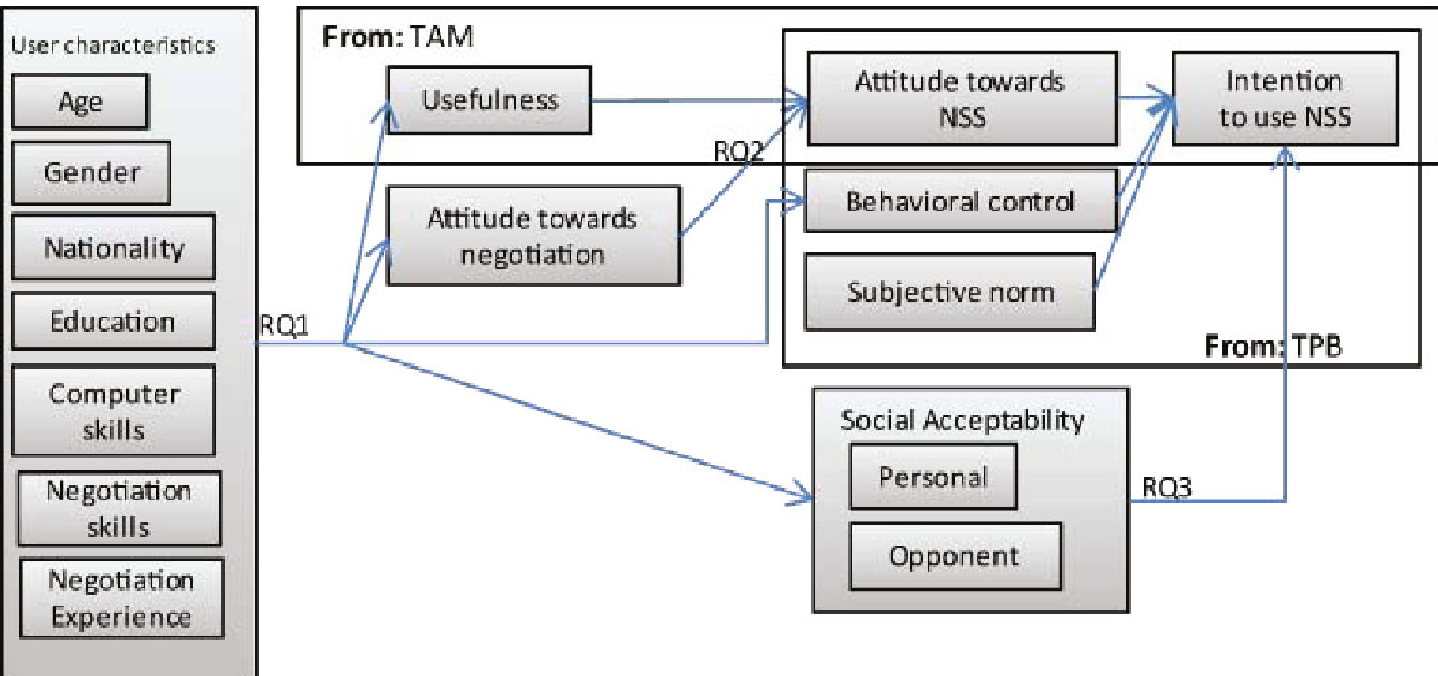
They combined the Technology Acceptance Model (TAM) with the Theory of Planned Behavior (TPB) to isolate "Subjective Norm" (what others think) from "Perceived Usefulness."
Core Insight: The Dominance of the "Subjective Norm"
The study’s most striking result is the dominance of the Subjective Norm. Across every single scenario—from buying a car to negotiating on the phone—the intention to use the NSS was primarily dictated by whether the user believed people important to them would approve.
Contextual Breakdown
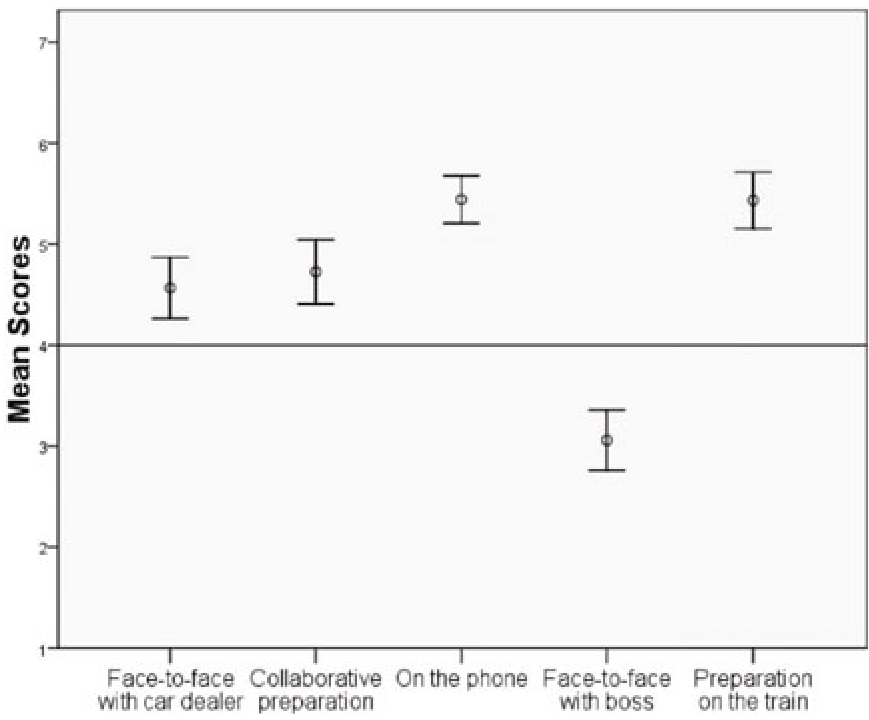
- Phone Negotiations: Most accepted, as the device is "invisible" to the opponent.
- Public Preparation (Train): Highly accepted; social norms for mobile use in transit are already permissive.
- The "Boss" Scenario: Significant resistance. Participants felt "stealth mode" would make them nervous or look dishonest.
Critical Analysis & Conclusion
This paper serves as a vital reminder for AI developers: Functionality is not enough. A tool that provides the perfect "Win-Win" mathematical strategy is useless if the act of looking at the tool destroys the rapport between negotiators.
Design Implications for the Future:
- Social Networking: The authors suggest that instead of a "black box" adviser, NSS should connect users to their own social circles, allowing friends to provide input—leveraging existing trust.
- Subtle Interfaces: To handle the "face-to-face" problem, developers must focus on low-intrusiveness interfaces (AR glasses or haptic feedback) rather than standard screens.
- Context-Aware Design: A "one size fits all" UI for negotiation is a mistake. A tool for a car dealership should look and feel different from a tool used at the dining table with a spouse.
Final Takeaway: To build the next generation of "Pocket Negotiators," we must stop treating the user as a solo operator and start treating the AI as a participant in a complex social network.