
SAF: Why Fine-Grained Social Data is the Secret Sauce for Better Recommendations
Social affinity filtering: Recommendation through fine-grained analysis of user interactions and activities
The paper introduces Social Affinity Filtering (SAF), a novel social recommendation approach that leverages fine-grained user interactions and activities (e.g., specific tags, video comments, or page memberships) rather than typical aggregate statistics. By treating these interactions as distinct Social Affinity Groups (SAGs), the method identifies highly informative predictors of user preference, outperforming SOTA social collaborative filtering models like Social Matchbox.
Executive Summary
TL;DR: Social Affinity Filtering (SAF) proves that "how" you interact on social media—whether you're tagging a friend in a video or joining a niche music group—is far more predictive than just "that" you interact. By treating 22+ interaction types and thousands of activities as distinct signal channels, SAF outperforms traditional social collaborative filtering by over 6% and solves the "cold-start" problem without requiring a user's prior history.
Positioning: This work shifts the paradigm from aggregating social signals into a single metric to filtering fine-grained social activities to find the most informative "affinity groups."
The Problem: The Curse of Aggregation
Most social recommender systems treat social networks as a simple weighted graph. If User A and User B interact often, the system assumes they share interests. However, this "Aggregate Statistics" approach is flawed. Does a "Happy Birthday" wall post carry the same weight as both users being members of a niche "Klingon Language" group?
The authors argue that by collapsing all interactions into a single "tie strength," we lose the most discriminative signals. The challenge lies in identifying which of the myriad fine-grained interactions actually signal a shared preference.
Methodology: Social Affinity Groups (SAGs)
The core of SAF is the transition from users to Social Affinity Groups (SAGs). The authors categorize social data into two types:
- Interaction SAGs (ISAGs): Defined by Modality (photo, video, link), Action (like, tag, comment), and Direction (incoming/outgoing).
- Activity SAGs (ASAGs): Defined by shared memberships in Facebook Groups, Pages, and Favourites.
Architecture Overview
The recommendation task is transformed into a binary classification problem. For a user and item , the model checks if any member of a specific SAG has liked item . This binary feature vector is then fed into a linear classifier (like Logistic Regression or SVM).
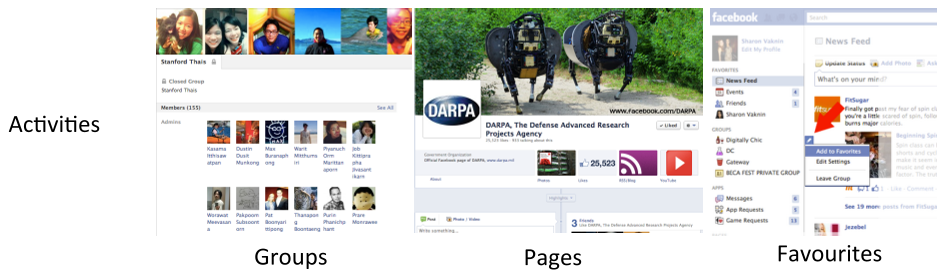 Figure 1: SAF Framework - Learning preferences through the surrogate likes of specific social groups.
Key Insights from the Experiments
1. The Superiority of "Fine-Grained" Filtering
SAF (particularly using Page Likes) systematically outperformed traditional Collaborative Filtering (NN, MF) and SOTA social models (Social Matchbox). This confirms that learning weights for individual activities is more effective than global social regularization.
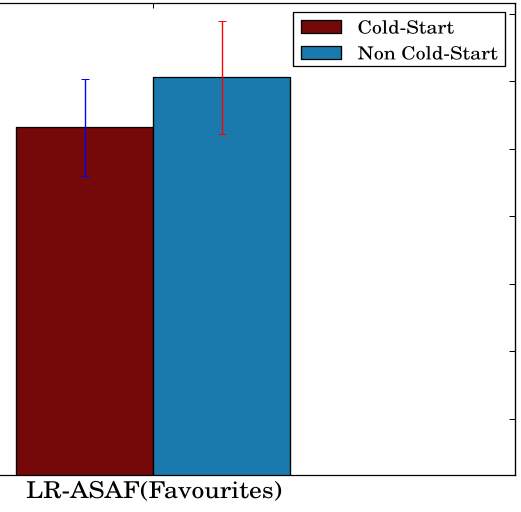 Figure 3: Accuracy comparison showing LR-ASAF (Page Likes) as the top performer.
2. Information Physics: Videos, Tags, and the Long Tail
The paper provides a fascinating entropy analysis of social interactions:
- Video > Photo: Interactions on videos are more informative than photos, likely because videos require a higher "attention tax" to consume.
- The Power of the Niche: The most predictive groups are small and "long-tailed" (e.g., specific sub-genres of music). Large, generic groups (e.g., "Interests: Music") are noisy and provide little predictive value.
- Direction Matters: Outgoing interactions (what you do to others) are generally more predictive than incoming ones.
3. Solving the Cold-Start
Because SAF relies on the activities of your affinity groups rather than your own previous item ratings, it can suggest content to a brand-new user perfectly, provided they have joined a few pages or have some friend interactions.
Critical Analysis & Conclusion
Takeaway
The success of SAF suggests that for social platforms, privacy and performance can coexist. Designers don't need to track every private message; simply knowing a user's public page likes and public tag history allows for state-of-the-art recommendation.
Limitations
- Data Sparsity: While ASAGs perform well, ISAGs (friend-based only) suffer when friends aren't active.
- Scalability of Features: With thousands of pages, the feature space is huge. While the authors use linear models successfully, this might require sophisticated feature selection in a real-time production environment with millions of pages.
Future Outlook: The next step for this line of research is likely moving from binary features to temporal social affinity, capturing how our "informative" friends change as our tastes evolve over time.