
Social Analytics: Bridging the Gap Between Digital Behavior and Credit Risk
9810_Application of Social Analytics to Credit Rating in Financial Technology.
This paper explores the integration of social media analytics into traditional financial credit rating systems. By utilizing Facebook data and the Classification and Regression Tree (CART) algorithm, the authors identify key social behavior indicators that correlate with creditworthiness, proposing a hybrid risk assessment framework.
TL;DR
Can your Facebook posts predict your ability to repay a loan? This research indicates the answer is a qualified "yes." By applying the CART decision tree algorithm to social media data, the authors demonstrate that behavioral markers—such as the emotion in your posts and the quality of your social circle—can predict creditworthiness with an 82% accuracy rate, providing a powerful auxiliary tool for modern risk assessment.
Background: The Limitations of Traditional Scoring
The conventional credit rating system is the gatekeeper of the financial world. However, it is fundamentally reactive, relying on past payment history. For the "unbanked" or younger generations with limited financial trails, this system is a barrier. The rise of Fintech demands a more proactive, behavioral approach to understanding a borrower's risk profile.
Problem & Motivation: Why Look at Social Media?
Traditional models suffer from a "data cold start" problem. The authors posit that social media is a mirror of a person’s life stability and social capital. If a borrower maintains long-term, positive digital interactions and associates with high-credit individuals, these are "soft" indicators of "hard" financial reliability. The challenge lies in translating messy, unstructured social data into a structured decision-making tool.
Methodology: From Status Updates to Credit Rules
The research utilized a multi-stage pipeline to process social data into actionable insights:
- Feature Engineering: 18 variables were extracted, ranging from "Post Emotion" (using sentiment analysis) to "Social Circle Scope."
- Text Mining: TF-IDF was employed to analyze the content of posts, turning vocabulary frequency into quantitative metrics.
- CART Deduction: The Classification and Regression Tree (CART) algorithm was used to generate human-readable classification rules.
Key Social Indicators
The study found several variables with high statistical significance (p < 0.05), suggesting they are the strongest predictors of a high credit rating:
- Post Emotion: Positive sentiment correlates with stability.
- Update Frequency: Consistent, non-erratic behavior.
- Social Circle Credit: The "homophily" principle—good borrowers tend to associate with other good borrowers.
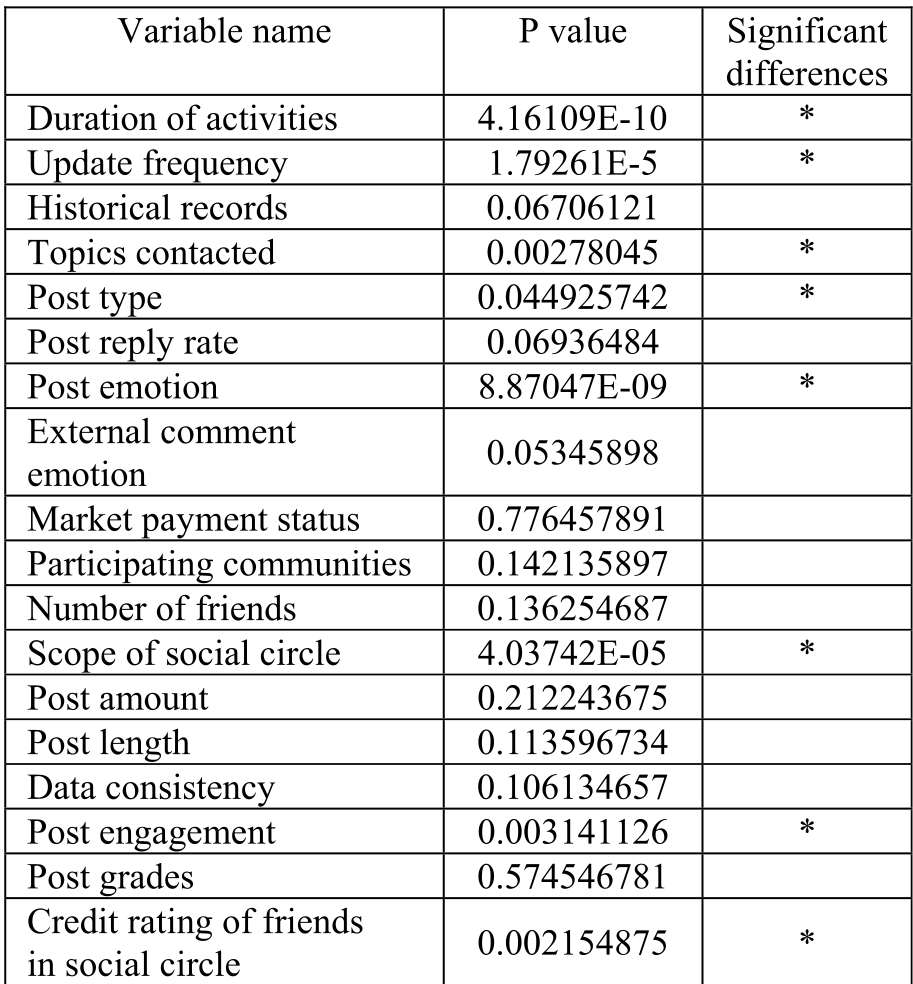 Figure 1: Statistical significance of social media variables in relation to credit rating.
Experiments & Results
The model was tested against a balanced dataset of "Good" (B+ to A+) and "Average/Poor" (C to B) credit profiles.
The CART Rules
The decision tree produced specific logic gates for identifying low-risk borrowers. For example, Rule 2 identifies a good credit rating if the user has high social circle scope and a post interaction rate ≥ 0.809.
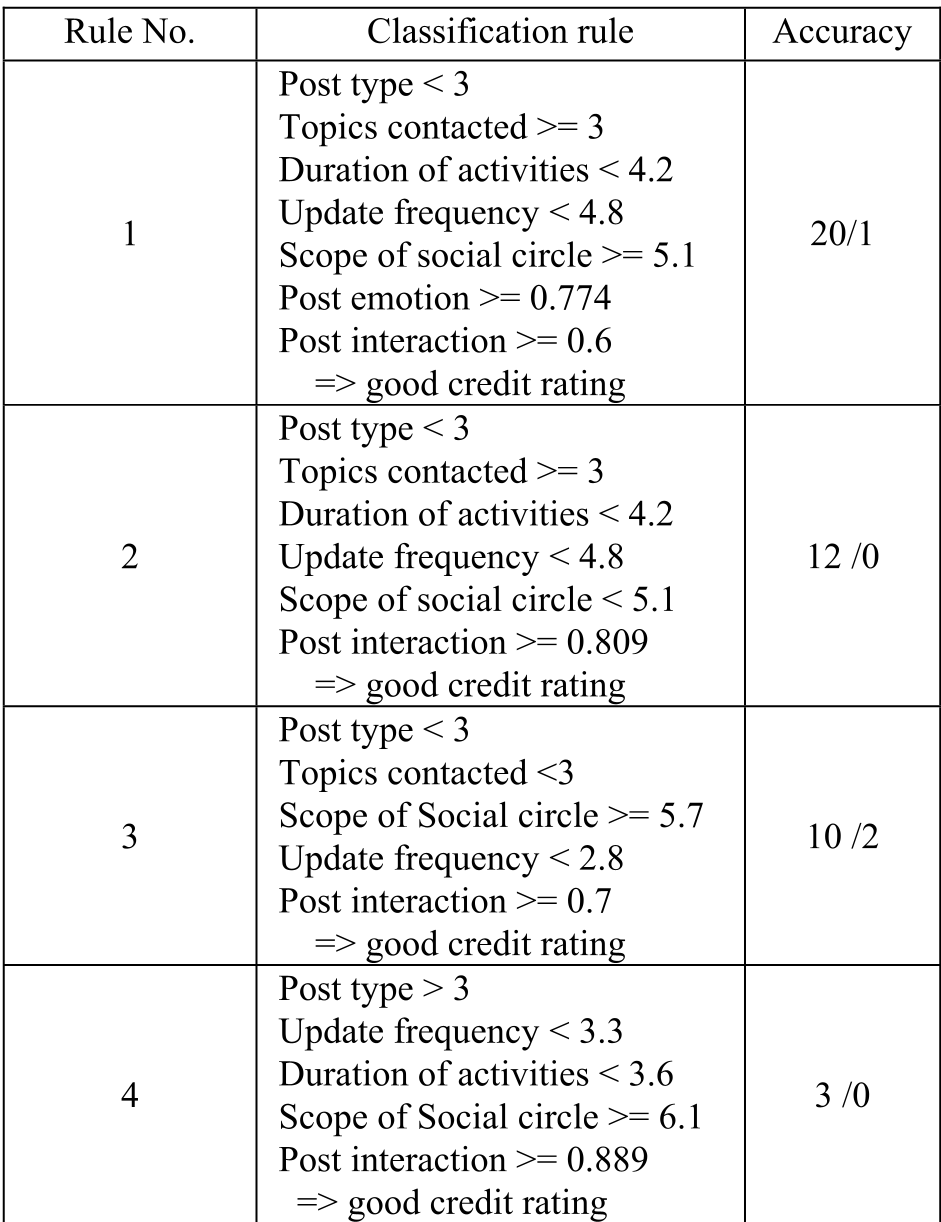 Figure 2: Induction rules generated by the CART algorithm for credit classification.
Performance Metrics
Compared to a purely random baseline, the model showed:
- Accuracy (Exception Rate): 82%
- Sensitivity: 65% (ability to correctly identify good borrowers)
- Specificity: 68% (ability to correctly identify risky borrowers)
- PPV: 80% (when the model predicts "Good Profile," it is correct 80% of the time).
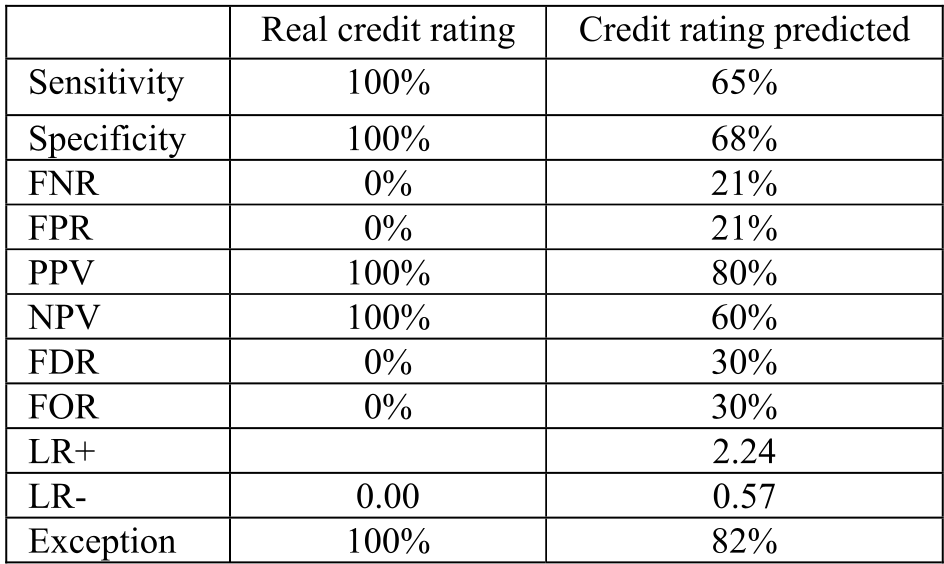 Figure 3: Performance metrics of the social-analytics-based prediction vs. real credit ratings.
Critical Analysis & Conclusion
Takeaway
Social media is no longer just for networking; it is a repository of behavioral "digital DNA." This paper proves that decision tree models can extract meaningful financial risk proxies from this data, allowing lenders to offer more flexible interest rates and loan amounts.
Limitations
- Data Bias: The study is limited to Facebook; results might differ on more professional networks like LinkedIn or anonymous platforms like X (Twitter).
- Privacy & Ethics: While technically effective, the use of social data for credit scoring raises significant ethical questions regarding privacy and the "right to be forgotten."
- Adversarial Behavior: If borrowers know their social media affects their loans, they may "game the system" by curating a fake high-credit persona.
Future Outlook
The next frontier in this research likely involves Deep Learning and Multi-modal models that can analyze not just text frequency, but the semantic context of images and videos to build an even more comprehensive psychological profile of the borrower.