
Social Authentication: Why Your Friends Might Be Your Greatest Security Risk
Social Authentication: Harder Than It Looks
The paper investigates the vulnerabilities of "Social Authentication" (e.g., Identifying friends from photos on Facebook) and proposes a "Community-Based Challenge Selection" method to mitigate risks. It demonstrates that social knowledge is often shared with "close enemies" and is increasingly susceptible to automated face-recognition attacks.
TL;DR
Facebook and other social giants have experimented with "Social Authentication"—identifying friends in photos—to verify users. This paper reveals that this is harder than it looks. Because our "enemies" are often within our own social circles, they share mutual friends and can easily bypass these tests. The authors propose a Community-Based selection method to make these challenges exponentially harder for attackers while staying easy for the rightful owner.
Background: The Intuition vs. Reality
The core idea of social authentication is simple: You know your friends' faces, but a hacker in another country doesn't. While this stops "stranger" attacks, it fails miserably against "close enemies"—the disgruntled ex-partner, the competitive colleague, or the "friend of a friend."
The "Inside Man" Problem & Statistical Vulnerability
The authors formalize the Adversary Advantage, calculating the probability that an attacker can identify a target 's friends.
1. The Mutual Friend Threat
If an attacker shares a large percentage of mutual friends with you, a random selection of photos is likely to include someone they recognize. The paper uses real datasets (Columbia, Harvard, Yale, etc.) to show that for many users, an attacker's success rate is dangerously high when challenges are picked randomly.
2. The Face Recognition Arms Race
Automated scripts can now scrape photos of "friends of friends" (due to loose default privacy settings) and train face-recognition models. If an algorithm can achieve 65% accuracy on Facebook photos, the security "gap" between humans and bots begins to vanish.
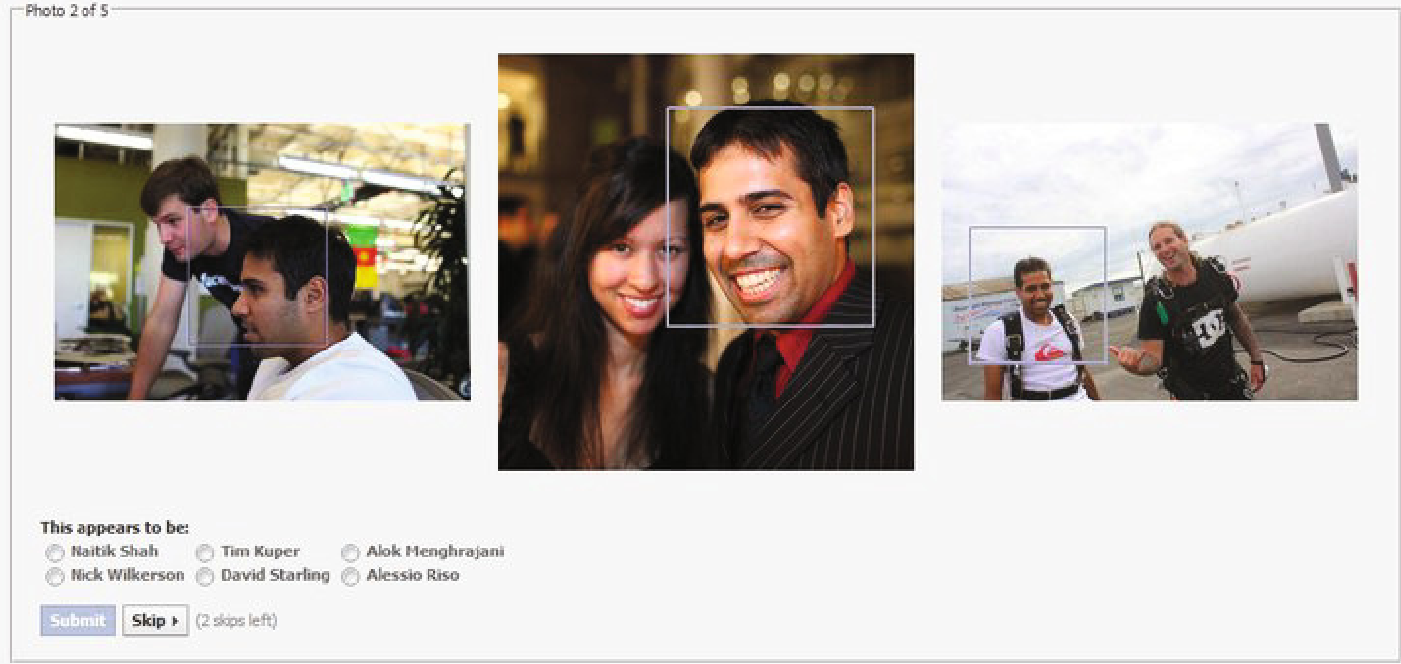 Figure 1: Typical Social Authentication UI where users pick names for a highlighted face.
The Solution: Community-Based Challenge Selection
The most elegant contribution of this paper is the Community-Based Challenge Selection ().
How it Works:
- Graph Extraction: Treat your friend list as a subgraph.
- Community Detection: Use algorithms to find clusters (e.g., your high school friends vs. your current coworkers).
- Cross-Cluster Sampling: Instead of picking 3 random friends, the system picks one friend from each different community.
The Logic: Even if an attacker is your coworker and knows everyone in that cluster, they are highly unlikely to know your cousins from your family cluster or your old friends from a different city.
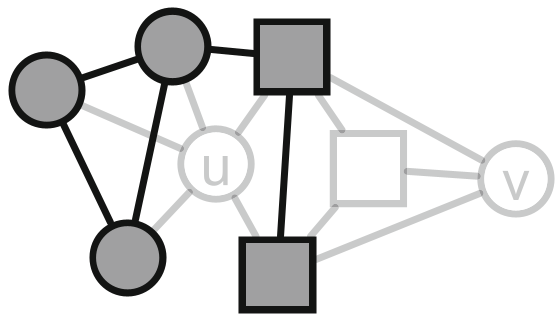 Figure 2: Breaking the social graph into communities to isolate knowledge.
Experimental Results: is the Magic Number
The authors compared Random Selection (R) vs. Community-Based Selection (C).
- Finding: Community selection performed significantly better for to challenges.
- Efficiency: Using just 3 challenges from different communities provided the same security level as 10 random challenges.
- Centrality Correlation: The paper found that "Centrality" (how important you are in the graph) determines your security. Users with a high Clustering Coefficient—meaning all their friends know each other—actually should never use social authentication because there are no "secret" communities to draw from.
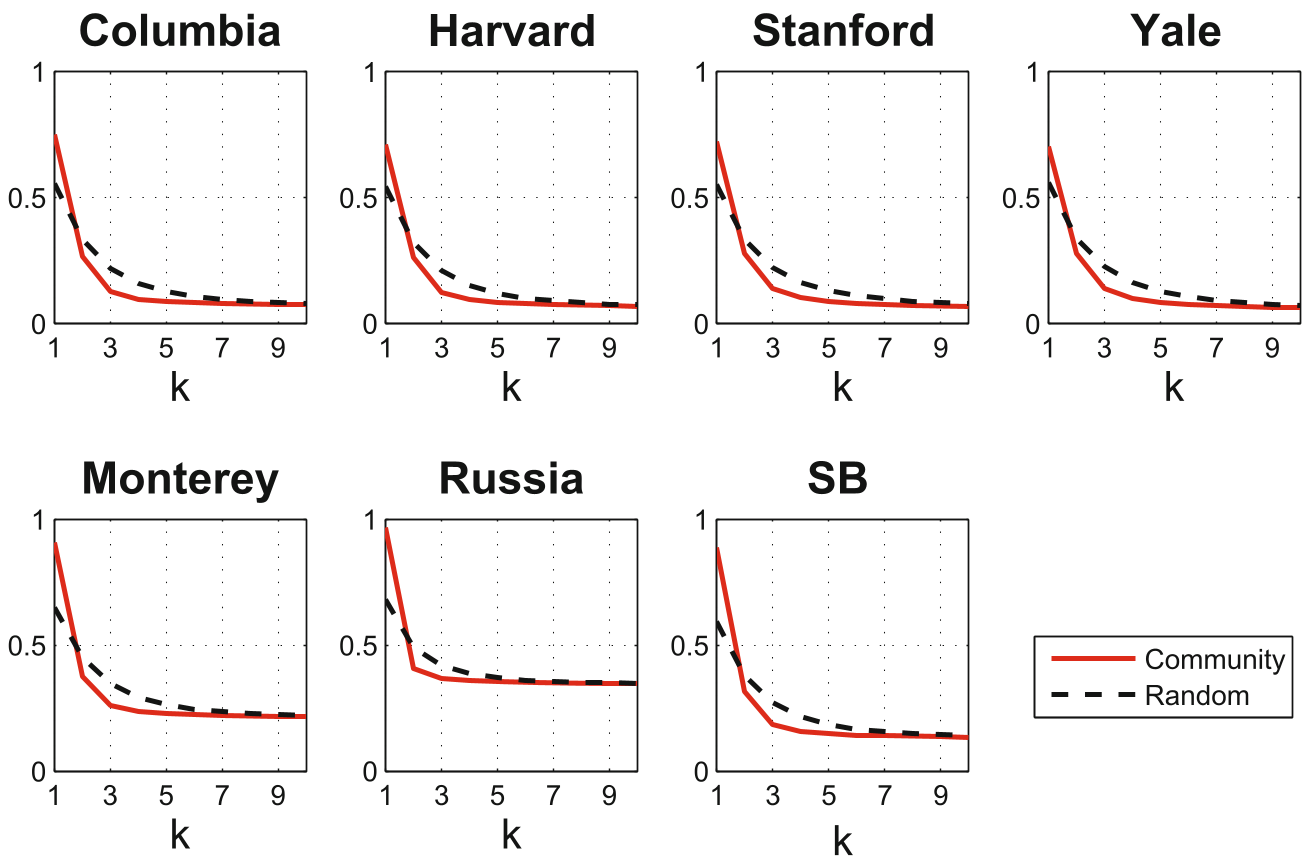 Figure 3: Comparison of Adversary Advantage between Random (dashed) and Community-based (solid) selection.
Critical Insight: The Privacy-Security Dilemma
The paper concludes with a stinging critique of platform defaults. Social networks benefit financially from "open" defaults (sharing photos with friends-of-friends), as it drives engagement. However, this same openness is what allows face-recognition bots to harvest the data needed to break social authentication.
Takeaway for Designers: If you want to use social knowledge for security, you must first enforce strict privacy. Security isn't just about the algorithm; it's about the Social Topology and the visibility of the data.
Summary Table of Dataset Stats
| Network | Type | Users | Avg Degree |
|---|---|---|---|
| Harvard | University | 18,273 | 116.21 |
| Stanford | University | 15,043 | 125.62 |
| Russia | Region | 116,987 | 7.34 |
Conclusion
Social authentication is a clever secondary factor, but in its naive form, it is "security theater" against those who know us best. By moving to a community-aware model, platforms can make unauthorized access much harder without hurting the user experience.