
Social-Aware D2D Content Delivery: A Strategic Game Theory Perspective
A social-aware content delivery scheme based on D2D communications underlying cellular networks: a Stackelberg game approach
The paper proposes a social-aware content delivery scheme for D2D communications in cellular networks using a Stackelberg game approach. The core method (Algorithm 1) optimizes monetary incentives and content distribution by integrating physical layer rates with social tie strength to achieve a unique Stackelberg equilibrium.
TL;DR
This research addresses the "selfish node" problem in D2D (Device-to-Device) networks. By treating the Content Requester as a market leader and Content Providers as followers in a Stackelberg Game, the authors introduce a pricing mechanism that leverages social ties. The result is a semi-distributed algorithm that minimizes download delay and cost while ensuring all providers are fairly compensated for their energy and data.
Motivation: Why Incentive Mechanisms Fail in D2D
In a typical D2D scenario (e.g., sharing a high-definition movie in a stadium), we usually rely on a single provider. However, this is risky—if the provider moves away or runs out of battery, the download fails.
Current SOTA work focuses on using multiple providers, but they face two fatal flaws:
- Redundancy: Having every provider send the whole file wastes massive energy.
- Selfishness: Why would a stranger use their battery for your download?
The authors argue that Social Ties (how close you are to someone) act as a hidden currency. You are more likely to help a friend (high social tie) for a lower reward than you would a stranger.
Methodology: The Stackelberg Game Approach
The paper models the interaction as a two-layer hierarchical game.
1. The Leader (Content Requester - CR)
The CR wants to minimize delay and monetary cost. Its utility function is defined as: Where is the price it offers per unit of data.
2. The Followers (Content Providers - CP)
Each CP decides on the proportion () of the content to provide. Crucially, their incentive is boosted by a social factor: Where is the social tie strength. This implies that for the same price , a higher results in higher perceived utility for the provider.
3. The Algorithm (Algorithm 1)
The authors designed a semi-distributed iterative algorithm where the CR broadcasts a price, CPs respond with their available content portions, and the price is adjusted until a unique equilibrium is reached where exactly 100% of the content is covered.
 Fig 1: D2D content sharing scenario involving CR and multiple CPs.
Experiments & Results
The study evaluated the algorithm against two baseline strategies: Social-only (choosing providers with the best ties) and Rate-only (choosing providers with the best signal).
Key Findings:
- Convergence: The proposed algorithm perfectly matches the theoretical Stackelberg Equilibrium.
- Utility Gain: The CR's utility is significantly higher than baseline algorithms because it balances high-speed delivery with social-based cost-cutting.
- Sensitivity: As social tie strength increases, the required price per unit content decreases, proving that social awareness translates directly into economic efficiency.
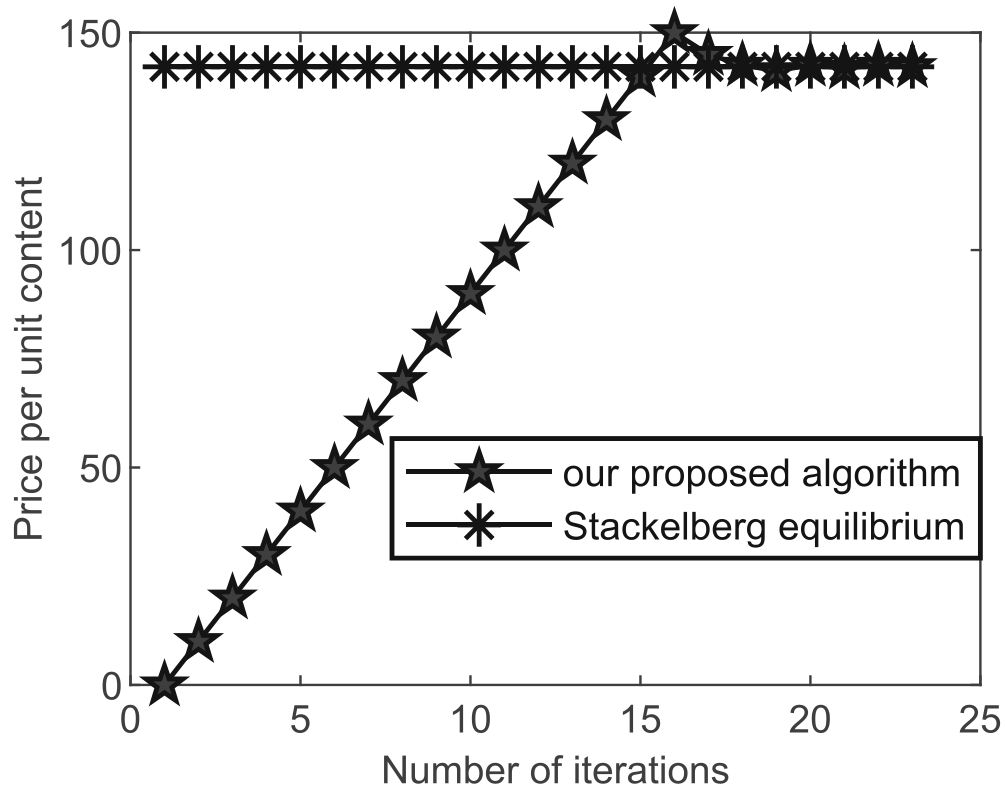 Fig 2: Utility comparison showing the proposed social-aware scheme outperforms rate-only and tie-only baselines.
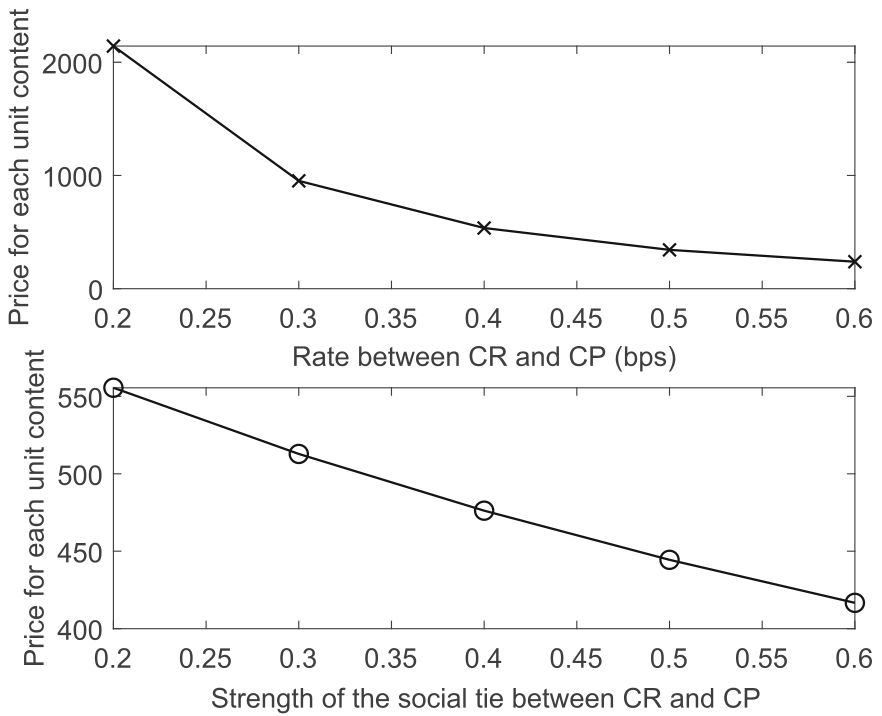 Fig 3: Evidence that the equilibrium price drops as social ties or data rates improve.
Critical Analysis & Conclusion
Takeaway
The genius of this work lies in the mathematical quantification of "willingness to help." By adding to the incentive term, the model successfully bridges the gap between social psychology and wireless communications.
Limitations
- Social Tie Acquisition: The paper assumes social tie values are given (uniform distribution). In reality, calculating (via interaction frequency or mutual friends) adds metadata overhead.
- Mobility: While the paper mentions mobility as a motivation, the static snapshots in simulations may not fully capture the "handover" complexity if a CP moves out of range mid-transfer.
Future Outlook
This framework could be extended to Federated Learning (FL), where social ties might motivate mobile devices to participate in "social-aware model training," reducing the need for high central server payments.