
Elevating Information Flow: A Deep Dive into Social-Aware Data Dissemination
Survey on Social-Aware Data Dissemination Over Mobile Wireless Networks
This paper provides a comprehensive survey on social-aware data dissemination in Mobile Social Networks (MSNs), highlighting how social relationships and mobility patterns can optimize information delivery. It contrasts traditional physical-layer approaches with emerging strategies that leverage D2D communication, game theory, and matching theory to achieve SOTA performance in energy efficiency and delivery delay.
TL;DR
Data dissemination—the task of delivering information to target users in a geographical region—is undergoing a paradigm shift. Moving beyond traditional "store-carry-and-forward" methods, this survey explores how social-awareness transforms mobile networks. By leveraging human relationships, D2D communication, and game-theoretic incentives, researchers are building networks that are not just faster, but more "human-centric."
Problem & Motivation: The Limits of Physical Networking
In the early days of Mobile Ad-hoc Networks (MANETs) and Delay Tolerant Networks (DTNs), data dissemination was treated as a purely physical problem. The focus was on flooding or intermittent connectivity.
However, these traditional approaches faced three critical bottlenecks:
- Inefficiency: Flooding causes massive redundancy and energy drain.
- Infrastructure Load: Relying solely on cellular base stations (BS) leads to traffic congestion.
- The "Selfishness" Gap: Most algorithms assumed nodes were happy to forward data for free, ignoring the fact that real users care about their battery life and privacy.
The authors argue that the "missing link" is the Social Dimension. Since mobile devices are carried by humans, their movement and willingness to help are dictated by social ties.
Methodology: The Theoretical Toolkit
The paper meticulously categorizes how social information is mathematically modeled to solve dissemination problems.
1. Matching Theory (Assigning the Right Partners)
In a D2D environment, you have "caching devices" (sources) and "requesting devices" (receivers). This is a classic bipartite matching problem. The authors highlight the use of the Deferred Acceptance Algorithm (DAA) to create stable pairings, ensuring that users are matched with content or partners they actually prefer.
2. Game Theory (Modeling Human Behavior)
- Coalitional Games: Used to model how users form groups to share data.
- Network Formation Games: Used to understand how D2D links evolve.
- The Insight: Users are more likely to cooperate (altruism) with friends and demand rewards (incentives) from strangers.
3. Seed Selection & Social-Physical Graphs
One of the most critical phases is Seed Selection—choosing the initial nodes to receive data from the BS.
 Figure 1: The intersection of Social and Physical Networks.
The SOTA approach involves creating a Social-Physical Graph. By partitioning this graph into communities based on edge-betweenness centrality, the system can identify the most influential "seeds" in each social cluster to maximize diffusion speed.
Experiments & Results: Quantitative Triumphs
The survey compares various frameworks across metrics like Delivery Ratio, Latency, and Traffic Offload.
| Approach | Key Feature | Primary Metric |
|---|---|---|
| PrefCast | Preference-aware | Average Utility |
| TOSS/TASA | SNS-based sharing | Traffic Offload Ratio |
| IRONMAN | Reputation-based | Delivery Ratio |
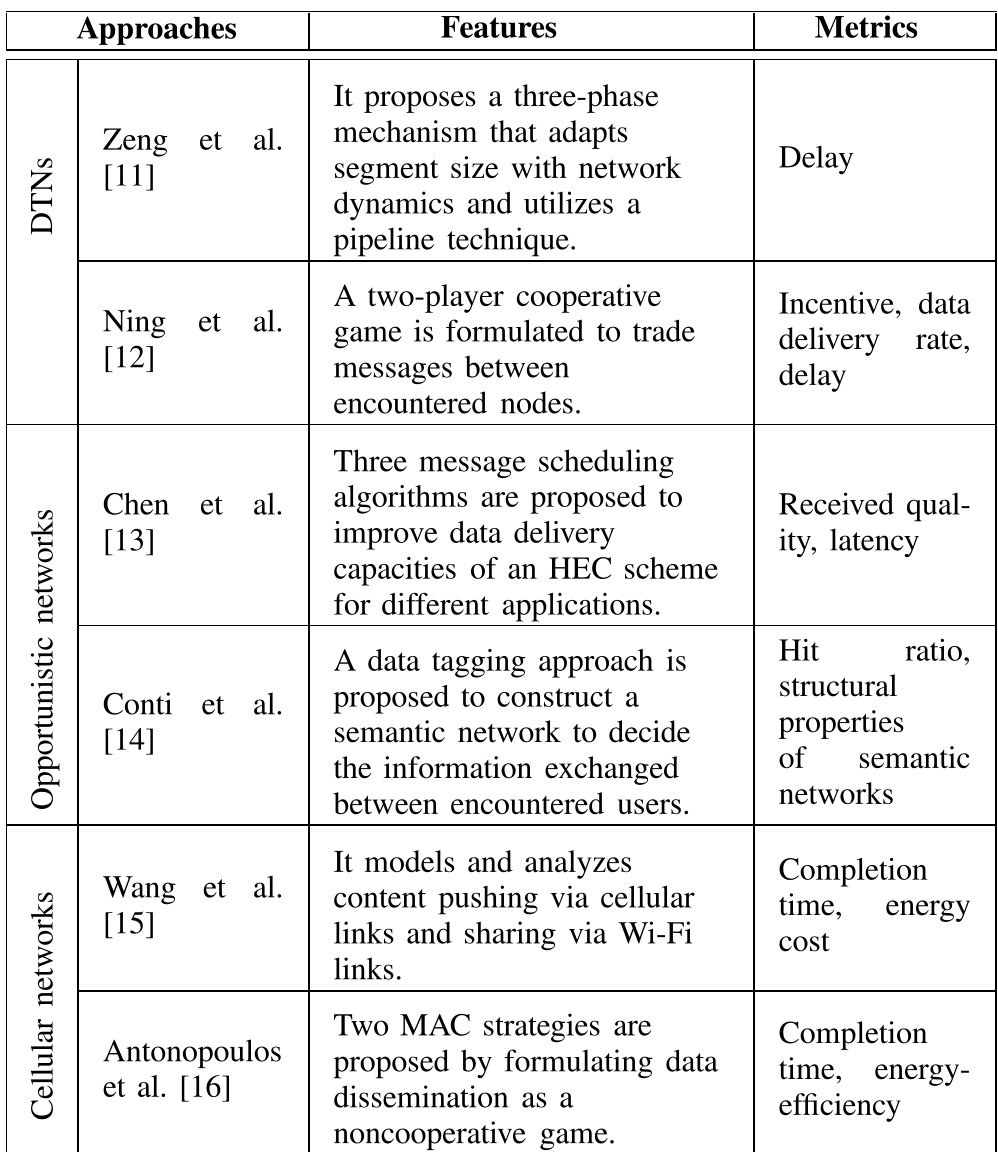 Table 1: Comparison of traditional vs. social-aware performance benchmarks.
One standout result is the impact of Incentive Schemes. Without them, delivery rates plummet as nodes turn off D2D features to save energy. Schemes like virtual checks or credit-based renting have shown to sustain high performance even in competitive environments.
Critical Analysis: The Way Forward
While social-aware dissemination is powerful, the authors identify two major frontiers:
- Large-Scale Complexity: Analyzing social graphs for millions of users is computationally expensive. We need decentralized or "incomplete-information" models that don't require global social knowledge.
- Moneyless Incentives: Transferring actual currency is a high-friction process. The industry needs Truthful Moneyless Mechanisms—where social capital or reciprocal services act as the currency.
Conclusion
This survey establishes that the future of mobile networking is not just about better antennas; it's about understanding the Social Fabric. By fusing social characteristics with D2D capabilities, we can offload cellular traffic and ensure reliable communication even when the primary infrastructure fails.