
Balancing the Power-Time Trade-off in Social D2D Data Dissemination
Social-Aware Energy-Efficient Data Dissemination with D2D Communications
This paper introduces Social-aware Energy-efficient Data Dissemination (SEDD) algorithms, specifically SSTBD and MSTBD, designed for D2D communications. By leveraging social network structures (Caveman model) and Minimum Spanning Trees (MST), the method achieves a Pareto-optimal balance between minimizing total transmit energy and reducing data delivery latency.
TL;DR
This research tackles the challenge of distributing data (like disaster alerts) to a group of mobile users by leveraging Device-to-Device (D2D) links and social relationships. The authors propose two main algorithms, SSTBD (Single-Seed) and MSTBD (Multiple-Seed), which use Minimum Spanning Trees and a unique "influence score" to ensure information spreads with minimal energy consumption and the shortest possible delay.
Problem & Motivation: The Energy-Latency Tug of War
In D2D networks, mobile devices act as relays. While this avoids the bottleneck of a Base Station (BS), it introduces a conflict:
- Energy Efficiency: To save battery, we want to use the shortest, most efficient links.
- Finishing Time: To spread data fast, we need parallel transmissions, which might require high-power links.
- Social Incentives: Users are usually only willing to share data with friends.
Existing solutions often focus on maximizing the "sum rate" but ignore the battery life of the individual devices or the total time it takes for the last person in the group to receive the file.
Methodology: The Core Mechanics
1. Seed Selection (The Root of the Tree)
The algorithm first models the social network using a Caveman Model, which mimics real-world "locally dense, globally sparse" social clusters. It then calculates a Minimum Spanning Tree (MST) based on the energy required for D2D links.
The "Seed"—the user who receives data directly from the Base Station—is selected by identifying the node that serves as the root of a transmission tree with the lowest aggregate energy cost.
2. Transmission Scheduling (The Influence Score)
Once the tree is built, the order of transmission matters. In this paper, every node ranks its "children" based on an Influence Score:
By sending data first to the "most influential" branches (those with many descendants and deep subtrees), the system maximizes parallel data spreading, drastically reducing the total finishing time.
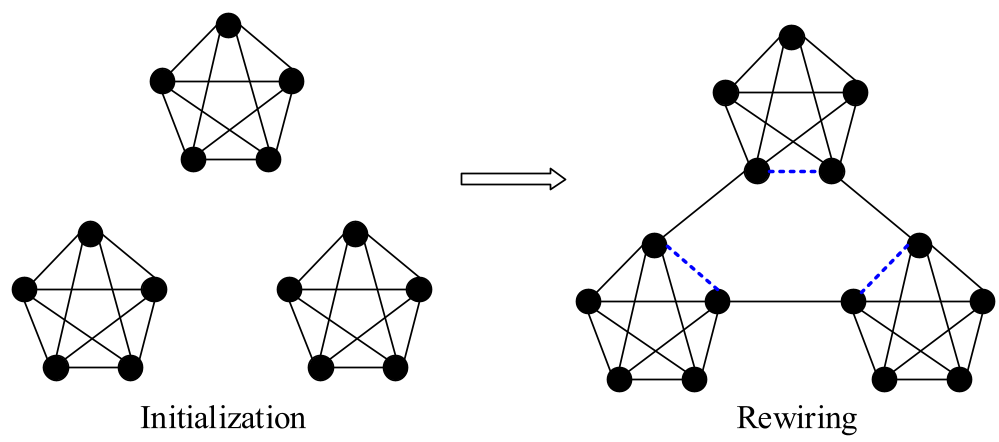 Figure 1: Using the Caveman model to represent social clusters and rewiring.
Experiments & Results
The authors compared their tree-based approach against a Random approach and a Coalitional Graph Game approach.
- Energy Consumption: SSTBD/MSTBD consistently showed the lowest energy footprint. As the number of users grew to 100, the energy savings became even more pronounced compared to the random baseline.
- Scalability: The MSTBD (Multiple Seed) version proved highly effective in large networks, achieving a "sweet spot" where it matched the speed of much hungrier algorithms but at a fraction of the energy cost.
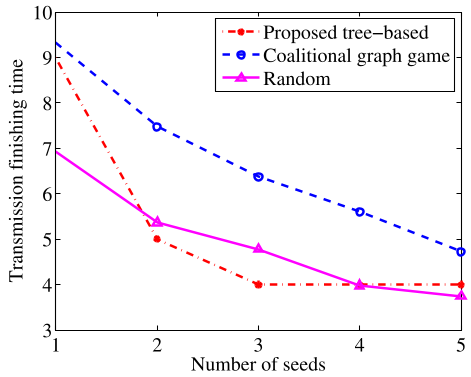 Figure 2: Performance comparison showing the advantage in total energy consumption.
Critical Analysis & Conclusion
The Takeaway: The beauty of this work lies in its simplicity. By converting a complex scheduling problem into a tree-traversal problem weighted by social "influence," the authors provide a lightweight solution that can be implemented on power-constrained mobile devices.
Limitations: The current model assumes a relatively static network. In a real-world scenario, User Mobility (walking or driving) would constantly change the D2D channel quality, requiring the tree to be reconstructed dynamically—a computationally expensive task.
Future Outlook: The next frontier for this research is integrating Mobility Patterns. If we can predict where a "social friend" will be in 10 seconds, we can pre-schedule the D2D link even more efficiently, truly marrying social-awareness with physical-layer optimization.