
Socially-Driven Offloading: Leveraging User Influence to Optimize 5G Small Cells
Social-aware mobile data offloading algorithm through small cell backhaul network: Direct and indirect user influence perspectives
The paper proposes a social-aware mobile data offloading algorithm for 5G small cell backhaul networks. It introduces a novel model to estimate application selection probability by integrating direct individual influence (Zipf distribution) and indirect social influence (Indian Buffet Process and Eigenvector Centrality) to optimize offloading ratios.
TL;DR
The explosion of Online Social Networking (SNS) traffic is choking mobile core networks. This paper introduces a social-aware offloading algorithm that doesn't just look at signal strength, but predicts what you'll download based on your social circle. By modeling "direct" and "indirect" influences, it achieves a nearly 2x throughput improvement over standard methods.
The Problem: The SNS Traffic Surge
Mobile Network Operators (MNOs) are facing a crisis: the massive rise in video-heavy social media content (Facebook, Instagram) is saturating the core network. While technologies like LIPA (Local IP Access) and SIPTO (Selected IP Traffic Offload) exist to move traffic directly to the internet via small cells, they are often "socially blind."
Current offloading ignores the fact that if a highly influential person in a social network shares a video, their neighbors are likely to request the same content. Failing to account for this predictive "social context" leads to suboptimal resource allocation and degraded Quality of Service (QoS).
Methodology: The Power of Social Influence
The researchers break down the probability of a user selecting an application () into two distinct mathematical perspectives:
- Direct Influence (): Based on the user's historical preferences, modeled via a Zipf distribution. If you frequently use YouTube, you are likely to use it again.
- Indirect Influence (): This is the "secret sauce." It uses Eigenvector Centrality to identify "high-impact" users in a social graph. If your influential friends are using an app, the Indian Buffet Process (IBP)-based model predicts you will likely follow suit.
Architecture Overview
The system utilizes Multi-access Edge Computing (MEC) located near the small cell to process these social metrics without adding latency to the core network.
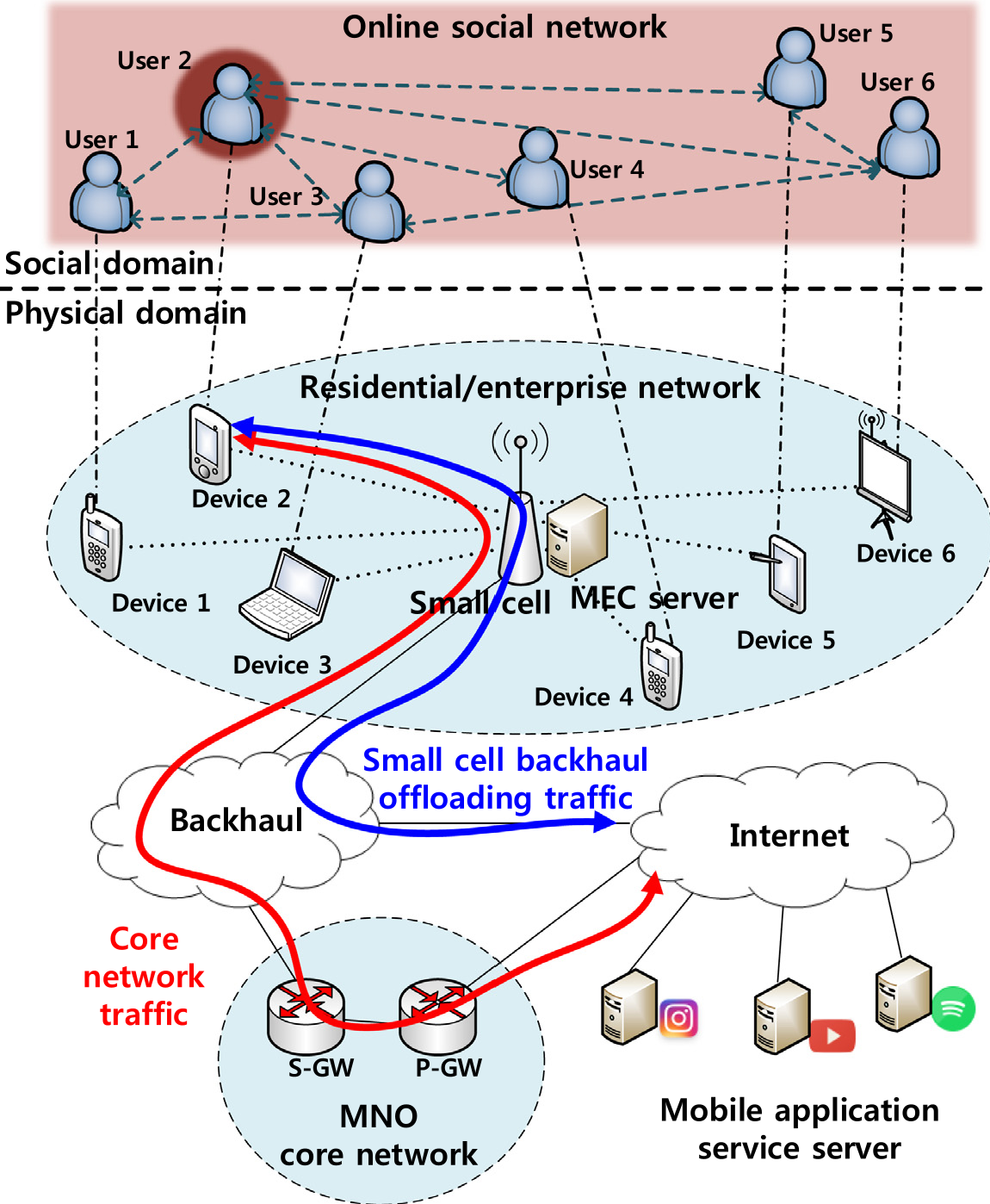 Fig 1: The proposed network architecture featuring MEC-integrated small cell offloading.
The algorithm then runs a heuristic search (Algorithms 2 & 3 in the paper) to find the optimal Offloading Ratio that minimizes core network load while maximizing user QoS (Data rate, Delay, and Packet Error Loss).
Experimental Results: Proving the Social Intuition
The authors validated their model using the Stanford SNAP Facebook dataset.
Key Findings:
- The "Influence" Factor: Users with high Eigenvector Centrality (the "social leaders") have a much higher impact on network performance. When the algorithm prioritizes their traffic patterns, the overall throughput of the cell increases.
- Throughput Gains: Compared to the Benchmark IFOM (IP Flow Mobility) algorithm, the proposed method showed a staggering improvement in spectrum efficiency and throughput.
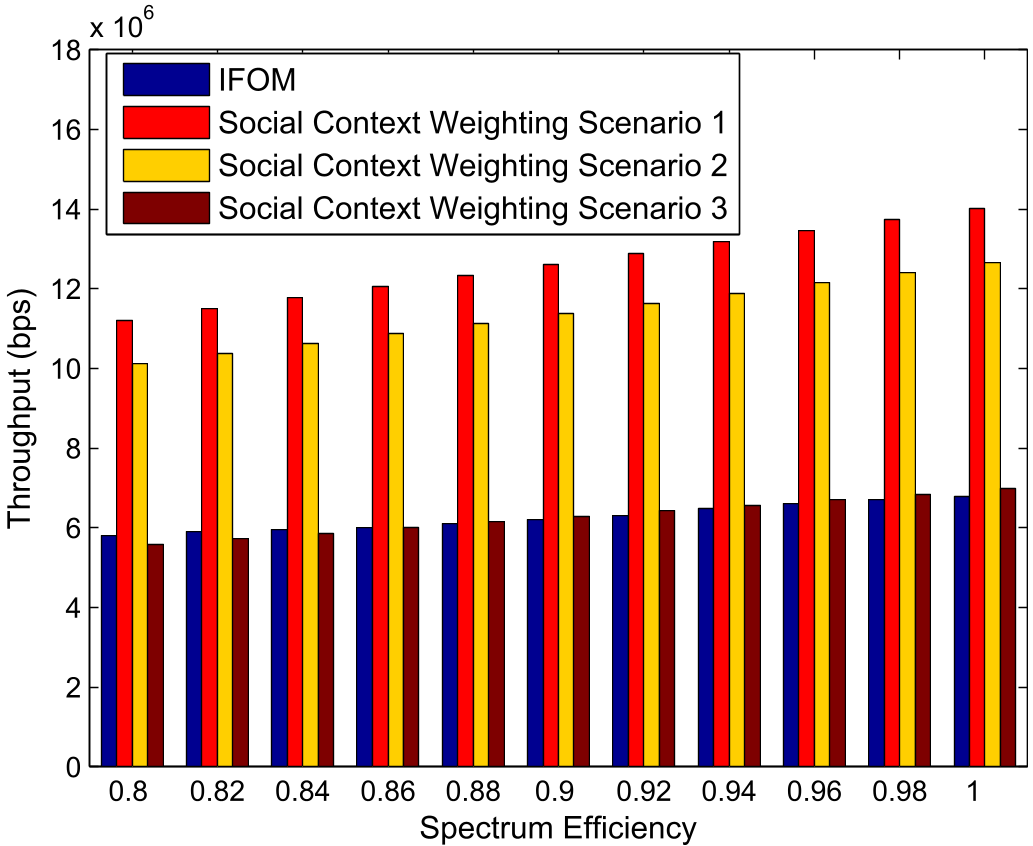 Fig 2: Comparison of throughput: Proposed Algorithm vs. IFOM-based Offloading.
The study also highlighted that as the social weighting factor () increases, the transmission delay and packet error rates decrease, proving that social context is a viable proxy for network demand prediction.
Critical Insight: Why This Matters for 5G/6G
The true value of this paper lies in its movement away from purely physical layer metrics (like SINR) toward application-layer intelligence. By understanding the "why" and "who" behind data requests, the network becomes proactive rather than reactive.
Limitations and Future Work
While the results are promising, the model assumes a somewhat static user environment within a small cell. The authors acknowledge that future iterations must account for high mobility and multi-MEC architectures where social influence might cross between different cell boundaries. Furthermore, privacy concerns regarding MNOs accessing social graph data remain a challenge for real-world implementation.
Conclusion
Social-aware offloading transforms the network from a "dumb pipe" into a socially-intelligent infrastructure. By leveraging the Indian Buffet Process and Eigenvector Centrality, MNOs can finally align their traffic management strategies with the actual human behavior driving the data explosion.