
BSO-C: Optimizing Social Recommendations with Bees Swarm Intelligence
Social-Based Collaborative Recommendation: Bees Swarm Optimization Based Clustering Approach
This paper introduces BSO-C, a social-based collaborative recommendation system that integrates trust relationships with rating patterns. The core method employs a Bees Swarm Optimization (BSO) algorithm to refine multi-view clustering, achieving superior performance on the Epinions dataset.
TL;DR
The paper introduces a novel framework that bridges the gap between social trust and collaborative filtering using an optimized clustering approach. By employing the Bees Swarm Optimization (BSO) meta-heuristic, the system avoids the local optima common in standard K-means/K-medoids, resulting in a significantly lower Mean Absolute Error (MAE) on real-world datasets like Epinions.
Context & Motivation: Why Clustering Isn't Enough
Collaborative Filtering (CF) is the backbone of modern recommendation, but it faces the "curse of dimensionality" and "sparsity." Clustering users into "interest neighborhoods" is a common way to scale CF, but it has a fatal flaw: Local Optima. Algorithms like K-means are sensitive to initial centroids and often get stuck in sub-optimal partitions that don't truly reflect user communities.
Furthermore, traditional systems ignore the Social Dimension. We don't just buy what people with similar history buy; we buy what people we trust recommend. The author argues that to fix accuracy and coverage, we must optimize the partitioning of users across both interest and social views simultaneously.
Methodology: The "Dance" of the Swarm
The core innovation is the BSO-C (Bees Swarm Optimization based Clustering). The process works in three distinct phases:
1. Hybrid Similarity Calculation
The system defines similarity through two lenses:
- Interests: Pearson Correlation based on item ratings.
- Social Trust: Jaccard similarity based on shared friendship circles (Formula 1).
- Hybrid Weighting: A combined weight and to balance these views.
2. Multi-view Clustering Initialization
Users are initially grouped using standard K-medoids or K-means to create a "seed" solution vector.
3. Bees Swarm Optimization
This is where the heuristic magic happens. Each "Bee" represents a potential partitioning of the user base.
- Search Space: Bees explore the neighborhood of a reference solution by "flipping" user assignments to different clusters.
- Fitness (The Dance): The quality of a solution is determined by its "Dance." For CF, the goal is to minimize intra-class inertia. For social clustering, the goal is to maximize the social link density within clusters (Formula 4).
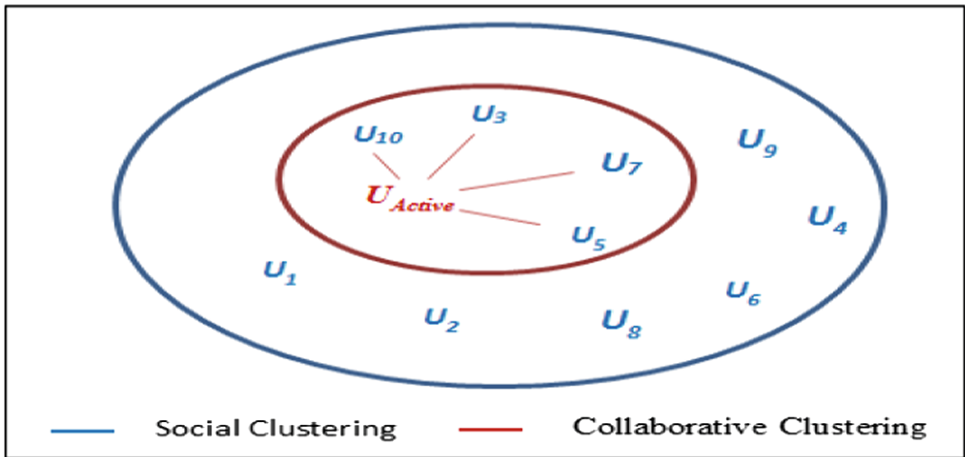 Figure 1: Illustration of partitioning and solution vector coding for the BSO algorithm.
Experimental Battleground: Epinions Dataset
The authors tested the approach against traditional baselines using the Epinions dataset (1,052 users).
Key Findings:
- Optimization Matters: BSO improved the MAE of K-medoids from 0.733 down to 0.681.
- Supervised vs. Unsupervised: While KNN (supervised) usually beats standard K-means, the BSO-optimized unsupervised models actually surpassed KNN, proving that a better-searched cluster structure is more powerful than a simple neighbor search.
- The Power of Social: Incorporating social trust with a high importance level (low ) yielded the best results.
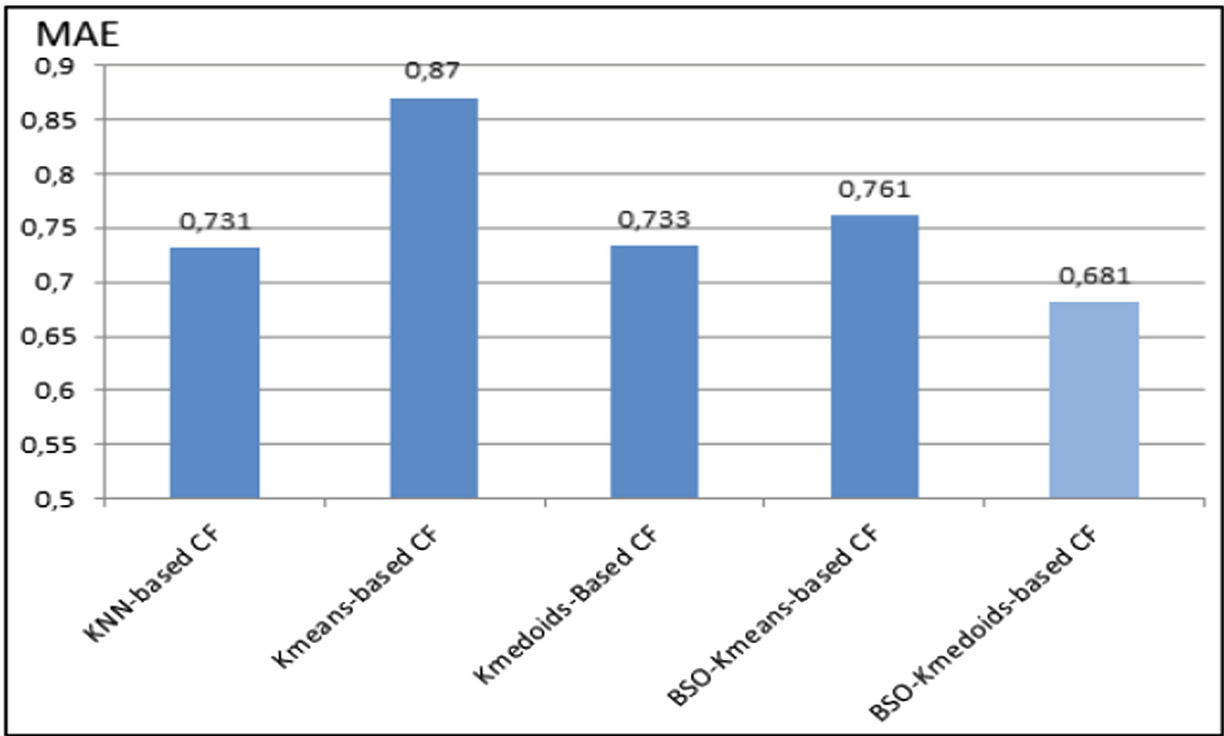 Figure 2: The contribution of the BSO meta-heuristic compared to traditional CF and KNN.
Critical Insight & Conclusion
The BSO-C approach proves that recommendation is not just a data-matching problem, but a combinatorial optimization problem. By treating user clustering as a global search task rather than a simple distance-based assignment, we can uncover more "natural" user communities that are both socially cohesive and share similar tastes.
Future Outlook
While the results are promising, the reliance on pre-defined "K" (number of clusters) remains a limitation. Future iterations would benefit from non-parametric clustering (where the swarm determines the optimal number of clusters dynamically) and extending the model to handle implicit trust—actions like clicks or views that suggest trust even without an explicit "friend" request.
Takeaway: In the era of big data, swarm intelligence offers a robust toolkit to refine the "noisy" clusters found in social networks, leading to a much more personalized user experience.