
Socially Intelligent Agents: Bridging the Gap Between Human Behavior and Deep Learning
Social Behaviour Understanding Using Deep Neural Networks: Development of Social Intelligence Systems
The paper proposes a Social Behaviour Understanding framework that leverages Deep Neural Networks (DNNs) to transition from social informatics to social intelligence. It introduces a multi-layered architecture—Information Fusion, Signal, Behaviour, and Context Understanding—and demonstrates its efficacy through three SOTA-aligned healthcare applications: vocal depression detection, activity recognition, and cognitive impairment screening.
TL;DR
This research presents a comprehensive framework for Social Behaviour Understanding using Deep Neural Networks. By fusing multimodal data from smartphones and wearable sensors, the authors have developed three critical healthcare systems: Depression Detection, Activity Recognition, and Cognitive Impairment Screening, effectively turning static social informatics into dynamic, proactive social intelligence.
Context: From Informatics to Intelligence
The digital landscape has shifted. We are no longer just collecting data; we are seeking to understand the meaning behind it. Traditional social computing focused on social informatics (the "what"), but the new frontier is Social Intelligence (the "why" and "how"). Social intelligence is the capacity to detect, interpret, and react to human social cues—a task where humans can be inconsistent, but machines, powered by Deep Learning, offer new levels of reliability.
The Core Challenge: The Context Gap
The primary bottleneck in current systems is their inability to handle context-dependent tasks. While computers excel at arithmetic, they struggle to understand empathy, agreement, or behavioral nuances. Furthermore, medical diagnostics for mental health (like depression) are often "archaic," relying on a two-week wait period for manual questionnaire processing.
Methodology: The Social Behaviour Understanding Framework
The authors propose a five-pillar architecture designed to emulate human cerebral activities:
- Information Fusion: Merging visual, audible, and movement data to eliminate sensor uncertainty.
- Person & Object Detection: Using CNNs to identify agents and tools within a social interaction.
- Social Signal Understanding: Capturing temporal and spatial features of facial expressions and gestures.
- Behavioural Understanding: Analyzing individual and group movements to elicit intent.
- Context Understanding: Embedding location, time, and situational data into the neural network to ground the behaviors.
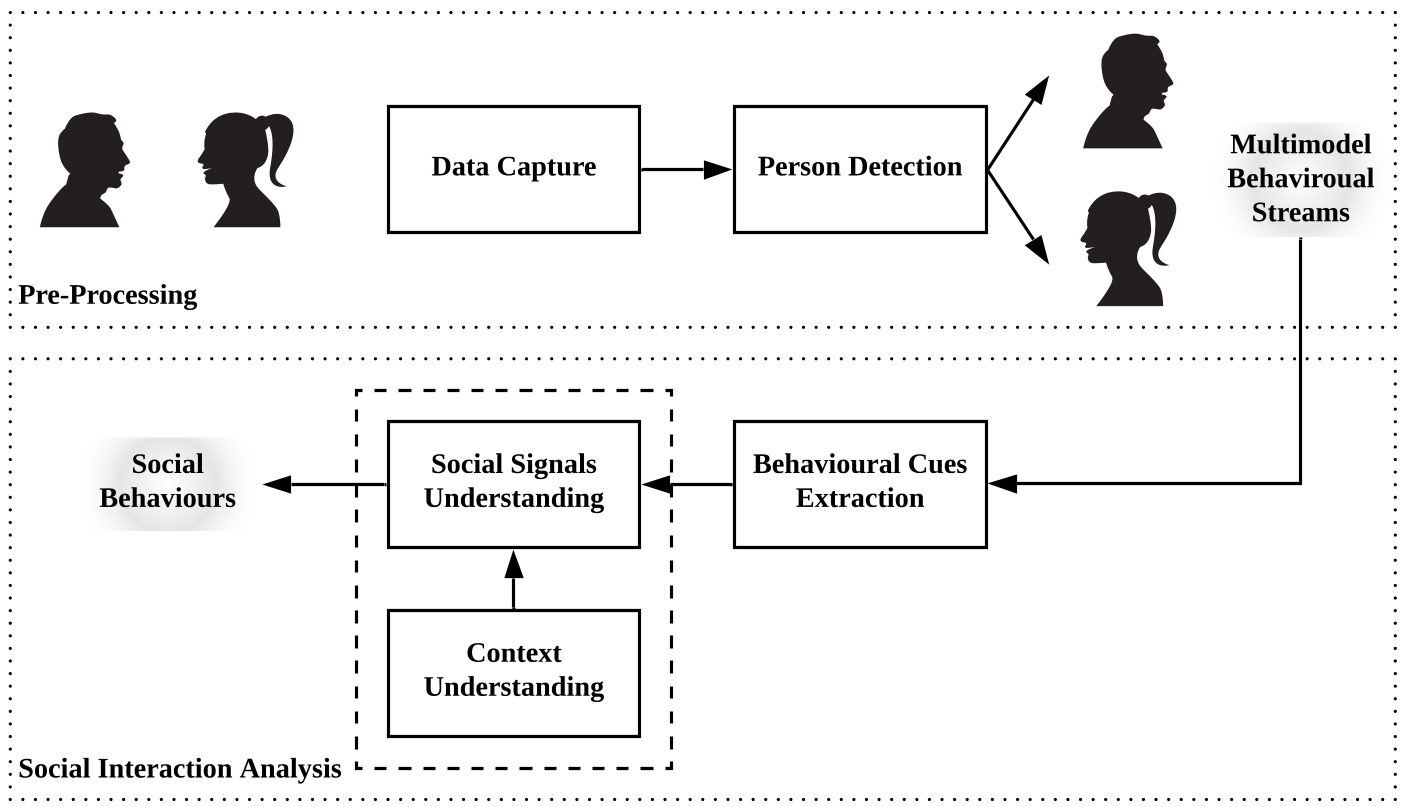 Fig 1: The foundational framework for machine analysis of social signals.
Real-World Use Cases: Social Intelligence in Action
1. Vocal Depression Detection
Moving away from the 2-week diagnostic wait, this system uses 2D CNNs to analyze vocal spectrograms. By processing raw audio (PCM format) into visual representations, the mobile application can classify depressive traits in real-time, providing immediate screening.
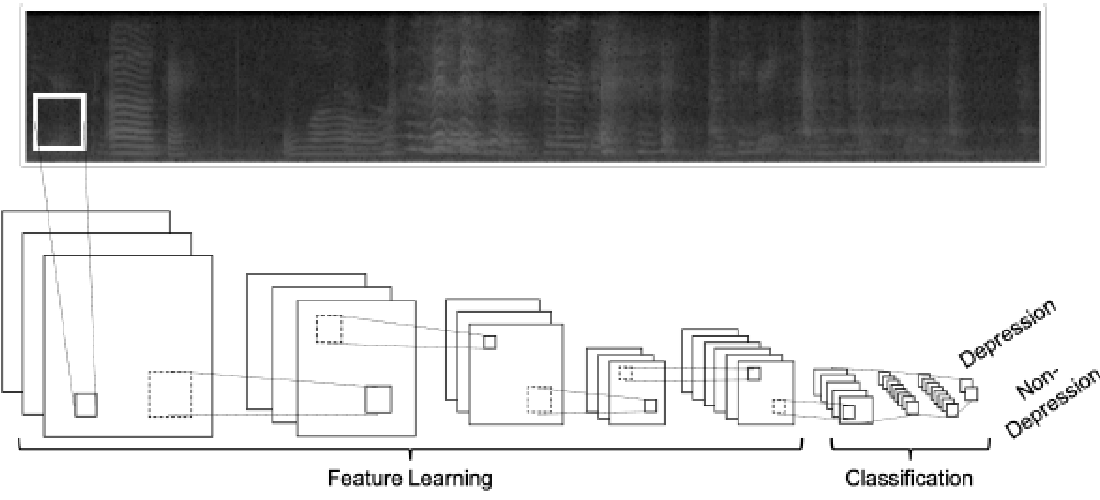 Fig 2: Converting audio features into visual representations for CNN classification.
2. Fall Detection via 3D CNNs
Using the accelerometer sensors in smartphones, the system monitors 17 different activities (walking, running, falling). The innovation here lies in using 3D Convolutional Neural Networks to process sequential 4D tensors of motion data, enabling predictive alerts for high-risk elderly patients.
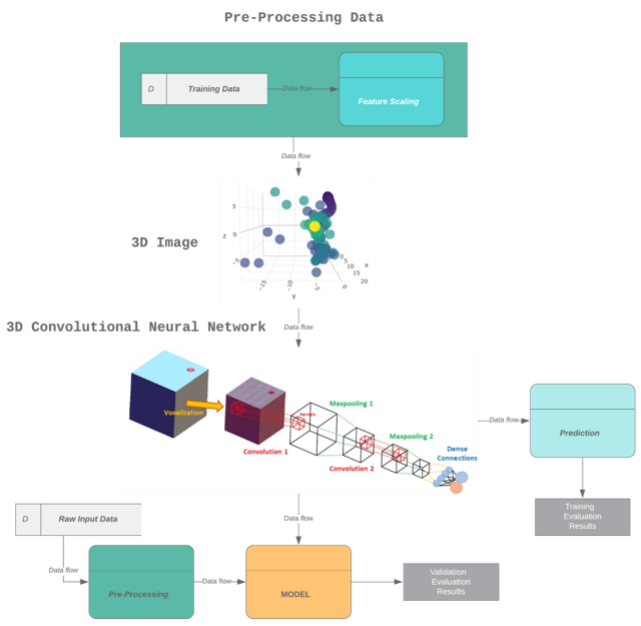 Fig 3: The 3D CNN architecture used to classify complex human movements and falls.
3. Cognitive Impairment Screening
By analyzing the hover trajectory and writing pressure of individuals on a tablet, the system flags early signs of dementia. This transforms a standard drawing test into a high-dimensional data analysis task.
Critical Insight & Conclusion
The true value of this work is not just in the accuracy of its models, but in the integration of context. By treating social behavior as a multimodal signal rather than a single data point, the framework provides a roadmap for "Socially Intelligent Agents" that can support healthcare practitioners in ways previous generations of AI could not.
Future Outlook: The next step in this evolution is the adoption of Cross-modality Transformers (like LXMERT), which will further refine how these systems handle the "overlapped signals" between behavior and context.