
Notobot: Leveraging Algorithmic Peer Influence to Combat Pro-Tobacco Sentiment
Social Bots for Online Public Health Interventions
This paper introduces Notobot (No-Tobacco Bot), an AI-driven social bot framework designed for targeted online public health interventions. It utilizes a Character-level Convolutional Neural Network (Char-CNN) to identify pro-tobacco tweets and a decision tree clustering mechanism to deliver personalized anti-tobacco testimonials from former smokers.
TL;DR
Researchers from the University of Southern California have developed Notobot, an automated Twitter bot designed to disrupt pro-tobacco echo chambers. By combining Character-level CNNs for nuanced sentiment detection with a metadata-driven matching engine, Notobot identifies users praising tobacco use and intervenes by sending them personalized stories from former smokers. This "targeted testimonial" approach marks a shift from generic health ads to scalable, AI-driven peer intervention.
The "Loudness" of Pro-Tobacco Social Media
Public health experts face a daunting challenge: for every anti-smoking ad, social media users are bombarded with countless pro-tobacco posts—ranging from "vape cloud" show-offs to the normalization of hookah in social settings.
The authors identify a critical gap: Prior interventions are either too broad (mass media) or too manual. Furthermore, detecting tobacco-related intent is computationally difficult. A phrase like "I could use a smoke" isn't just about an object; it's an expression of desire. Traditional NLP models often fail to capture this nuance, especially when buried in the slang and typos of Twitter.
Methodology: The Notobot Architecture
The Notobot framework operates through a sophisticated pipeline designed to move from detection to action.
1. Robust Detection via Char-CNN
Unlike word-based models that break down when they encounter "grrrreat" or "vappppping," the authors utilized a Character-level Convolutional Neural Network (Char-CNN). By treating text as a raw signal at the character level, the model becomes immune to Out-of-Vocabulary (OOV) issues and slang.
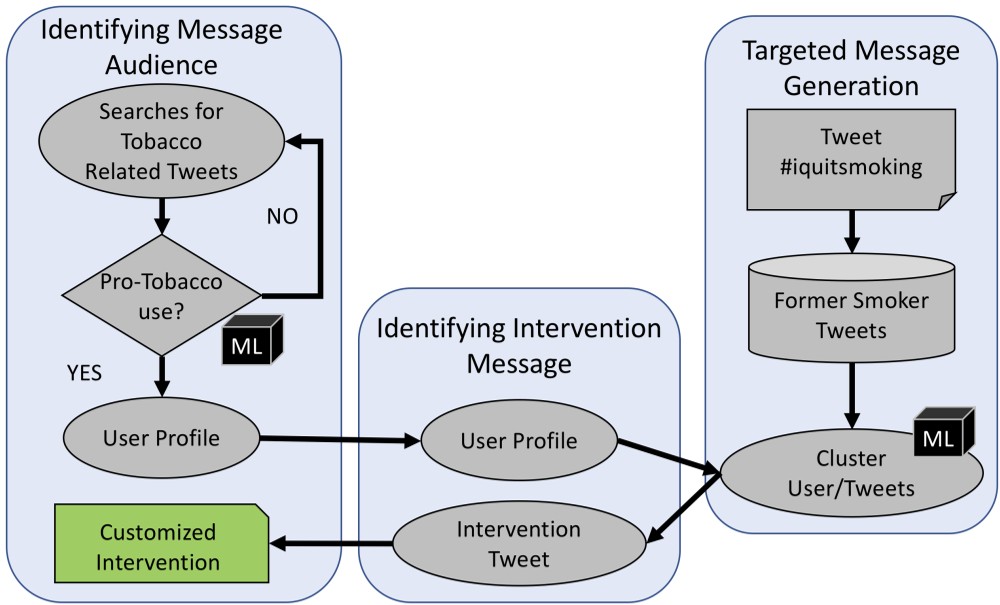 Fig 1. The Notobot workflow: from keyword capture to personalized intervention.
2. The Matching Engine: Peer Power
The "secret sauce" of Notobot isn't just finding smokers—it's finding the right messenger. The system analyzes the metadata of "message creators" (former smokers using #iquitsmoking) and "target users" (pro-tobacco accounts).
Using features like account age (created_at), follower count, and activity levels, the system uses a Decision Tree to bucket users into categories. A young, highly active user is matched with an anti-tobacco message from a similarly high-activity peer, maximizing the psychological resonance of the message.
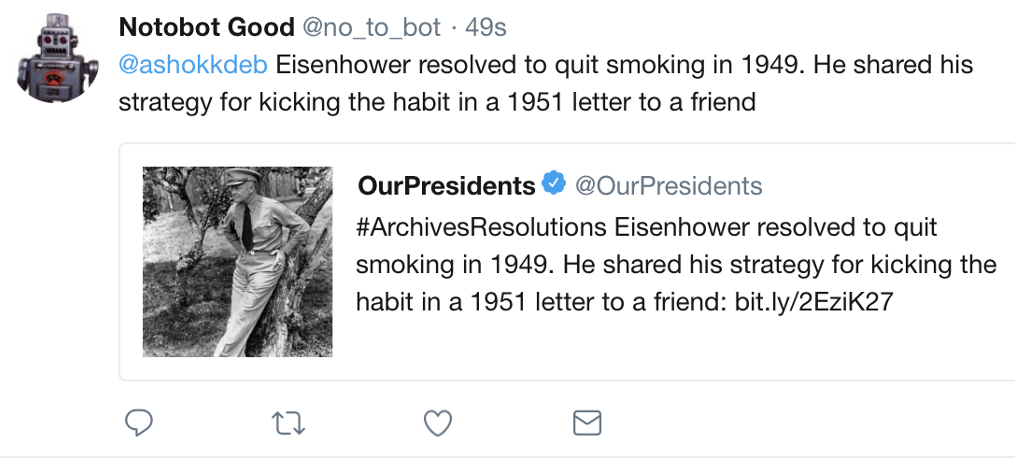 Fig 2. The Decision Tree maps user metadata to specific intervention bins.
Experiments & Results
The researchers tested various architectures to see which could best navigate the "noisy" tobacco discourse.
| Classifier | Accuracy |
|---|---|
| Logistic Regression | 67.67% |
| SVM | 69.04% |
| MLP | 69.68% |
| Char-CNN | 74.01% |
The Char-CNN emerged as the clear winner. While 74% might seem modest compared to clean-dataset benchmarks, in the chaotic environment of real-time Twitter data, this represents a significant SOTA achievement for behavior classification.
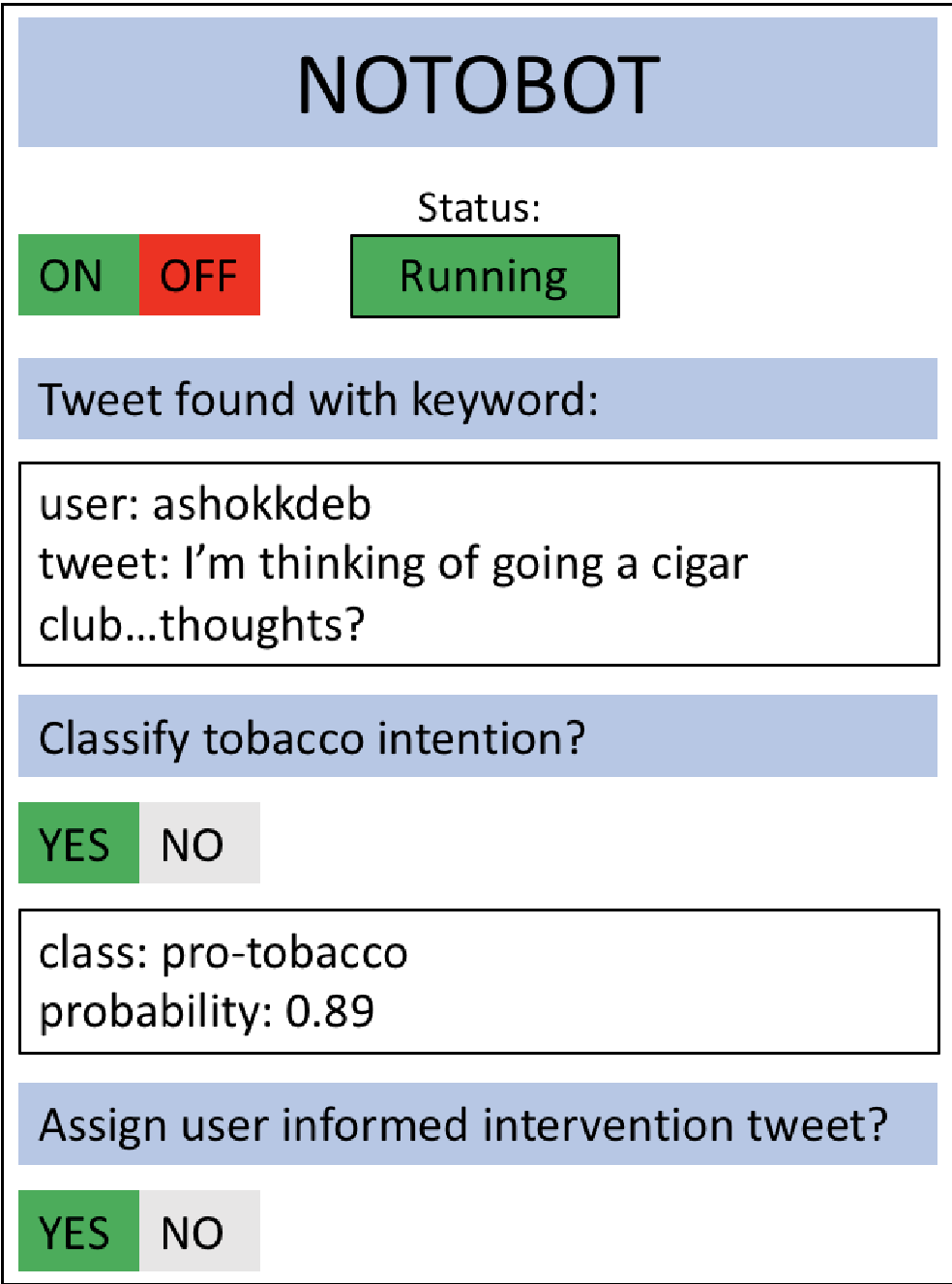 Fig 3. The Notobot User Interface used by researchers to monitor and approve interventions.
Critical Insight: Beyond "One Size Fits All"
The core philosophy of this paper is that delivery matters as much as the message. By "crowd-sourcing" the intervention content from real former smokers, Notobot avoids the "preachy" tone of government health warnings.
Limitations & Ethics: The authors acknowledge that Twitter's demographic is not a perfect proxy for all youth. More importantly, the system currently operates in a "demonstration" mode to comply with Institutional Review Board (IRB) ethical standards before widespread deployment.
Conclusion
Notobot represents a blueprint for the future of digital health. By automating the identification and response process, public health researchers can now perform "micro-interventions" at a scale previously reserved for massive corporate marketing budgets. As we move toward 2026, the integration of generative AI (like LLMs) into this framework could make these "interventionist bots" even more persuasive and human-like.