
Social Catalysts: The Hidden Architects of Online Conversation
Social Catalysts: Characterizing People Who Spark Conversations Among Others
This paper introduces the concept of "Social Catalysts," individuals who spark and facilitate conversations among others in online social networks. Using Facebook data and surveys, the authors developed a behavioral measure of "catalystness" and identified that the top 1% of catalysts drive 31% of all peer-to-peer interactions.
TL;DR
While digital marketing obsesses over Influencers and sociology focuses on Brokers, a third vital role has been hidden in plain sight: the Social Catalyst. These are the users who don't just broadcast; they spark meaningful dialogue between other people. By analyzing Facebook’s massive social graph, researchers have quantified this role, finding that a tiny 1% of users facilitate nearly a third of all peer interactions.
Beyond Influencers: Why "Catalystness" Matters
For decades, we’ve characterized social value through two lenses:
- Degree Centrality (Influencers): People with many followers.
- Betweenness (Brokers): People who bridge disparate groups.
However, the authors of this study argue that these metrics miss the "social glue." A social catalyst creates the opportunity for their friends to talk to each other. This is crucial because active engagement (talking with people) is linked to higher well-being than passive consumption (scrolling through an influencer's feed).
The Anatomy of a Catalyst Post
What makes a post spark a conversation between friends? The researchers compared high-catalyst posts against a control group matched by audience size.
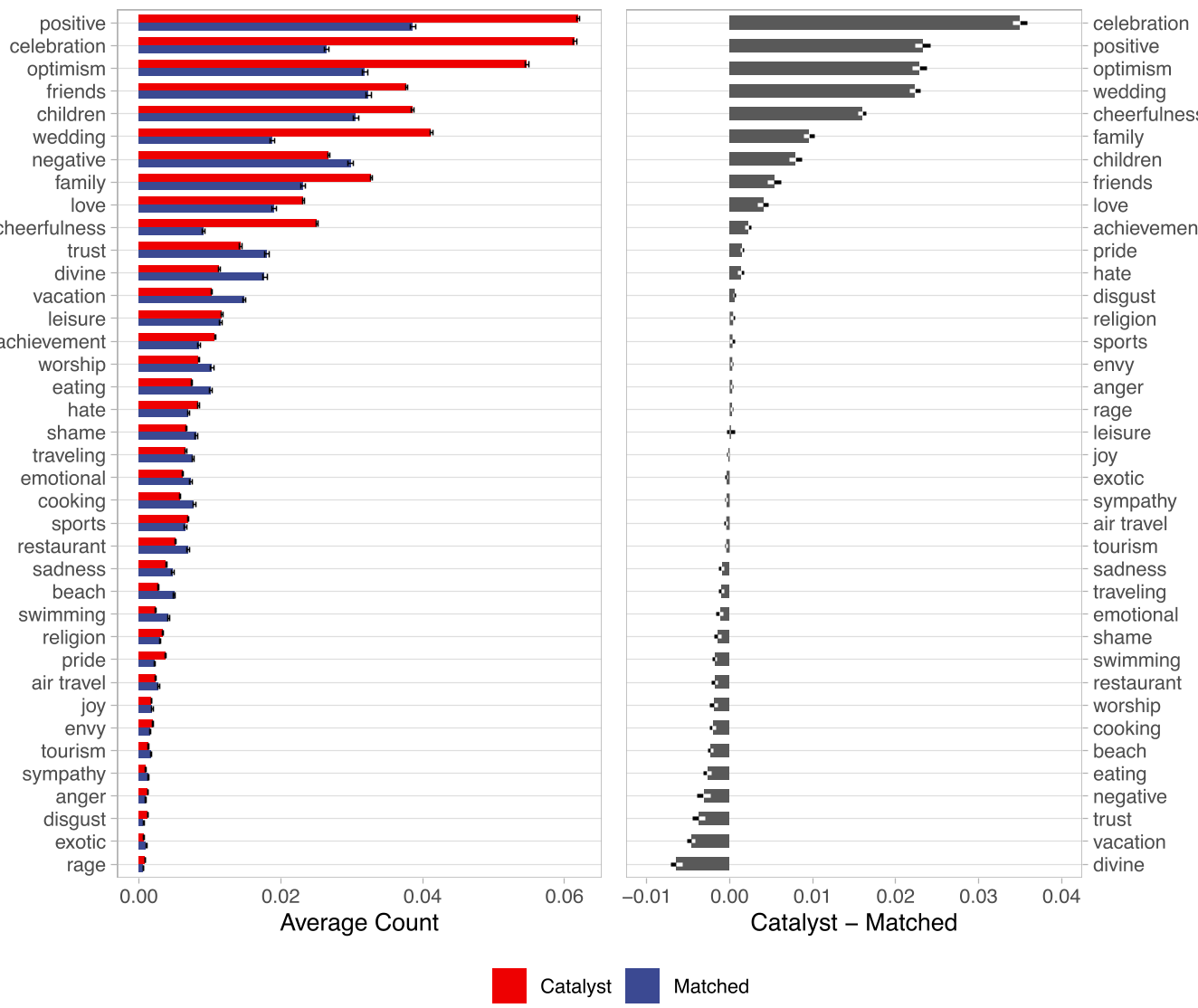
Key findings include:
- Originality is King: Catalysts are 2.16x more likely to post original content rather than reshares.
- Length & Depth: Catalyst posts are roughly 75% longer in word count, suggesting higher information density.
- The Power of Positivity: Topics like optimism, celebration, and friendship significantly outperform negative sentiment or rage-bait in sparking peer-to-peer replies.
- Prompts: They are 2x more likely to use question marks, acting as literal conversation starters.
Methodology: Measuring the "Spark"
The core metric is elegant: The Catalystness Score. If User A posts an update, and User B replies to User C’s comment, User A gets a catalyst point. The researchers meticulously cleaned the data using @mentions and reply-thread structures to ensure they were only counting interactions between friends, excluding those with the original poster.
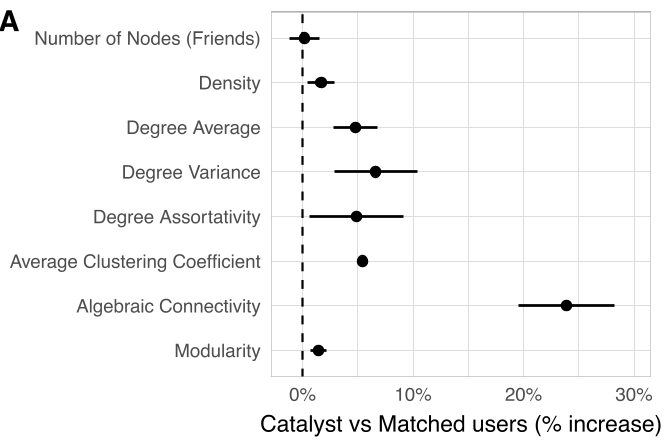
Surprisingly, the internal structure of a catalyst's "ego network" (how their friends are connected to each other) was not the deciding factor. While catalysts have slightly denser networks and higher clustering, the differences were substantively small. This suggests that catalystness is a behavioral trait, not just a byproduct of where you sit in the network.
Probing Human Perception: The Survey
To validate their math, the team surveyed over 10,000 users, asking them to nominate friends who "get people to open up and talk."
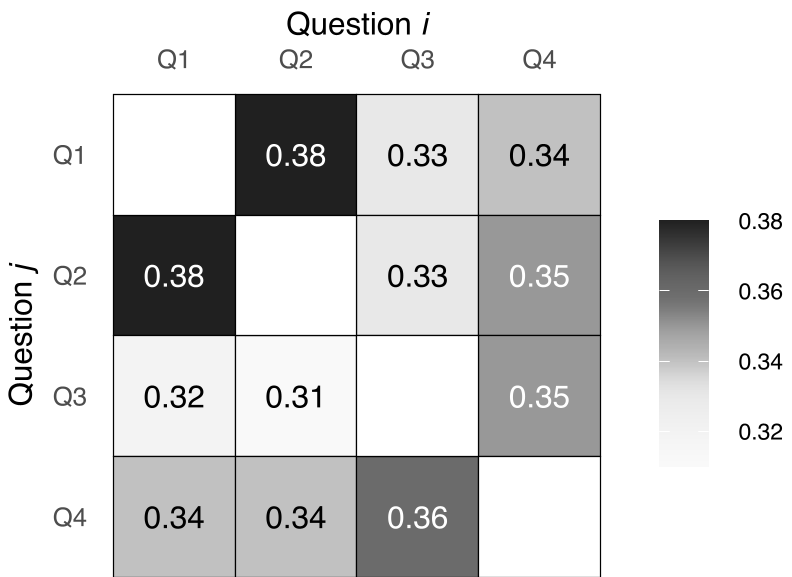
The results were striking:
- Alignment: Nominated users had nearly 137% more catalyst interactions than matched non-nominees.
- Predictability: Using features like reaction types ("Hahas") and catalyst scores, the team built a Machine Learning model (GBDT) that could predict who would be nominated with an AUC of 78.85%.
Critical Insight & Future Outlook
The most profound takeaway is that catalysts may be the key to community health. The study found that catalysts are significantly more likely to facilitate triadic closure—essentially introducing two friends who didn't know each other before.
Limitations: The study is correlational and limited to a 28-day window on a single platform (Facebook). Whether "catalystness" is a permanent personality trait or a temporary state remains to be seen.
The Future: For platform designers, this work suggests we should move beyond "likes" as a metric of success. If we want to foster healthier digital communities, we need to identify and support the catalysts—the people who make us talk to each other, not just at our screens.