
Social Closeness: Leveraging Behavioral Fingerprints to Thwart Clone Attacks in Mobile Health
Social closeness based clone attack detection for mobile healthcare system
This paper introduces a social closeness-based method for detecting clone attacks in mobile healthcare systems by leveraging user encounter patterns and community structures. The authors propose the "Community Betweenness" metric and demonstrate its effectiveness on MIT Reality Mining and SWIM traces, achieving a high detection ratio with zero false positives.
TL;DR
Researchers have developed a method to detect clone attacks in mobile healthcare systems by analyzing the "social closeness" of users. By introducing a metric called Community Betweenness, the system identifies cloned devices that appear in multiple social circles simultaneously—a behavior that contradicts typical human social patterns. Tested on real-world contact traces, the method achieved near 100% detection accuracy with zero false alarms.
Problem: The Invisible Replicant
In mobile healthcare networks, "clone attacks" are a nightmare scenario. An attacker captures a legitimate node, extracts its security keys, and creates dozens of replicas. Because these clones have valid credentials, traditional encryption and key-exchange protocols can't stop them.
In a disease control system, these clones could be used to manipulate vaccine allocation. For instance, an adversary could deploy clones to make a specific neighborhood appear high-risk, unfairly hogging limited medical resources. Prior detection methods relied on GPS (which drains battery and is easy to spoof) or worked only in static environments like smart factories.
Methodology: The "Community Betweenness" Insight
The core intuition of this paper is simple but profound: Humans are social creatures of habit. We typically belong to a few stable communities (work, home, gym). A single legitimate user rarely bridges dozens of distinct, unconnected social groups in a short window.
A cloned ID, however, exists in multiple places or participates in multiple social circles via the different physical replicas. This causes the node's "Betweenness" to skyrocket.
1. Defining the Metric
The authors define Community Betweenness as the number of shortest paths between pairs of communities that pass through a specific node. They propose three variants to calculate this:
- Contact Frequency Based (CFB): Counts the number of nodes in overlapping sets.
- Contact Duration Based (CDB): Weights the link by how long users stayed in proximity.
- Shortest Path Based (SPB): Focuses on the topological routing between groups.
2. Architecture for Detection
The system doesn't just look for a one-time spike. It uses an Observation Window approach. A clone is only flagged if its community betweenness exceeds a threshold (derived via training or analytical models) for multiple periods within a set timeframe.
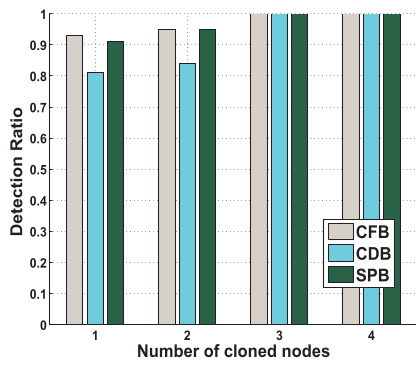 Fig 1: Modeling community structures to establish a baseline for normal human behavior.
Experiments & Results: Real-World Validation
The researchers tested their approach against two famous datasets: the MIT Reality Mining trace and the SWIM trace.
Key Findings:
- High Sensitivity: As the number of clones increases, the detection ratio quickly approaches 100%. This is because more clones create more "unnatural" bridges between communities, making the anomaly easier to spot.
- Robustness: Even when clones interacted with different node sets (active vs. regular users), the system successfully identified them.
- Zero False Positives: In all tested scenarios, the system never mistakenly flagged a legitimate user as a clone. This is vital for healthcare systems where false alarms could cause panic or logistics failures.
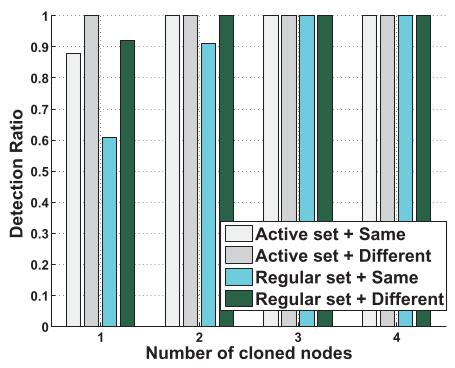 Fig 2: Detection performance using Contact Frequency Based (CFB) metrics across different node densities.
Critical Analysis & Conclusion
The true value of this work lies in its hardware-agnostic nature. It utilizes Bluetooth encounter data—something mobile phones already collect for social apps—to provide security without additional battery drain or specialized sensors.
Takeaways:
- Context is King: Security in mobile networks shouldn't just be about what you know (passwords) but how you behave (social context).
- Limitations: The system assumes a certain level of social stability. In highly chaotic or ultra-mobile environments (like a one-day international festival), the community definitions might blur, potentially requiring more dynamic thresholding.
This research paves the way for "Behavioral Biometrics" at the network level, ensuring that even if an attacker steals your digital keys, they cannot steal your social signature.