
Social Cloud Computing: Turning Friendships into Virtualized Infrastructure
Social Cloud Computing: A Vision for Socially Motivated Resource Sharing
The paper introduces "Social Cloud Computing," a resource-sharing framework that leverages established trust within social networks to trade heterogeneous resources like storage and computation. By combining cloud virtualization with a social marketplace, the authors demonstrate a functional social storage cloud implemented within Facebook.
TL;DR
Social Cloud Computing is a paradigm shift that asks: Why pay a centralized provider for storage when your friends have idle capacity? This paper explores leveraging the "Implicit Trust" within social networks to create a decentralized marketplace for sharing heterogeneous resources. By deploying a storage cloud inside Facebook, the authors prove that social incentives can replace expensive legal SLAs, creating a "co-op" cloud that is both scalable and efficient.
The Missing Link: Why Trust Matters in the Cloud
Current cloud computing relies on massive data centers and rigid, legally binding Service Level Agreements (SLAs). While effective, this model is centralized and carries high overheads for privacy and security. Conversely, volunteer computing models (like SETI@home) have struggled with "freeloading" and a lack of accountability because users are anonymous.
The authors identify a unique Insight: Social networks contain a pre-built web of real-world relationships. These relationships provide "Social Capital"—a form of trust that can be used as a corrective mechanism. If a friend fails to provide the storage they promised, the repercussions are social (reputation damage) rather than just financial, which is often a more powerful motivator in peer-to-peer environments.
Methodology: The Social Marketplace
The core of the system is the Social Marketplace, which regulates how resources move between friends. Unlike a standard market, this one is "socially oriented," meaning it uses a blend of economic and noneconomic protocols:
- Market Metaphors: The system supports everything from "Volunteer" models to "Reverse Auctions," where friends bid to host your data.
- Virtualized Resource Layer: Using a web service-based architecture, hardware is abstracted away. Whether it is storage or CPU, it is presented as a standardized service.
- Framework Architecture: The system utilizes a Banking Service to track social credits and a Monitoring and Discovery System (MDS) to find available resources among friends.
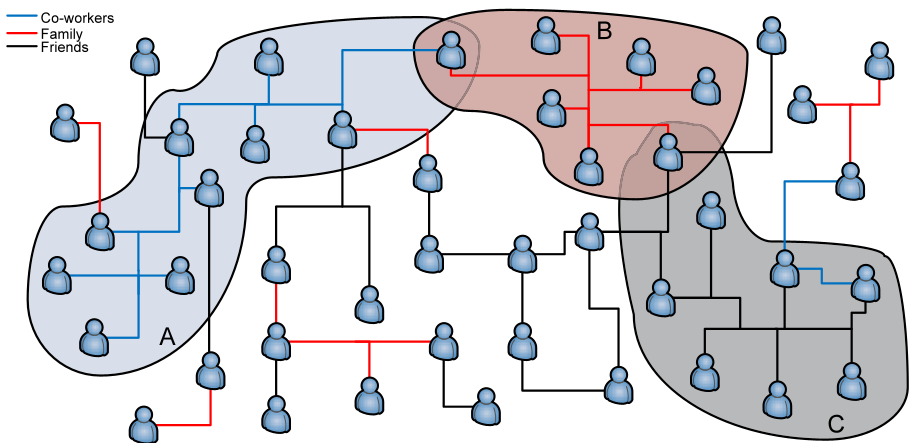 Figure 1: The multi-layered approach of the Social Cloud, spanning Social, Economic, and Resource layers.
Implementation: The Facebook Storage Cloud
The authors built a "Social Storage Cloud" as a Facebook application. They used the Facebook Graph API to map "friendships" to "sharing permissions."
When a user wants to back up a file:
- The app identifies which friends have the "Storage Service" installed.
- In a Posted Price scenario, the user selects a friend's offer.
- In an Auction scenario, the app runs a "Reverse Vickrey Auction" (where the dominant strategy is truth-telling) to find the best provider.
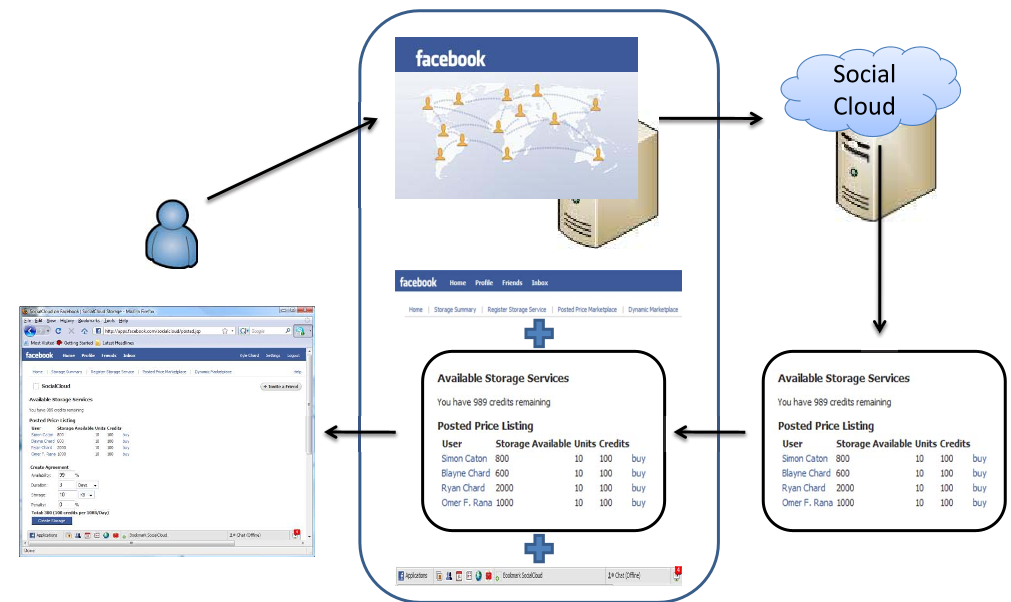 Figure 2: The registration and authentication flow within the Facebook environment.
Results & Performance
The researchers addressed a critical question: Can a social network scale into a cloud?
- Discovery Speed: Querying 130 friends (the average Facebook user's circle) out of 2,000 possible providers took ~2 seconds.
- Market Efficiency: The system handled 65 auctions per minute with 50 bidders simultaneously—more than enough for most community-driven groups.
- Co-op Potential: They demonstrated that the "Auction Manager" and "Agreement Manager" could run on a standard home PC with minimal CPU (peaks of 80%) and RAM (125MB), paving the way for a self-hosted "Co-op Cloud" where users provide the infrastructure themselves.
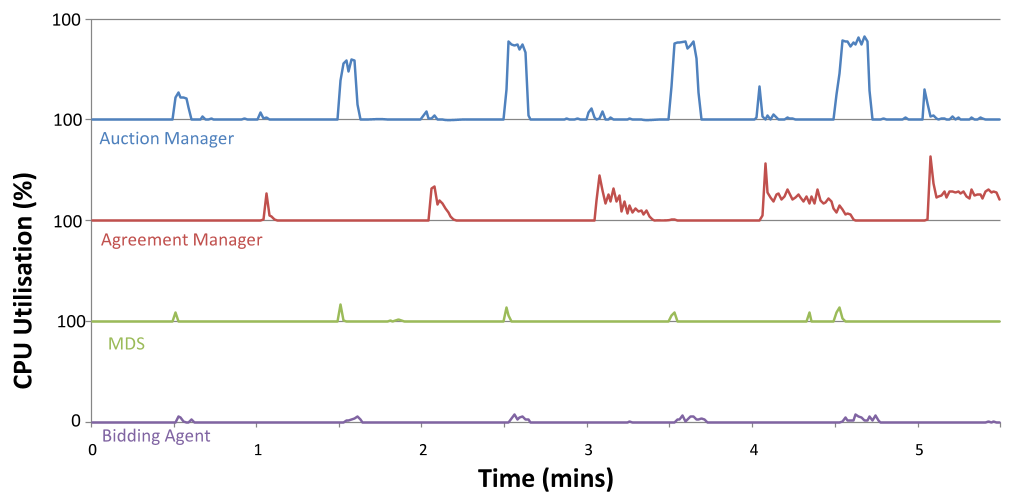 Figure 3: Memory usage during high-load auction scenarios, demonstrating a small footprint.
Critical Insight: The "Social Co-op"
The most profound takeaway is the concept of the Social Co-op. By distributing the management of the cloud among the participants, we eliminate the need for a "Big Tech" middleman to own the servers. While the current implementation uses Facebook as the social glue, the theory is platform-agnostic.
However, the paper admits limitations:
- Identity: It relies on Facebook's authentication; if a profile is fake, the trust breaks.
- QoS: Social trust doesn't prevent a friend's PC from crashing or losing internet access.
Conclusion
Social Cloud Computing bridges the gap between high-overhead commercial clouds and low-accountability volunteer systems. By formalizing "friendship" into a "trading protocol," it unlocks a future where our digital communities are not just for communication, but are the very infrastructure we use to power our digital lives.