
The Privacy Paradox: Why Japanese Youth Leave the Door Open While Fearing Burglars
Exploring Social Cognition Related to Privacy Settings in SNS Usage
This study investigates the psychological drivers of SNS privacy behaviors among Japanese young adults, specifically focusing on Twitter. It identifies a significant "privacy paradox" (AB dichotomy) where users express high privacy concerns but maintain public profiles, driven by social cognitive biases.
TL;DR
A study of Japanese university students reveals a radical contradiction: while nearly all users believe privacy is paramount, over 81% keep their Twitter accounts public. This behavior is fueled by two powerful social cognitive biases: the Third-Person Perception (believing "it won't happen to me") and negative stereotypes that paint privacy-conscious users as unsociable or "not cool."
The "AB Dichotomy": When Words and Actions Clash
Researchers Miyuki Onuma, Atsushi Kimura, and Naoki Mukawa dive into a phenomenon known as the AB dichotomy. In the realm of Social Networking Sites (SNS), this refers to the gap between a user’s Attitude (high privacy concern) and their Behavior (high disclosure).
The study finds that young adults use Twitter primarily to maintain existing real-world relationships. However, despite this "closed" motivation, they leave their "digital front doors" wide open to the public and strangers.
Methodology: Peeking Behind the Privacy Settings
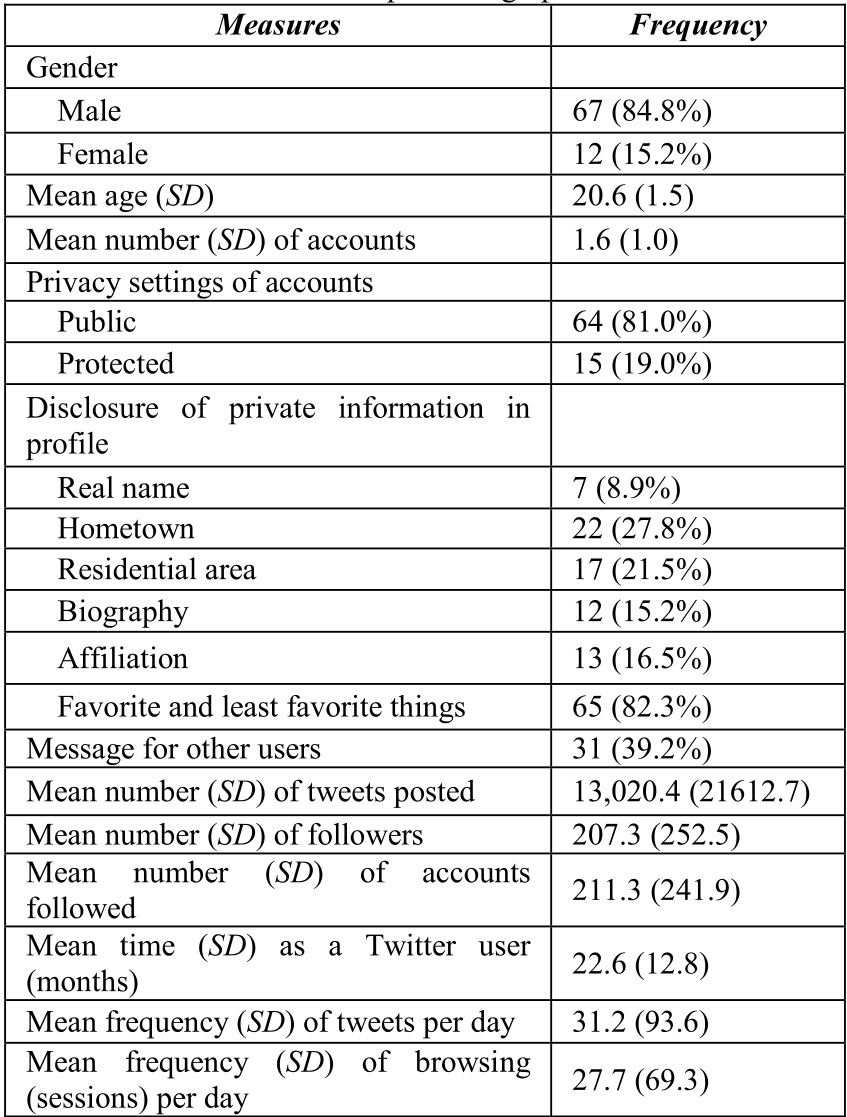
The team surveyed 79 Japanese undergraduate students, analyzing:
- Actual Settings: Verifying if accounts were "Public" or "Protected."
- Risk Perception: Using percentage estimates for the likelihood of "backlash" or "trouble."
- User Stereotypes: Rating typical Twitter users on traits like "influential," "sober," or "warm."
Core Insight 1: The "It Won't Happen to Me" Bias
The study provides empirical evidence for Third-Person Perception (TPP). When asked about the risk of getting into trouble or facing online backlash, respondents consistently rated the risk for others as significantly higher than the risk for themselves.
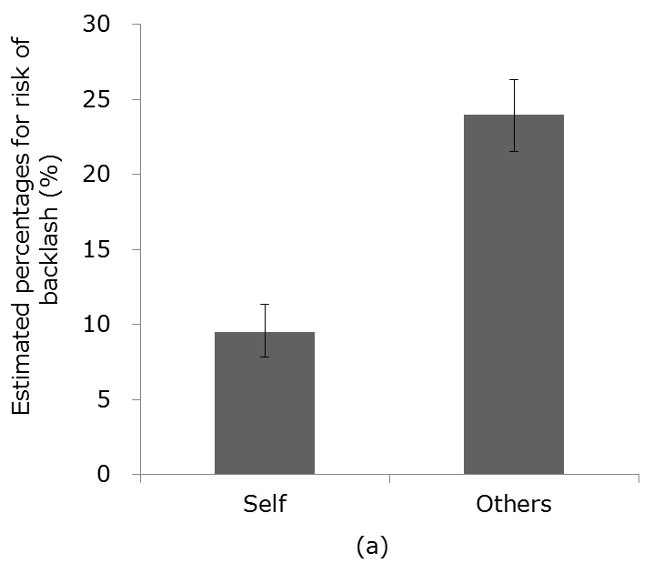
Figure 3 shows a clear "optimistic bias": Users believe they are uniquely shielded from the consequences of public disclosure.
Core Insight 2: The Stigma of Being "Protected"
Perhaps the most fascinating finding is the role of User Stereotypes. The study mapped out how students perceive different types of Twitter users:
- Users with many followers: Seen as influential, outgoing, and humorous (Positive traits).
- Users with protected accounts: Seen as "not warm," "not influential," and "not sociable" (Negative traits).
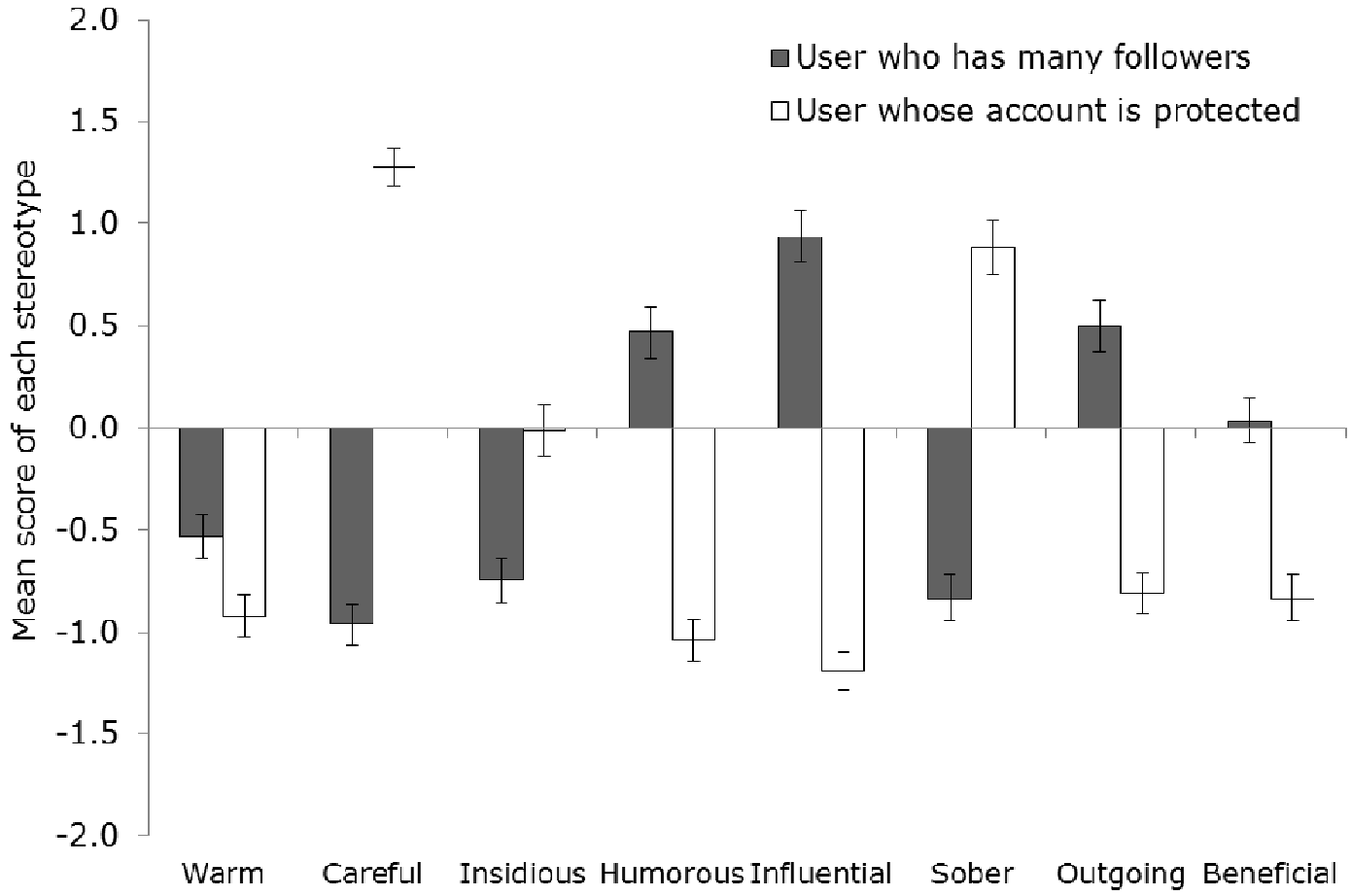
This creates a "social tax" on privacy. To avoid being seen as "unsociable" or "boring," young users opt for public settings even when it contradicts their safety concerns.
Critical Analysis & Conclusion
This research highlights that Privacy is not just a technical choice; it is a social performance.
Key Takeaways:
- Cognitive Contempt: Users perceive Twitter communication as "less important" than face-to-face interaction, leading to negligence in security.
- Social Pressure: The fear of negative stereotypes (being seen as "unbeneficial" or "sober") outweighs the fear of identity theft or data misuse.
Limitations: The study is limited by a small, predominantly male Japanese sample (N=79). Future research must explore if these social stigmas around "protected accounts" vary across cultures (e.g., US vs. Japan) or platforms (e.g., Instagram vs. TikTok).
Future Outlook: For designers and educators, the message is clear: improving SNS literacy isn't about teaching people how to toggle a switch; it's about changing the social narrative so that "privacy" is no longer synonymous with "unsociable."