
Social Commerce: Humanizing the Digital Transaction through Value Co-creation
Social Commerce: The Mediating Effects of Trust and Value Co-creation on Social Sharing and Shopping Intentions
This study investigates the drivers of social commerce intentions in the Taiwanese market, proposing a structural model where Social Presence, Social Support, and Social Commerce Constructs (reviews/ratings) influence Social Shopping and Social Sharing. The research highlights the critical mediating roles of Trust and Value Co-creation in converting social interactions into commercial outcomes.
TL;DR
Social commerce is no longer just about "adding a buy button" to social media. This study reveals that the secret sauce lies in Social Presence and Value Co-creation. By analyzing 286 users, the researchers demonstrate that when consumers feel they are interacting with "real people" and participating in the brand's value journey, their intention to shop and share information skyrockets.
Academic Positioning: This work bridges the gap between Social Presence Theory and Service-Dominant Logic, moving the conversation from "Trust" as the sole mediator to a dual-pathway model involving "Value Co-creation."
The "Missing Link" in Social Shopping
Why do we trust a stranger's review on a social platform more than a polished corporate ad? The existing literature has long hailed Trust as the king of e-commerce. However, trust is passive. The authors argue that in the era of social media, we need a more dynamic engine: Value Co-creation.
The problem with many social commerce platforms is their "siloed" nature; they provide the tools (ratings/reviews) but fail to create an environment where users feel psychologically present or supported. This study asks: How do we turn a lurker into a shopper?
Methodology: The Social-Cognitive Framework
The researchers proposed a structural model connecting three "Social Factors" to two "Social Intentions" via two "Cognitive Mediators."
1. The Antecedents
- Social Presence: The "warmth" of the medium. Does it feel like a cold interface or a bustling market?
- Social Support: Emotional and informational help from other users.
- Social Commerce Constructs: The tangible features like ratings, reviews, and referrals.
2. The Mediators (The Core Engine)
The study emphasizes that these social factors do not lead directly to sales. Instead, they must first build Trust and a sense of Value Co-creation—where the consumer feels like an active partner rather than a passive target.
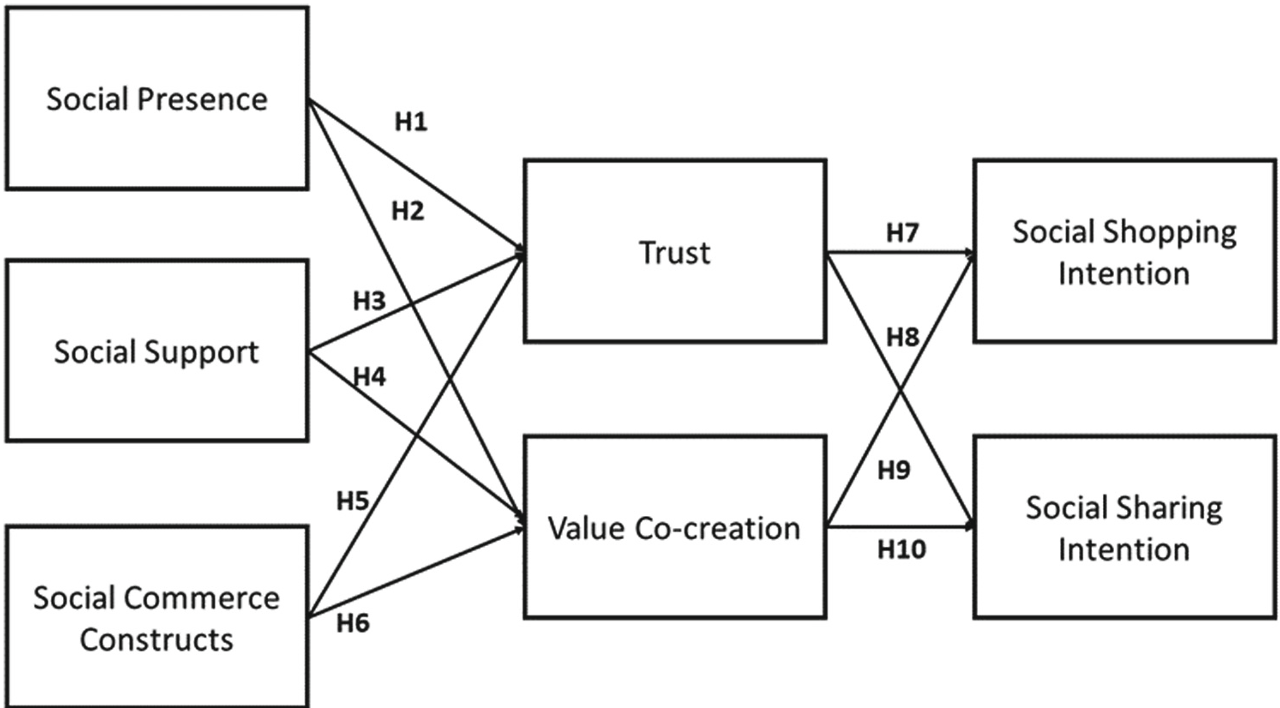
Key Findings & Visual Evidence
The Structural Equation Modeling (SEM) analysis yielded several high-impact insights:
- Social Presence is a Powerhouse: It significantly impacts both Trust and Value Co-creation. If a user feels the presence of "real people," they are more likely to engage in the service procedure.
- The Sharing Economy: Interestingly, while Trust is vital for shopping, Value Co-creation is a stronger motivator for Social Sharing. When users feel they helped "create" the value, they are far more likely to broadcast it to their network.
- The Taiwan Context: Unlike Western studies, this research highlights that in emerging Asian markets, the "intimacy" of communication (social presence) is a prerequisite for any commercial transaction.
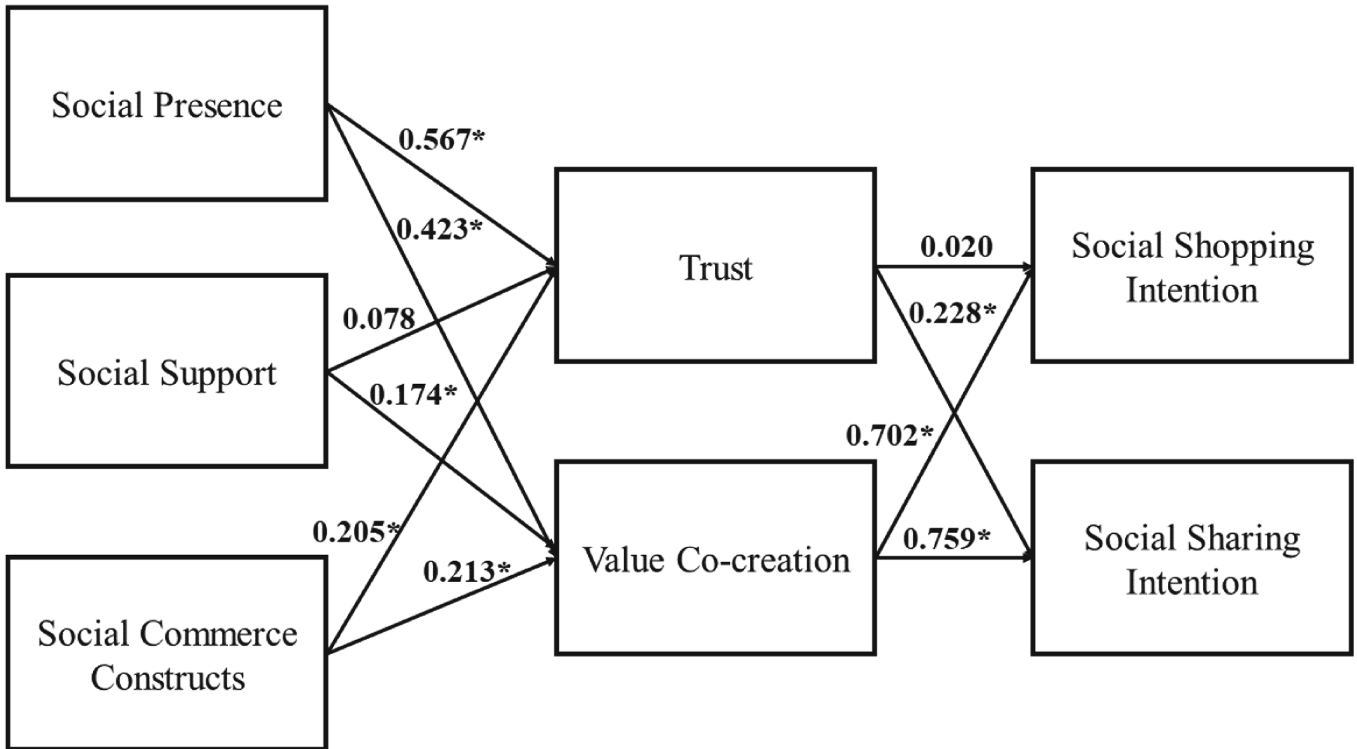
Critical Insight: Beyond the "Buy" Button
The most profound takeaway for practitioners is the shift in the role of the consumer. The transition from a "passive audience" to an "active partner" is what converts social browsing into social commerce.
Managerial Implications:
- Humanize the Interface: Use features like live chats, avatars, or real-time interaction cues to boost Social Presence.
- Facilitate "Co-creation": Don't just ask for a 5-star rating. Encourage users to share "use-case stories" where they feel their input could influence the product's future.
- Support the Community: Emotional support—feeling "cared for" by a group—is a massive trust builder that e-commerce giants often overlook.
Conclusion & Future Outlook
While the study is limited by its specific geographic focus (Taiwan) and student-heavy sample, its theoretical contribution is clear: Social commerce is a social experience first and a commercial one second.
Future research should look into how these dynamics change in the "Metaverse" or "VR-commerce," where Social Presence is inherently maximized, but Trust might be harder to verify.
Takeaway: To win in social commerce, stop selling products and start facilitating relationships.