
Architecting Growth: How Social Competency and Strategic Networking Power Japanese IT Startups
Social Competency and Social Networks as Predictors of Business Growth in Japanese IT and Web Startups
This study investigates the impact of entrepreneurs' social competency and active networking on business growth within the Japanese IT/Web startup ecosystem. It utilizes a longitudinal tracking approach to validate how psychological traits and behaviors translate into network size (acquaintances and mentors), eventually leading to significant organizational scaling.
TL;DR
Success in the startup world is rarely a solo endeavor. This study of Tokyo's Web and IT sector reveals that an entrepreneur's social competency and proactive networking habits are not just "soft skills"—they are leading indicators of tangible business growth. By expanding their reach across industries and securing professional mentors, founders significantly increase their chances of doubling their workforce and achieving scale.
Background: Beyond the "Solo Genius" Myth
The image of the lone-wolf programmer building a billion-dollar company is pervasive but inaccurate. Academic literature has long suggested that entrepreneurs are "embedded" in social networks. However, why some founders build robust networks while others remain isolated has been a black box.
This research moves beyond just measuring what a network looks like, focusing instead on how it is built. By studying Japanese startups—a culture with unique social dynamics—the authors provide a roadmap for how psychological traits translate into social capital and, eventually, market success.
Problem & Motivation: The Process of Networking
While previous studies (e.g., Zhao et al., 2010) looked at "Guanxi" in China, Japan's IT sector operates differently. The researchers identified a gap: existing models often failed to distinguish between a person's ability to be social (Social Competency) and their actual effort to network (Active Networking).
The motivation was to see if these two factors independently contributed to building two types of social assets:
- Acquaintance Networks: Broad access to information across 12 different industries.
- Business Mentors: Deep access to professional advice and direct support.
Methodology: A Two-Year Longitudinal Study
The researchers surveyed 89 entrepreneurs in the Tokyo metropolitan area starting in 2012 and followed up two years later. Using employee growth (doubling the team and reaching 30+ employees) as a metric for success, they analyzed the predictive power of early-stage networking.
The Analysis Model
The study utilized a dual-stage approach:
- Regression Analysis: To see if personality and behavior grew the network.
- Logistic Regression: To see if that network predicted business growth.
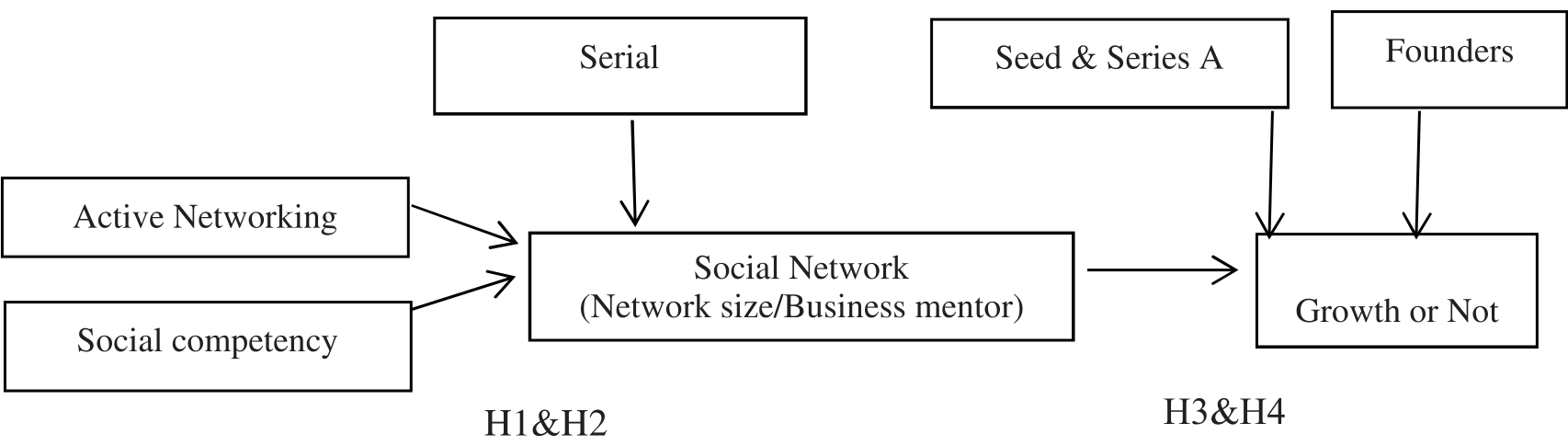 Fig 1: The structural framework connecting psychological traits to business outcomes.
Key Results: Mentors as Growth Catalysts
The findings were striking. Social competency and active networking were both strongly linked to having more business mentors. Interestingly, the data showed that while broad networks are good for information, Business Mentors were particularly significant for actual business scaling.
Statistical Breakdown
- Networking Behavior: The most significant predictor of network size (B = 6.02, p < 0.001).
- Growth Correlation: Companies with broader network sizes and more professional mentors were significantly more likely to belong to the "Growth" category (approx. 14.6% of the sample) rather than the "Stagnant/Closed" group.
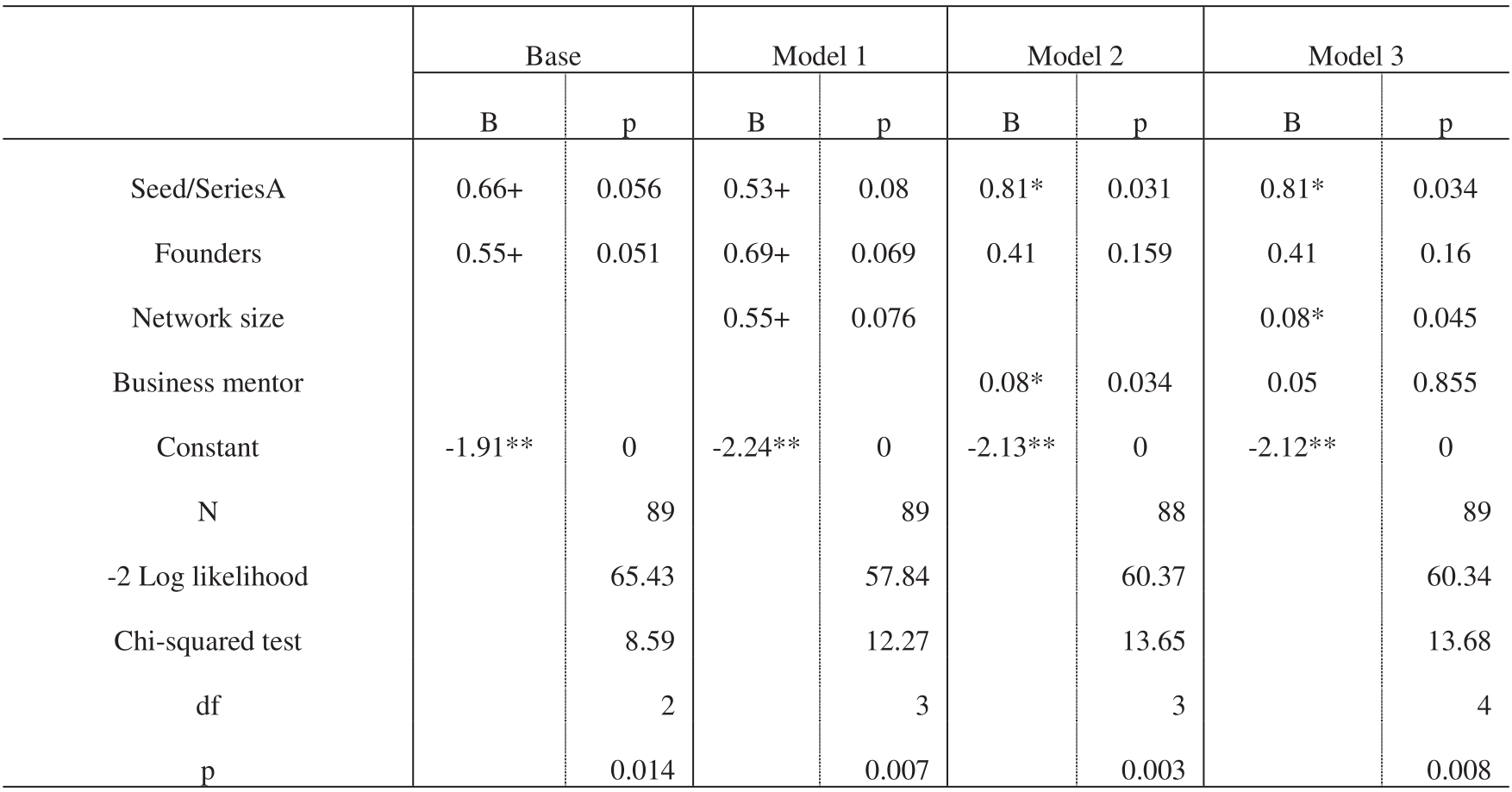 Table IV: Probit/Logistic analysis showing the impact of network size and mentors on growth.
Critical Analysis & Takeaways
The study highlights an important Inductive Bias in entrepreneurship: we often over-attribute success to the product and under-attribute it to the "relay of resources" provided by networks.
Why it Works:
- Information Arbitrage: Broad industry contacts allow founders to see trends before they hit their specific niche.
- Credentialing: Mentors provide "social proof," making it easier to hire talent and secure investment (Seed/Series A).
Limitations:
The sample size (n=89) is relatively small, and the focus is specifically on the Tokyo Web/IT sector. The findings might differ in more traditional industries like manufacturing or in different geographical regions with less dense social clusters.
Future Outlook
For current founders and investors, the takeaway is clear: Invest in the person's ability to connect. Technical brilliance is the baseline; social competency and the discipline of active networking are the true predictors of whether a startup stays a "lifestyle business" or evolves into a market leader.