
The Monogamy Paradox: How Wealth Dilution Solved a biological Mystery
Social Computing Based Analysis on Monogamous Marriage Puzzle of Human
The paper investigates the "Monogamous Marriage Puzzle" using a social computing approach, proposing a wealth-redistribution mechanism titled "Socially Imposed Monogamy." By employing agent-based modeling (ABM), it demonstrates how patriarchal inheritance naturally drives societies toward de-facto monogamy even without legal intervention.
TL;DR
Why did powerful men, who historically controlled the laws of society, voluntarily switch from polygyny (multiple wives) to monogamy? This paper argues it wasn't just morality or disease—it was math. Using social computing, the authors show that "wealth dilution" from having too many heirs naturally forces a society toward monogamy to preserve status and resources.
Background: The Puzzle of the Elite
In the animal kingdom, 90% of mammals are polygynous. Human history follows a similar trend, yet modern civilization is defined by "socially imposed monogamy." The academic "puzzle" is simple: laws are usually made by the powerful, and the powerful benefit most from having multiple mates. Why would they legislate away their own evolutionary advantage?
The "Negative Feedback" Insight
The authors suggest that monogamy is an emergent property of patriarchal inheritance. Their logic follows a cycle of Negative Feedback:
- Advantage: A wealthy man takes many wives.
- Consequence: He produces a large number of sons.
- Dilution: His massive wealth is divided into many small parcels for inheritance.
- Regression: His sons, now possessing only average wealth, lose the "sexual selection" race and can only afford one wife (or none).
Over generations, this process acts as a "leveler," naturally bringing the variance of wife counts down to nearly zero.
Methodology: Simulating Society
The researchers used a discrete-timed agent-based model to simulate wealth distribution, marriage, reproduction, and inheritance across generations.
The Marriage Function
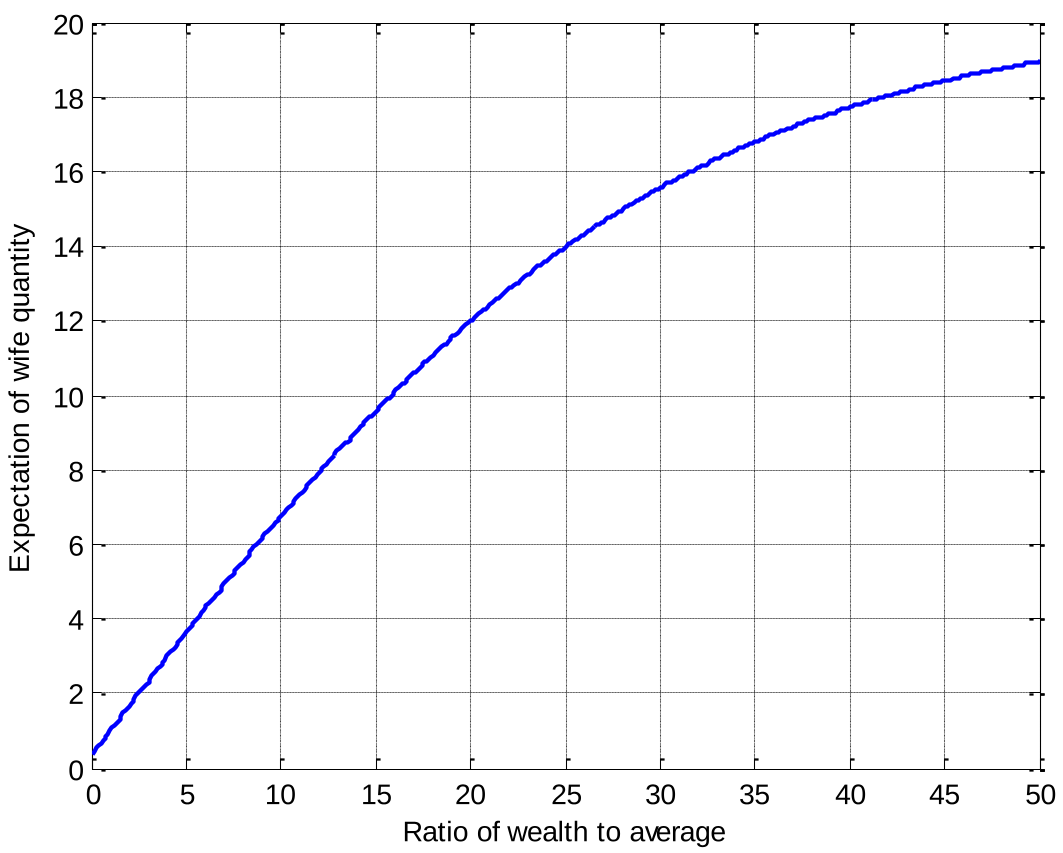
The model assumes that wife quantity () is a function of a man’s relative wealth (). They utilized a hyperbolic tangent function to simulate "saturation"—even the richest man has a limit to how many wives he can support due to limited resources.
Key Findings
1. The Natural Death of Polygyny
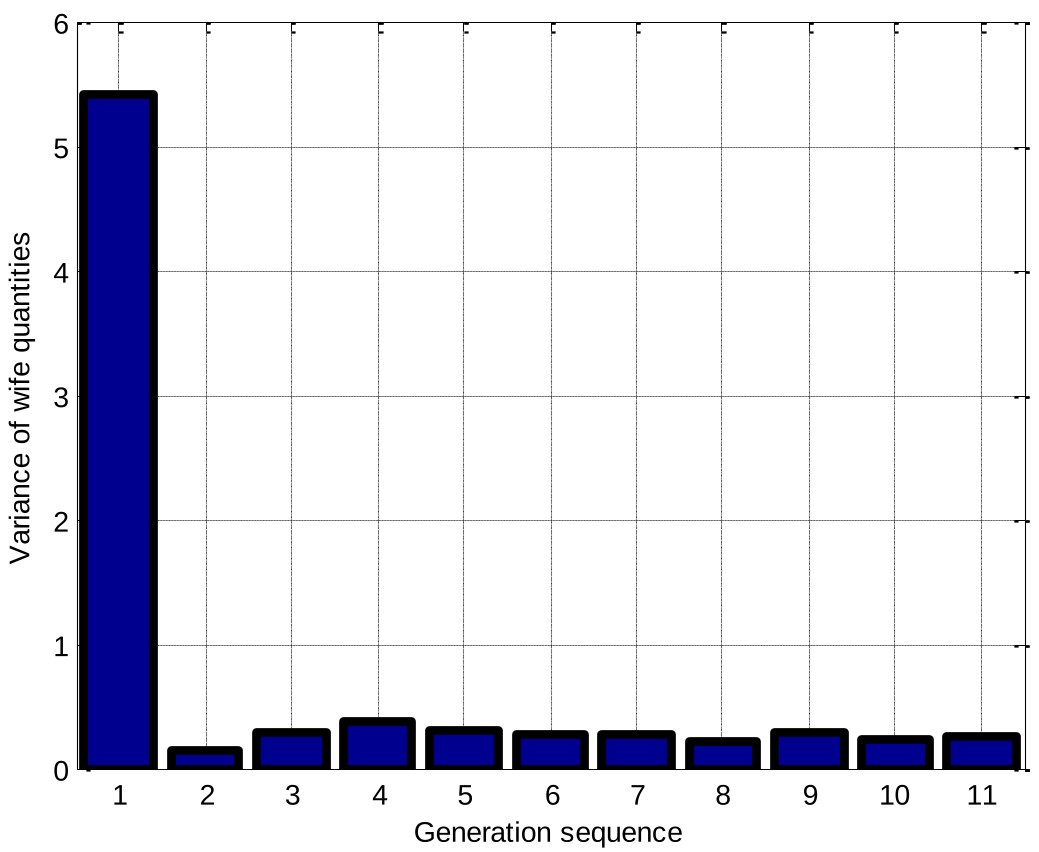
The simulation results are striking. Even if a society starts with extreme wealth gaps and widespread polygyny, the "Variance of Wife Quantities" drops precipitously. By the second or third generation, the society reaches "de-facto monogamy."
2. The Wealth Gap Paradox
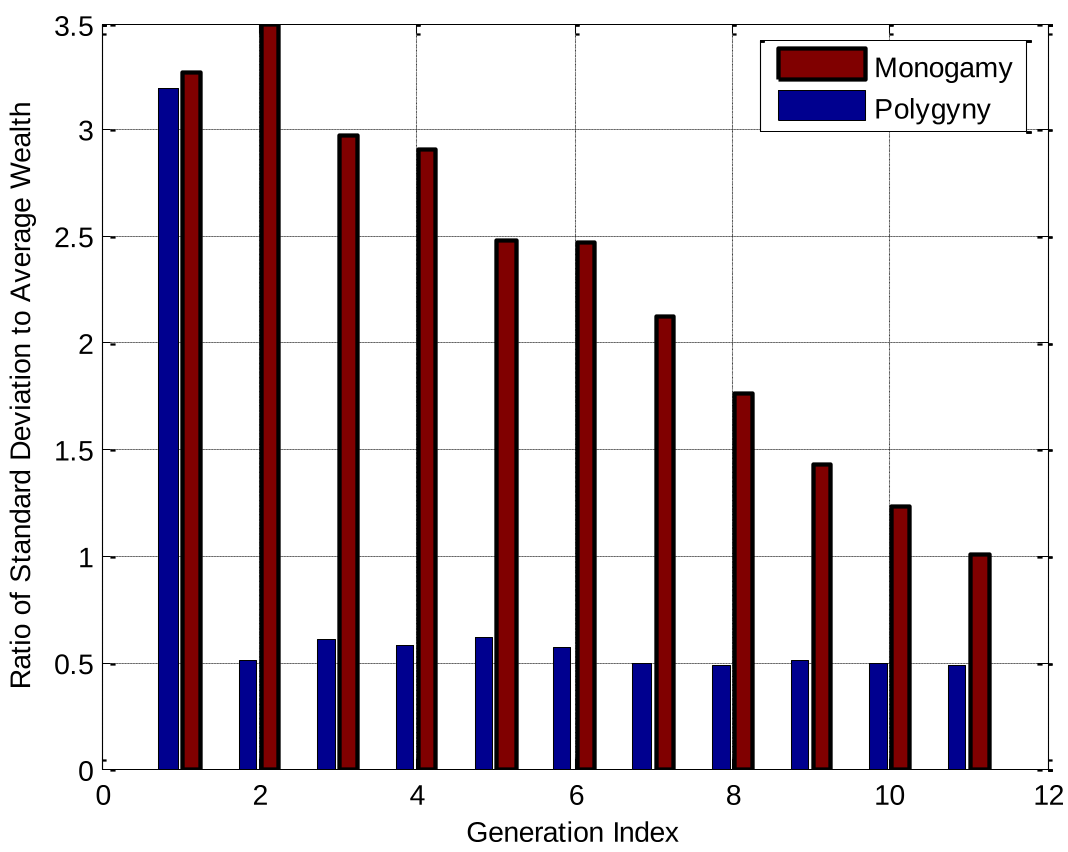
A fascinating side effect of the research is the impact on social equality. The authors found that polygyny actually suppresses the wealth gap. Because a rich man's wealth is shattered among 10 or 20 children, the "super-rich" class is constantly being dissolved back into the middle class. Monogamy, by contrast, allows for the concentration of wealth within small family lineages, potentially explaining why modern monogamous societies face such high Gini coefficients.
Critical Analysis: A Shift in Perspective
While previous theories (like Bauch & McElreath's 2016 Nature study) focused on Sexually Transmitted Diseases (STDs) as the driver for monogamy, this paper provides a more robust economic explanation.
The authors argue that the STD theory is inconsistent with history—Asian countries like China and Japan adopted monogamy via law very recently, without significant evidence of "pathogen stress" driving the change. Instead, the authors posit that laws and morals are "byproducts" or "rationalizations" of a de-facto reality already created by economic constraints.
Conclusion
This research reframes monogamy from a moral achievement to a structural necessity of patriarchal wealth management. It suggests that:
- Monogamy is self-organizing: It doesn't require "top-down" enforcement to begin; inheritance dynamics do the heavy lifting.
- The Price of Monogamy: While socially stable, monogamy contributes to the long-term widening of the wealth gap by preventing the "inheritance dilution" that decentralized wealth in the past.
Ultimately, the "puzzle" is solved not through altruism, but through the cold, inevitable logic of the division of assets.