
Tamu Gadang Portal: Re-Humanizing E-Commerce Through Social Computing
Social Computing Through Business-based: Tamu Gadang Portal
The paper presents the "Tamu Gadang Portal," a business-based web platform designed to integrate social computing values into e-commerce. Developed using the Dynamic Systems Development Method (DSDM), the portal aims to enhance user trust and interaction, achieving an 88% satisfaction rate in delivering social computing values compared to industry giants like Amazon and Lazada.
TL;DR
The Tamu Gadang Portal represents a shift from purely transactional e-commerce to "Social Computing" based business. By utilizing the Dynamic Systems Development Method (DSDM), researchers created a portal that mirrors social conventions, achieving high user trust (88%) and proving that social interaction is the most critical element (100% participant agreement) for a successful online shopping experience.
The Missing Link: Why E-Commerce Feels "Cold"
Despite the massive growth in online shopping, many small business websites struggle to retain customers. The core problem identified by Baharum et al. is that traditional e-commerce focuses on the utility of the transaction—cart, checkout, product list—while ignoring the social context.
In the physical world, shopping is a social act. We look for social cues, peer validation, and direct interaction. Existing SOTA platforms like Amazon or Lazada have mastered this through complex algorithms, but smaller business-based websites often lack these "social computing" values, making them appear less legitimate or untrustworthy.
Methodology: Iterating Towards Social Value
The researchers opted for the Dynamic Systems Development Method (DSDM). Unlike rigid waterfall models, DSDM is iterative and focuses on delivering business solutions quickly through active user participation.
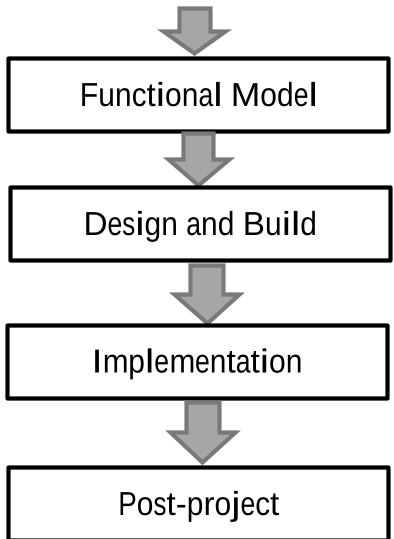
The DSDM Workflow used for Tamu Gadang:
- Pre-project: Identifying social computing values (efficiency, quality, and legitimacy).
- Functional Model/Design: Building prototypes and storyboards.
- Implementation: Gathering quantitative feedback from vendors and visitors.
Architecture of Social Interaction
The Tamu Gadang Portal was split into three distinct modules to ensure a seamless "social-business" flow:
- Visitor Module: Focuses on "Bestselling" and "Products on Sale"—features that leverage social proof to guide new users.
- Vendor (User) Module: Provides a dashboard for sellers to manage not just products, but their social reputation through sales statistics and customer feedback management.
- Administrator Module: Governs the ecosystem, ensuring that only legitimate vendors are approved, thus maintaining the "trust" pillar of social computing.
Experimental Results: Trust is the New Currency
The study conducted usability testing with 50 participants (predominantly students and small business owners). The results were striking:
- Platform Equivalence: 88% of users felt Tamu Gadang provided social mechanisms (reviews, ratings) comparable to major platforms like Zalora or Lazada.
- The Vitality of Social: 96% of participants stated that social interaction and profile validation are vital for a shopping website.
- The Experience Factor: 100% of respondents agreed that testimonials and reviews are "essential" for the shopping experience.

Critical Insight: Beyond the Cart
The fundamental takeaway from this research is that Social Computing isn't just a set of features; it is a design philosophy. The authors argue that the reason people engage with these systems is the "give and take" of the interaction—the meaning and connection derived from others.
Limitations & Future Work
While the study proves the desire for social computing, it is limited by its sample size (50 participants) and demographic (mostly students). Future research needs to explore how these social mechanisms perform under "adversarial" conditions, such as dealing with fake reviews or social manipulation, which are the primary threats to social computing legitimacy today.
Conclusion
The Tamu Gadang Portal serves as a blueprint for localized e-commerce. It proves that by prioritizing social behavior over mere computation, developers can create platforms that are not just marketplaces, but digital communities.