
Beyond Algorithms: Redefining Social Computing as the Master Paradigm of the Web Society
Social Computing: Its Evolving Definition and Modeling in the Context of Collective Intelligence
This paper explores the evolution of "Social Computing" from a simple use of social software to a complex "strong sense" paradigm driven by Collective Intelligence. It proposes a formal model of social computing characterized by a social feedback loop and argues that Social Computing inherently subsumes traditional Computer Science rather than being a mere sub-discipline of it.
TL;DR
Is social computing just a sub-field of Computer Science? This paper argues the opposite. By analyzing the transition from "social software" (Web 1.0) to "collective intelligence" (Web 2.0), author Yoshifumi Masunaga provides a formal model that places human participation at the core of the computing process. The key takeaway: Social Computing is no longer just "using computers to talk"; it is "groups of people acting as the computer."
Background Positioning
While most researchers focus on optimizing social algorithms, this work takes a philosophical and formalistic step back. It functions as a theoretical corrective, challenging the established hierarchies of the IEEE/ACM and Wikipedia. It essentially repositions Social Computing not as a branch on the tree of Computer Science, but as the atmosphere in which the tree grows.
The Core Motivation: The "Wisdom of Crowds" Shift
The author identifies a critical pivot point in history—October 17, 2007. This was when the Wikipedia definition of social computing shifted from a "weak sense" (email, IM, blogs) to a "strong sense" (prediction markets, collaborative filtering, and the Wisdom of Crowds).
The problem with existing definitions is that they treat "Social" as a mere prefix. However, the author argues that the introduction of human crowds changes the fundamental physics of computing:
- Traditional Computing: Deterministic, reproducible, and closed.
- Social Computing: Stochastic, time-dependent, and "always in beta."
Methodology: The Formal Model of Social Feedback
To prove that Social Computing is distinct, Masunaga compares two formal models.
1. Traditional Computing
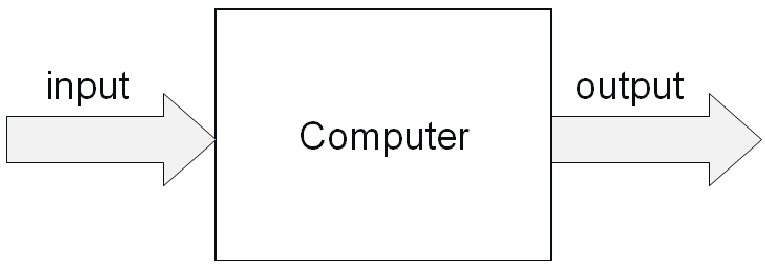
The standard model is linear: Input Computer Output. If you provide the same input, you get the same output. It is characterized by absolute reproducibility.
2. Social Computing
The "Strong" model introduces a Social Feedback Loop. Here, the output is fed back to the people (the "Input" source), who then adjust their behavior for the next iteration of computation. This feedback makes the system "convergent" (if negative feedback is applied, like Wikipedia’s 3-revert rule) or "divergent" (like an edit war).
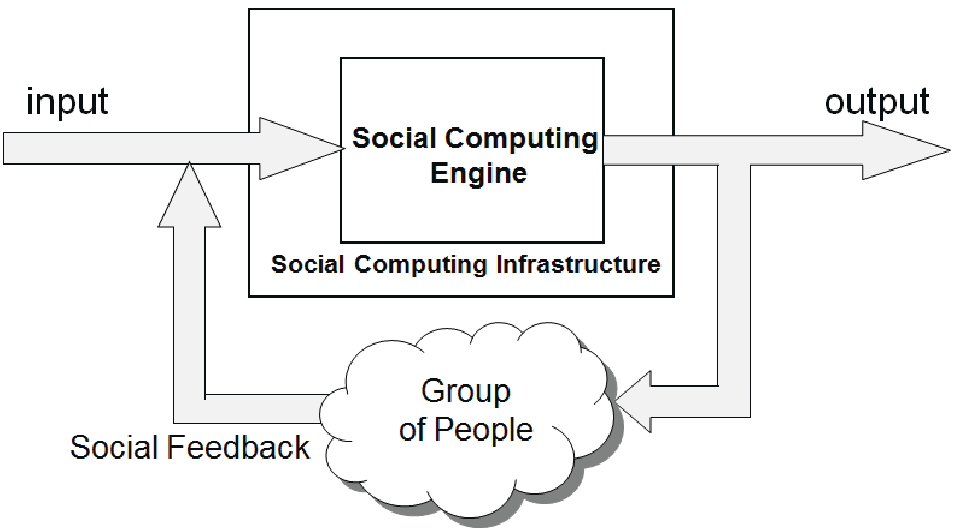
The Social Computing Engine (e.g., PageRank, NASDAQ, or MediaWiki) acts as the aggregator that weaves individual, decentralized opinions into a singular collective outcome.
Critical Insight: The Inversion of the "IS-A" Hierarchy
The most provocative part of this paper is the logical deconstruction of the current academic taxonomy.
Wikipedia and academic bodies like the ACM often state:
Social Computing Computer Science
However, Masunaga proves that if we define computing as a goal-oriented activity and social computing as that same activity plus human feedback, then the relationship is actually:
Computer Science IS-A (subset of) Social Computing
By removing the human feedback loop from the Social Computing model, you are left with the traditional Computer Science model. Therefore, Social Computing is the broader, more complex superset.
Experiments & Real-World Infiltration
The author validated the "citizenship" of social computing by analyzing Google SERP data.
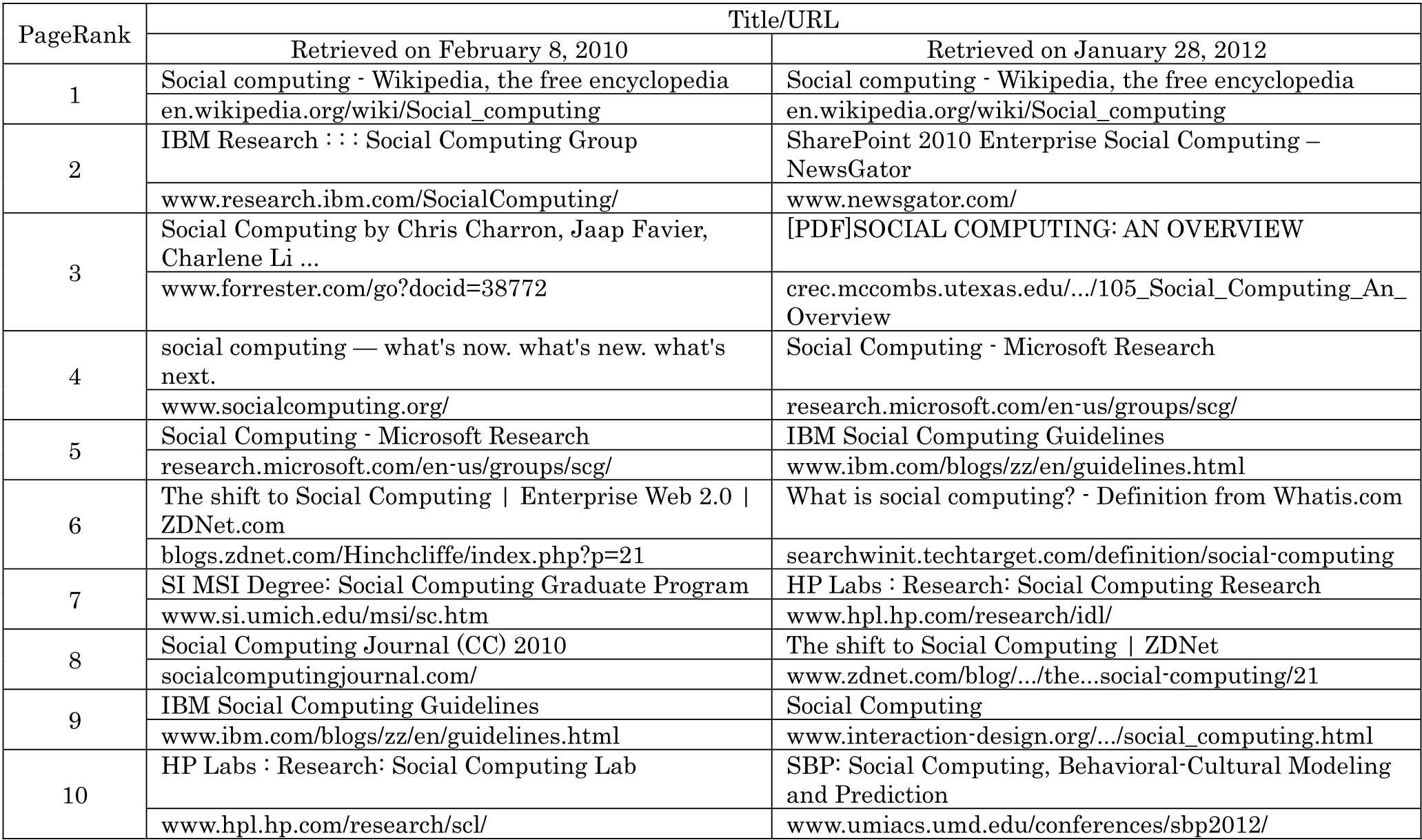
The data reveals that big tech (IBM, Microsoft, HP) and top-tier universities (Texas, Michigan, Maryland) moved aggressively toward social computing between 2010 and 2012, recognizing it as a business and pedagogical imperative rather than just a trend.
Deep Insight & Conclusion
Takeaway
We must stop viewing Social Computing as a "soft" version of Computer Science. It is a "hard" formal system that requires its own Body of Knowledge (SCBOK), focused on the dynamics of aggregation, stability through negative feedback, and the ethics of collective decision-making.
Limitations & Future Work
The author acknowledges that while Wikipedia is the best example of this paradigm, it is reaching a "ceiling" in article growth. The next challenge is developing a WikiBOK—a collective intelligence system designed to define the very field of Social Computing in a bottom-up, decentralized manner. This suggests that the future of academic disciplines themselves will be a product of the social computing models they seek to study.