
Social Computing: Turning Energy Efficiency into a Social Movement
Social Computing for Home Energy Efficiency: Technological and Stakeholder Ecosystems
The paper investigates the "Social Computing for Home Energy Efficiency" ecosystem, mapping the technological and stakeholder frameworks necessary to drive residential energy conservation. It identifies key enablers like smart metering, Home Area Networks (HAN), and cloud-based social platforms that leverage peer comparison and gamification to sustain user engagement.
TL;DR
To bridge the gap between "wanting to be green" and "acting green," technology must evolve beyond simple sensors. This paper outlines a holistic ecosystem where Advanced Metering Infrastructure (AMI), Social Media, and Knowledge Engineering converge to transform boring utility data into engaging, social experiences that drive genuine behavioral change in the home.
The "Green" Paradox: Insight vs. Action
While society increasingly demands environmental responsibility, individual conservation efforts often stall. Why? Because electricity is "invisible." Users typically only see their consumption once a month via a bill, offering zero opportunity for real-time course correction. The authors argue that the missing link isn't just better hardware, but a Social Computing Ecosystem that leverages human psychology—competition, social recognition, and community support—to make energy efficiency a daily habit.
Methodology: The Technical Backbone
The paper identifies three primary technological pillars required to make "Smart Energy" a reality:
1. The Collaborative Ecosystem (Stakeholders)
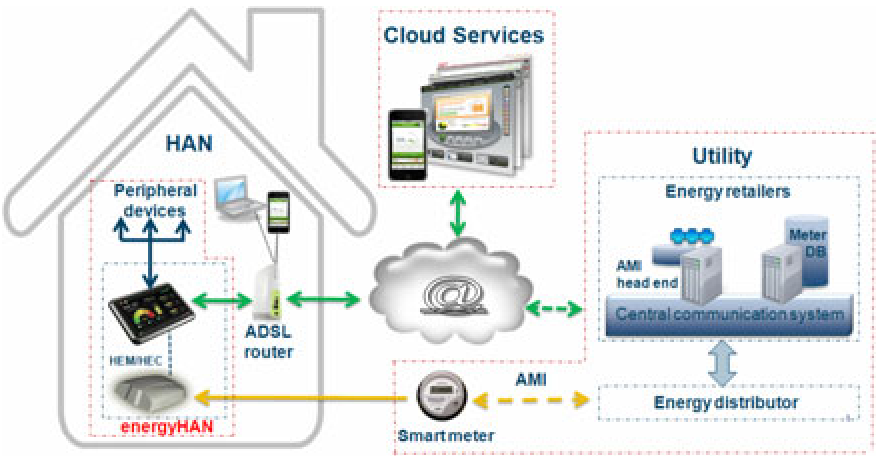
The architecture connects the Utility (data provider), the HAN Provider (hardware at home), and the Cloud Service Provider (the intelligence layer). Success depends on these actors forming alliances to deliver a unified user experience.
2. Knowledge Engineering (Thinking, not just Sensing)
Raw data from a smart meter is useless to a layperson. The paper emphasizes:
- Ontological Modeling: Structuring data to understand the relationship between a user’s home characteristics, climate, and appliances.
- User Profiling: Using implicit (data mining) and explicit (surveys) models to predict what recommendations will actually resonate.
- Semantic Recommenders: Moving beyond "turn off the lights" to context-aware advice like "your fridge is consuming 20% more than similar users in your area; it may need a seal check."
3. Gamification and HCI
To combat "engagement fatigue," the authors highlight Gamification. By introducing achievement badges, virtual currency, and leaderboards, energy saving shifts from a chore to a social game.
Market Landscape: A Snapshot of Transition
The study analyzes the "First Wave" of energy social platforms. While these pioneers established the feasibility of social energy tracking, many lacked the deep integration needed for the mass market.
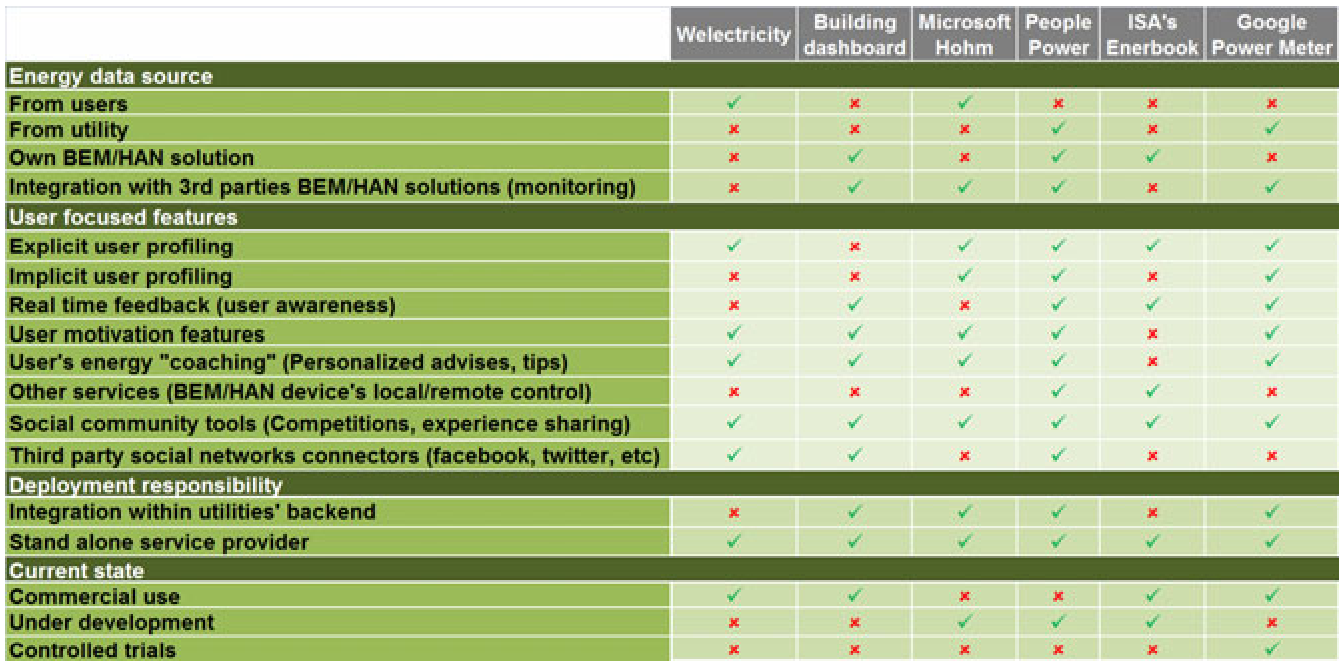
Key insight from the data: Solutions like Microsoft Hohm and Google PowerMeter (at the time) were already moving toward "implicit user profiling" and "energy coaching," signaling the industry's shift toward the AI-driven personalization we see in modern smart homes today.
Critical Perspective: Why This Matters Now
Captured at a pivotal moment (the rise of early smart meters), this paper reminds us that human behavior is the ultimate optimization variable.
The Limitations: The paper notes that standardization between smart meters and Home Area Networks (HAN) was a major bottleneck—a challenge that continues to evolve with standards like Matter and Thread today.
The Future Outlook: We are moving toward a second generation of systems where automation takes the lead. Imagine a home that not only suggests shifts in energy use but automatically negotiates with the grid to charge your Electric Vehicle (EV) during off-peak windows based on social community patterns.
Conclusion
Social Computing isn't just about "posting on Facebook." It’s about leveraging the social graph and semantic data to give users a sense of place and purpose in the global effort toward sustainability. For utilities and hardware providers, the message is clear: the most powerful energy-saving tool isn't a better sensor—it's a more engaged human.