
Unified Social Computing: Breaking the Silos of Recommendations, Trust, and Networks
9787_Social computing an intersection of recommender systems, trustreputation systems, and social networks.
The paper introduces a unified graph-based taxonomy for Social Computing, integrating Recommender Systems (RS), Trust/Reputation Systems (TRS), and Social Networks (SN). By proposing a heterogeneous two-layer directed hypergraph, it seeks to bridge distinct social services to mitigate inherent data limitations.
TL;DR
Social computing has long been fragmented into three distinct silos: Recommender Systems (RS), Trust/Reputation Systems (TRS), and Social Networks (SN). This paper from IEEE Network argues that these are not separate entities but different views of the same underlying human behavior. By introducing a two-layer hypergraph model, the authors provide a mathematical framework to solve the "Cold-Start" and "Sparsity" problems by "borrowing" data across these domains.
The Problem: The "Desert" of Data
The Achilles' heel of any intelligent social application is Network Sparsity.
- In Recommender Systems: Most users only rate a fraction of available items.
- In Trust Systems: Users rarely have enough direct interactions to judge the reliability of a new partner.
- The Cold-Start Trap: New nodes (users/items) enter the system with zero edges, making them invisible to traditional algorithms.
The authors observe that while a user might be "new" to an e-commerce platform (RS), they are not "new" to the social web. They have friends (SN) and those friends have reputations (TRS). The failure of current systems is their inability to look across these boundaries.
Methodology: The Two-Layer Hypergraph
The core contribution is a novel graph-theoretic taxonomy that represents social computing data not as a flat matrix, but as a complex, multi-layered structure.
1. Architecture Breakdown
The model consists of two primary layers:
- User Layer: Contains nodes representing individuals.
- Item Layer: Contains nodes representing products, content, or services.
2. Edge Heterogeneity
The power of this model lies in its types of connections:
- Hyperlinks (Social Relations): Connect groups of users based on affiliation.
- Similarity Links (Item-Item): Connect items based on shared attributes (Content-based filtering).
- Interlayer Links (Transactions): Weighted edges representing ratings or purchases.
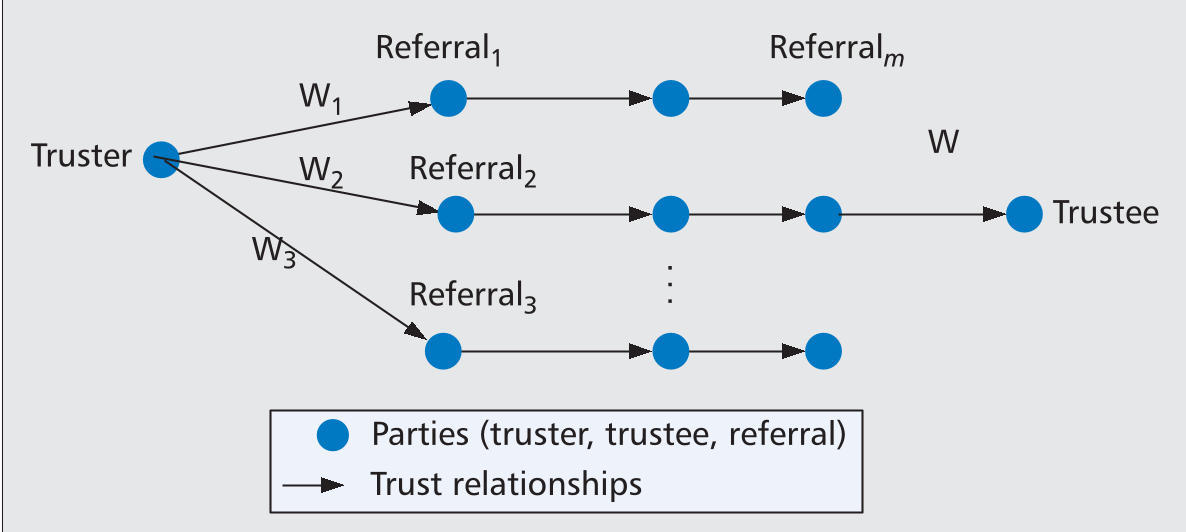 Figure 1: The proposed two-layer weighted directed hypergraph integrating users, items, and their complex relationships.
Why This Works: Cross-Service Bootstrapping
By viewing the recommendation problem as a Link Prediction task on this unified graph, we can find paths that were previously invisible:
- Social-to-RS: If User A is connected to User B in the Social Layer, A can receive recommendations based on B’s transaction history, even if A has never bought an item.
- TRS-to-Social: Trust relationships can be used to infer social ties. If A trusts B, and B trusts C, a transitive link can bootstrap a social connection between A and C, reducing sparsity.
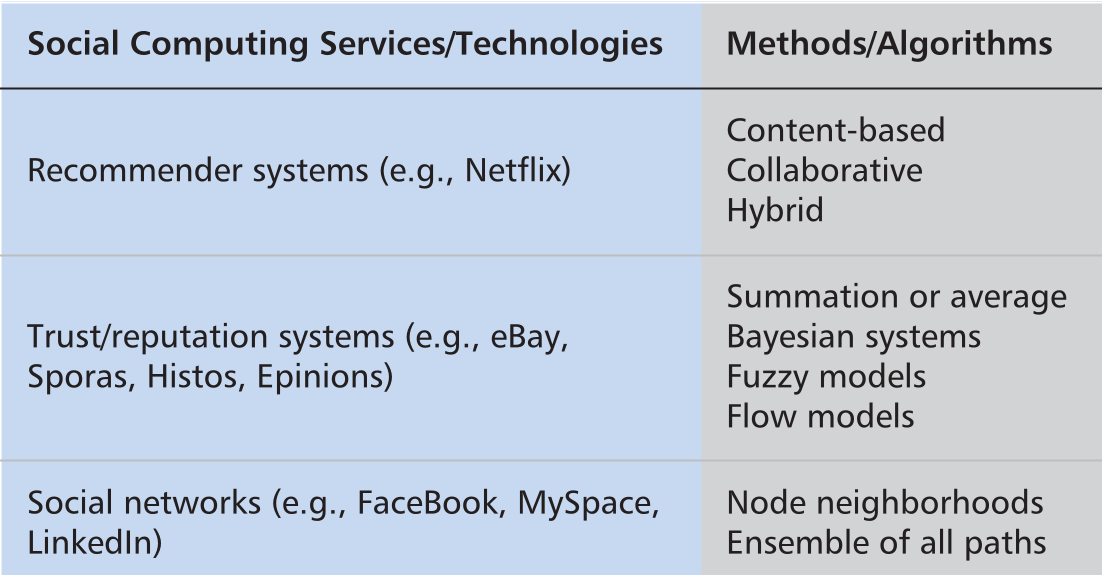 Table 1: Comparison of current services and their underlying algorithmic approaches.
Critical Insights & Future Outlook
The paper shifts the perspective from algorithms to data representation. The authors argue that even the most sophisticated Bayesian or Fuzzy logic models will fail if the input graph is empty.
Takeaway for Practitioners: When building a recommendation engine, don't just look at the User-Item matrix. Look at the "Affiliation Network." By integrating social graphs, you aren't just adding features; you are fundamentally changing the topology of the search space, making "shortcuts" possible through trust and social proximity.
Limitations: While the theoretical framework is robust, the paper leaves the computational complexity of managing such a massive hypergraph at scale as an open challenge. Implementing this in real-time for platforms like Netflix or Amazon would require significant advancements in distributed graph processing.
Conclusion
This work serves as a foundational roadmap for Integrated Social Computing. By moving beyond personal computing toward collaborative, interaction-based models, we can create systems that understand users not just by what they buy, but by who they trust and how they connect.