
SCVH: Redefining Vertical Handover through the Lens of Social Connectivity
Social-connectivity-aware vertical handover for heterogeneous wireless networks
The paper introduces Social-Connectivity-aware Vertical Handover (SCVH), a novel admission control scheme for heterogeneous wireless networks (WLAN-Cellular). By utilizing graph-theoretic centrality measures from Online Social Networks (OSNs), it prioritizes handover for users with high social connectivity to localize traffic and improves Quality of Service (QoS).
TL;DR
Researchers have developed a Social-Connectivity-aware Vertical Handover (SCVH) scheme that uses Online Social Network (OSN) data to decide which users get access to WiFi. By prioritizing "socially central" users, the system turns global internet traffic into local data exchange, significantly reducing the load on ISP bottlenecks while maintaining high service quality.
Background: Beyond Signal Strength
In the era of "Always Best Connected" (ABC), vertical handover (VHO)—the seamless transfer of a session between different wireless technologies like LTE and WiFi—is critical. Historically, these decisions were "blind" to the application layer, focusing only on Physical Layer (RSS) or MAC layer parameters.
The authors argue that since Online Social Networking (OSN) traffic dominates smartphone usage, the network should be socially aware. If a group of friends are all in the same building, why route their status updates through global servers? Why not localize them?
The Core Innovation: Social Importance Metric (SIM)
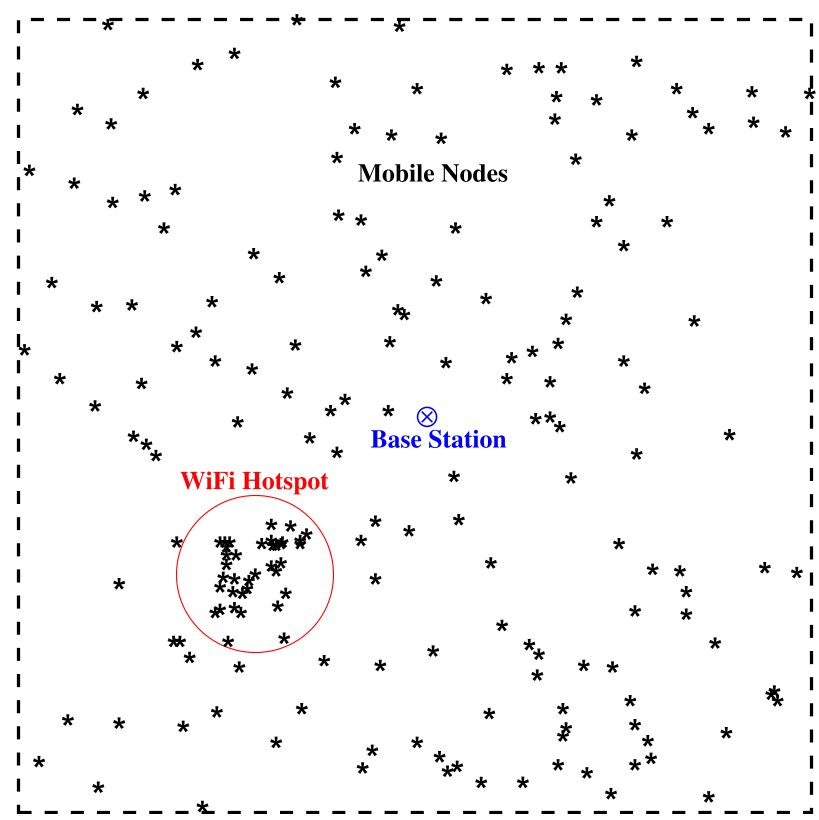
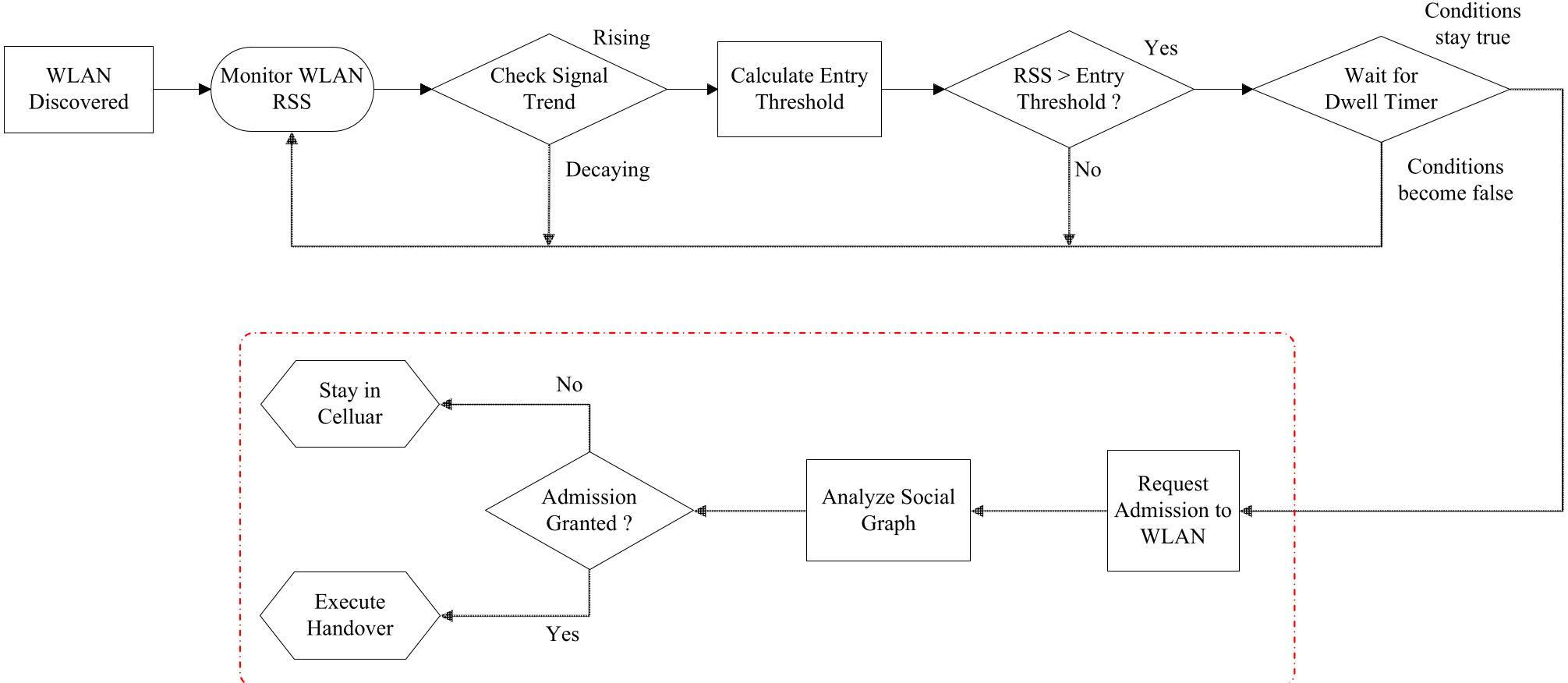
The methodology moves beyond simple connection requests. When a user enters a WiFi zone, the Access Point (AP) evaluates their "Social Importance" within a connectivity graph of currently connected users.
The paper defines SIM () using three pillars of graph theory:
- Degree Centrality: How many direct friends are already in the WiFi zone?
- Betweenness Centrality: Does this user connect separate social clusters?
- Eigenvector Centrality: Is the user connected to "influential" people?
The OSN Proxy Mechanism
The Access Point acts as an OSN Proxy. When a high-SIM user is admitted, their updates are distributed locally to friends on the same network. Admission is probabilistic: . Higher social value equals higher admission priority.
Methodology: Optimal Weighting
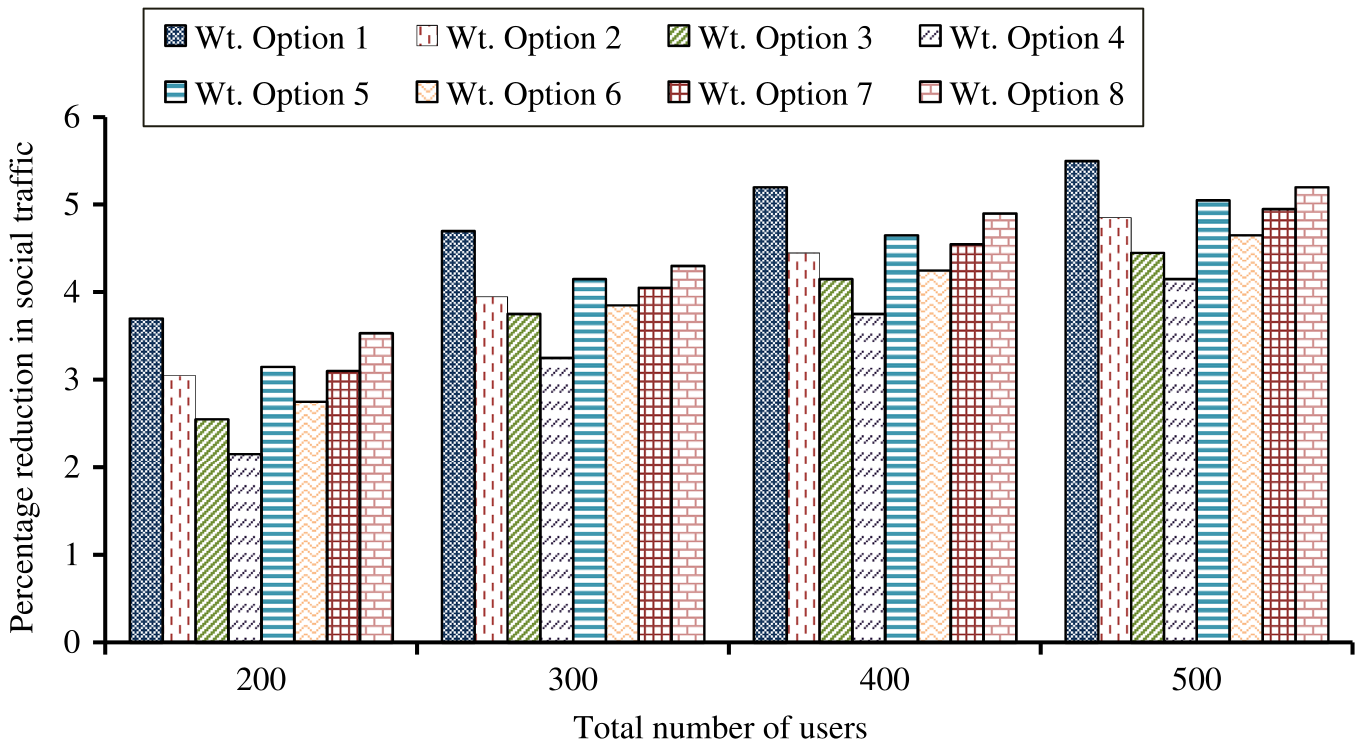
Not all social metrics are equal. The authors calculated empirical weights by correlating centrality with actual traffic reduction.
- Empirical Weights: (Degree), (Betweenness), (Eigenvector).
- This balanced approach ensures that the network localizes as much "resharing" traffic as possible.
Experimental Validation
Using the IMC'07 dataset (over 3 million Orkut users), the team simulated a university campus scenario.
Key Findings:
- Traffic Reduction: Global social traffic was reduced by approximately 5-7% just by optimizing admission at a single hotspot level.
- Congestion Control: SCVH maintained lower occupancy levels compared to the aggressive "WLAN-first" strategy, preventing the "bottleneck" effect on the ISP link.
- Density Sensitivity: As the network density (Clustering Coefficient) increases, the benefits of SCVH scale linearly.
Critical Insight: The "Social" Inductive Bias
The brilliance of this work lies in its Inductive Bias: it assumes that social proximity in the digital world correlates with physical proximity in the real world. By treating the WiFi AP as a social cache/proxy, the authors effectively turn the network into a decentralized content delivery network (CDN).
Limitations & Future Work
- Privacy: The system requires users to share Social IDs, which poses privacy challenges in today's GDPR/CCPA environment.
- Directed Graphs: The current model uses undirected graphs (like Facebook). Future iterations should address directed "Following" models (like Twitter/X).
Conclusion
SCVH proves that the application layer holds the key to the next efficiency gain in wireless networking. By understanding who is connecting, not just how they connect, network operators can design systems that are both smarter and faster.