
Utilizing Social Context: Breaking Data Silos for Personalized Mobile Services
Utilizing Social Context for Providing Personalized Services to Mobile Users
The paper introduces a cross-platform recommendation system that aggregates personal data from multiple social networks (Facebook, MySpace, LinkedIn) to deliver personalized Web feeds (RSS) to mobile users. By mapping social context into RDF/FOAF ontologies and using a SIP/SIMPLE-based broker, it achieves zero-intervention content personalization.
TL;DR
This study presents a semantic-based recommendation system that harvests user data from multiple social networks—Facebook, LinkedIn, and MySpace—to build a unified personal context. By converting this data into ontologies and matching it against tagged Web feeds via a SIP-based broker, the system delivers highly relevant content to iOS users without requiring manual intervention.
Contextual Motivation: The Problem of "Profile Fragmentation"
In the late 2000s, the social web was a collection of walled gardens. A user might post professional achievements on LinkedIn, social updates on Facebook, and musical tastes on MySpace. For a recommendation engine, looking at just one of these sources provides a skewed, incomplete version of the user.
The authors identify two core challenges:
- Data Silos: Social networks generally prohibit sharing aggregated information due to competition and privacy.
- Superficial Matching: Most aggregators (like Google News at the time) matched users to broad categories (e.g., "Sports") rather than specific micro-interests or real-time location contexts.
Methodology: The Context Broker Architecture
The heartbeat of this system is the Context Broker (CB), built on the OpenSIPS SIP Server. It handles the lifecycle of personalization through four distinct stages:
1. Context Aggregation & Transformation
The system uses a "Context Aggregator" to pull data from various APIs. Recognizing that raw data is messy (e.g., location names like "Aten" vs "Athens"), it utilizes external APIs (Google Maps, IMDB) to normalize entities. These are then encoded into a FOAF (Friend-of-a-Friend) vocabulary, extended with custom RDF schemas like businessBackground and mediaFiles.
2. Semantic Matching Algorithm
Instead of simple keyword matching, the authors use a layered alignment approach. Each match is assigned a value .
- Layer 1 (General): Broad categories (News, Entertainment).
- Layer 2 (Sub-category): Politics, Movies.
- Layer 3 (Specialization): Specific genres or industries.
- Layer 4 (Direct match): Exact syntactic matches (e.g., the specific name of a favorite movie).
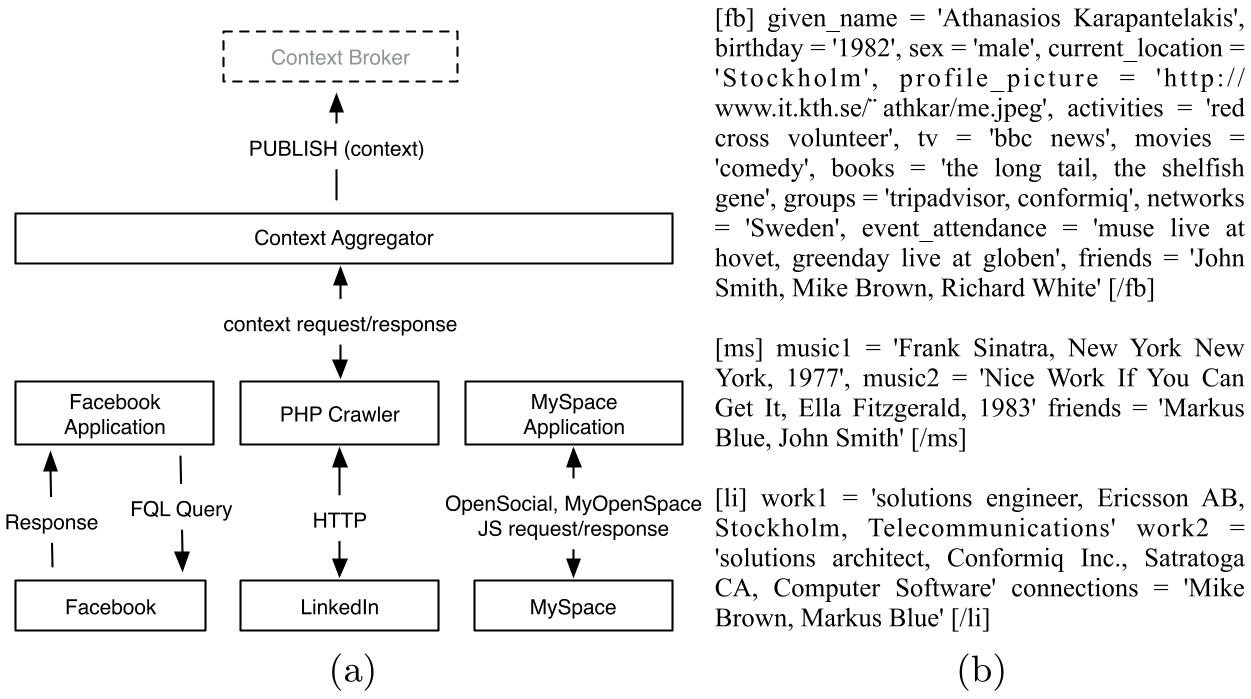 Figure 1: The Context Broker utilizes SIP/SIMPLE for subscription management and an internal engine for ontology matching.
Experiments and Results
The system was tested in a 6-month trial with 462 users. Two key aspects were evaluated: technical performance and user satisfaction.
Scalability and Prioritization
As the user base grew, the time required to match a single feed against all user profiles (propagation delay) increased linearly. To counter this, the authors implemented Active Subscriber Prioritization. By processing only the users currently online, they achieved a dramatic reduction in latency, shifting the bottleneck away from the "offline" majority.
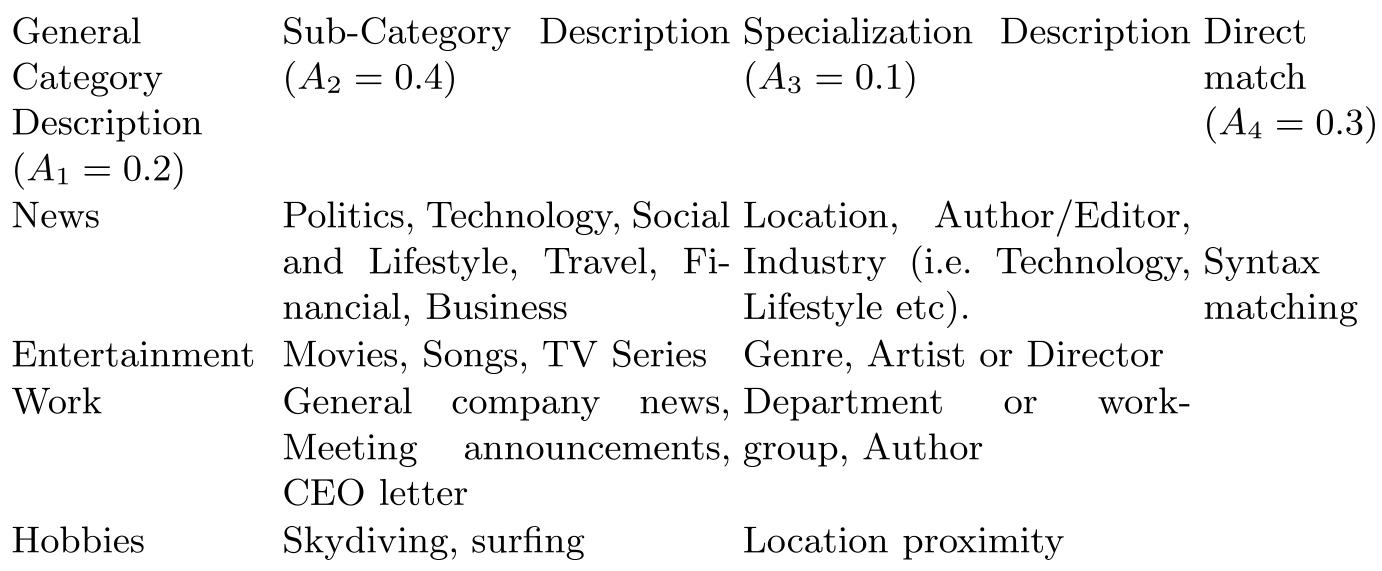 Table 1: The 4-layer categorization approach used to calculate alignment weights.
User Feedback
The qualitative results were overwhelmingly positive. Users appreciated the "zero-touch" nature of the recommendations. The inclusion of a feedback mechanism directly in the iOS app allowed the team to track satisfaction, which remained high throughout the 6-month window.
Critical Insight: The Value of Multi-Source Context
The most striking takeaway is that social network data is complementary, not redundant. Facebook provided hobbies and locations, while LinkedIn offered professional depth. By merging these, the "Confidence Measure" () for a successful recommendation could be set higher (0.6), leading to fewer "spammy" or irrelevant notifications.
Limitations and Future Work
While innovative for its time, the system relies heavily on Professional Editors to tag RSS content correctly. In a modern context, this would likely be replaced by LLM-based zero-shot classification. Additionally, the study suggests that future iterations should incorporate Social Graphs (friends' interests) to further refine recommendations—a concept that has since become the cornerstone of modern social discovery algorithms.
Conclusion
This paper serves as a foundational blueprint for cross-platform personal assistants. It proves that by using standardized semantic protocols (RDF/SIP), we can build services that truly understand the multifaceted digital lives of mobile users.